

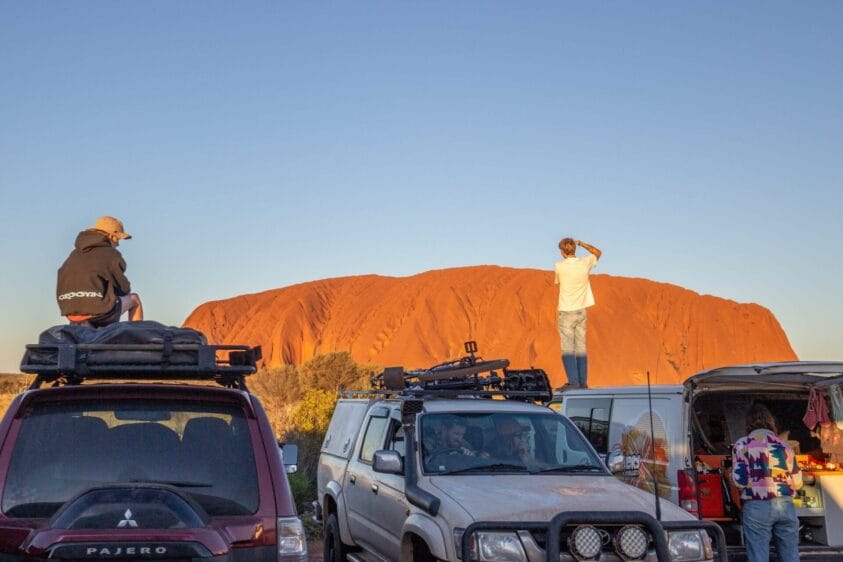

We thought we had our Alice Springs to Uluru itinerary completely mapped out, until we very nearly made a huge mistake.
If you’re planning the classic Red Centre road trip from Alice Springs to Uluru, this guide will help you avoid the same problem we ran into.
We had planned to spend a few days in Alice Springs, visit the West MacDonnell Ranges, continue on to Kings Canyon, and then drive down to Uluru.
In reality, it was not as simple as we thought it would be.
The route we had planned involved roads that were not suitable for our 2WD Star RV motorhome. We only found this out once we arrived in Alice Springs and spoke to the tourist information office. If we had continued with our original plan, we would have lost days trying to get through badly corrugated roads, or worse, ended up stuck somewhere we shouldn’t have been.
So if you’re driving Alice Springs to Uluru in a 2WD, motorhome, campervan, or regular hire car, this guide will help you plan the route properly. And if you’re still working out what to do once you arrive, my guide to the best things to do in Uluru is a good place to start.
Get 10% off hiring a Star RV Motorhome with our code: LIS10
The Fatal Error You Need to Know Before You go
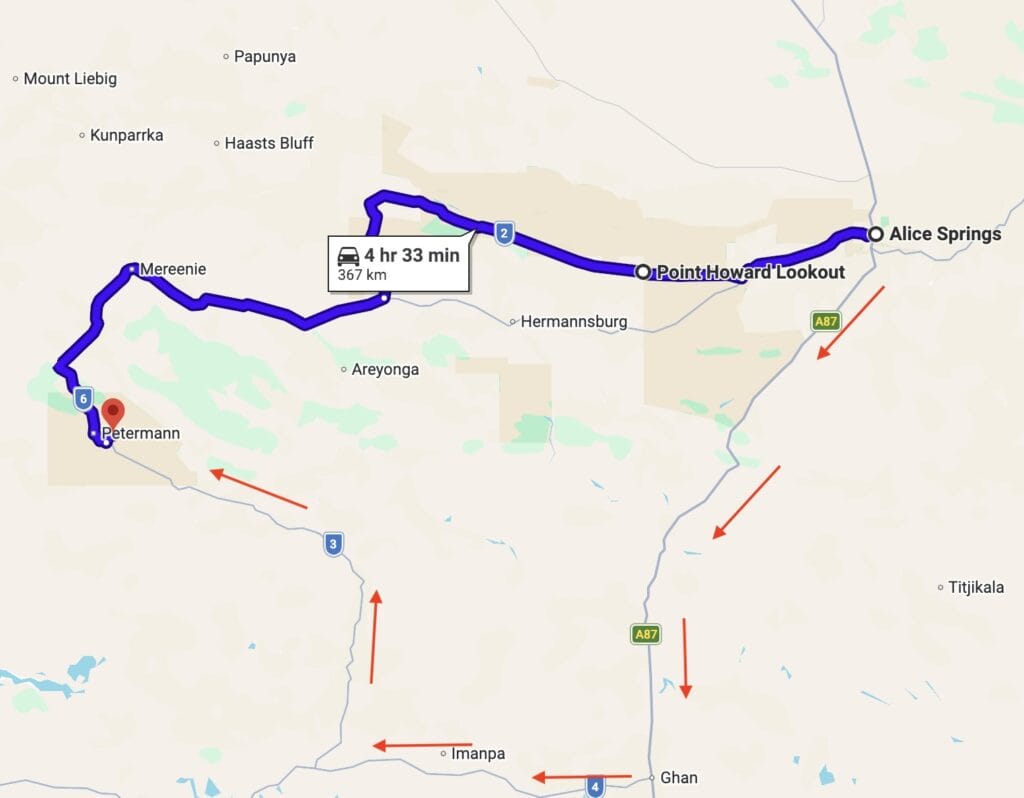
Our biggest mistake was assuming we could drive from the West MacDonnell Ranges to Kings Canyon, then continue on to Uluru (pictured above in blue).
We had seen Larapinta Drive on the map and thought it looked like a logical route. We were already planning to visit the West MacDonnell Ranges, so it seemed to make sense to continue around the Red Centre Way instead of backtracking.
But once we reached Alice Springs, we were told that this was not a good idea in our 2WD motorhome. The road was too corrugated, and it would have taken us far longer than expected. More importantly, it was not the right route for the type of vehicle we were driving.
This is the part you need to know
If you’re in a 2WD, don’t assume every road on the map is suitable. Some routes in Central Australia look straightforward, but they can be rough, remote, and slow-going.
The sealed route to Kings Canyon goes via the Stuart Highway, Lasseter Highway and Luritja Road (pictured in red arrows). This is the safer route for 2WD vehicles in normal conditions.
The Red Centre Way via Larapinta Drive and the Mereenie Loop is a different story, and you’ll need to check vehicle requirements, road conditions and permit rules before attempting it.
That means if you’re not set up for that route, it is usually better to visit the West MacDonnell Ranges as a separate day trip from Alice Springs. You can then drive to Kings Canyon via the sealed highways instead.
It might look like backtracking, but it can save you a lot of stress.
Can You Drive Alice Springs To Uluru In A 2WD?
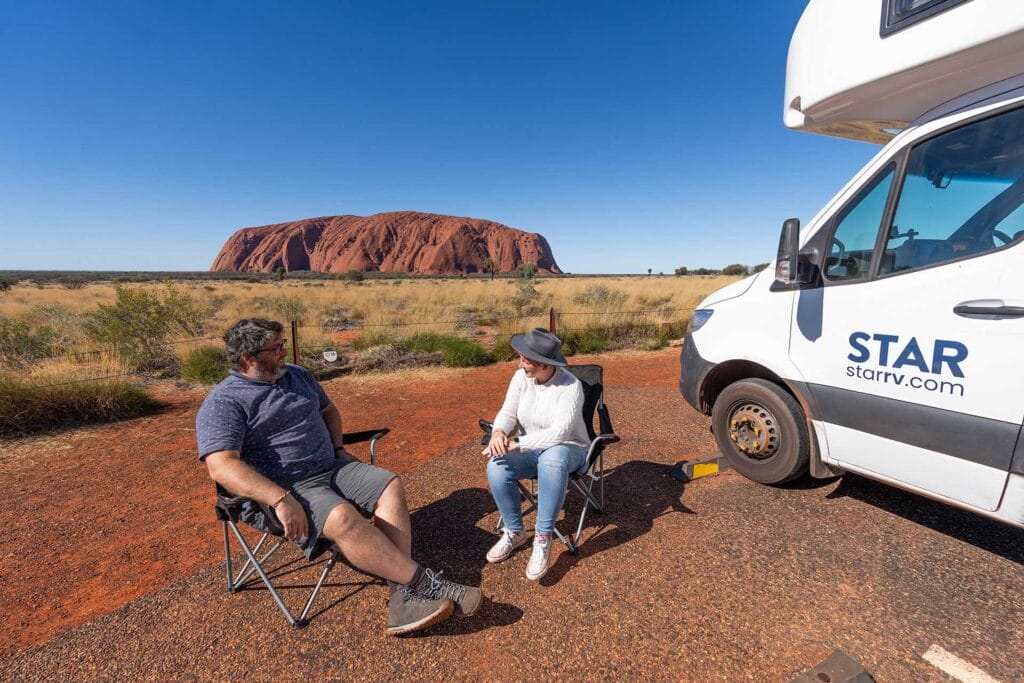
Yes, you can drive from Alice Springs to Uluru in a 2WD if you take the sealed route.
The standard route follows the Stuart Highway south from Alice Springs, then turns onto the Lasseter Highway towards Yulara and Uluṟu-Kata Tjuṯa National Park. This is the main route most travellers take, and it is suitable for ordinary vehicles in normal conditions.
The drive is around 450km and usually takes about 4.5 to 5.5 hours without major stops. But I wouldn’t recommend treating it as a simple A-to-B drive if you have more time.
There is so much to see in this part of the Northern Territory. If you rush from Alice Springs to Uluru in one day, you’ll miss some of the best places in the Red Centre.
The biggest thing is to understand the difference between the sealed highways and the more remote routes. If you’re driving a 2WD, stick to the sealed roads unless you have clear, current advice that says otherwise.
Don’t Drive Remote Roads At Night
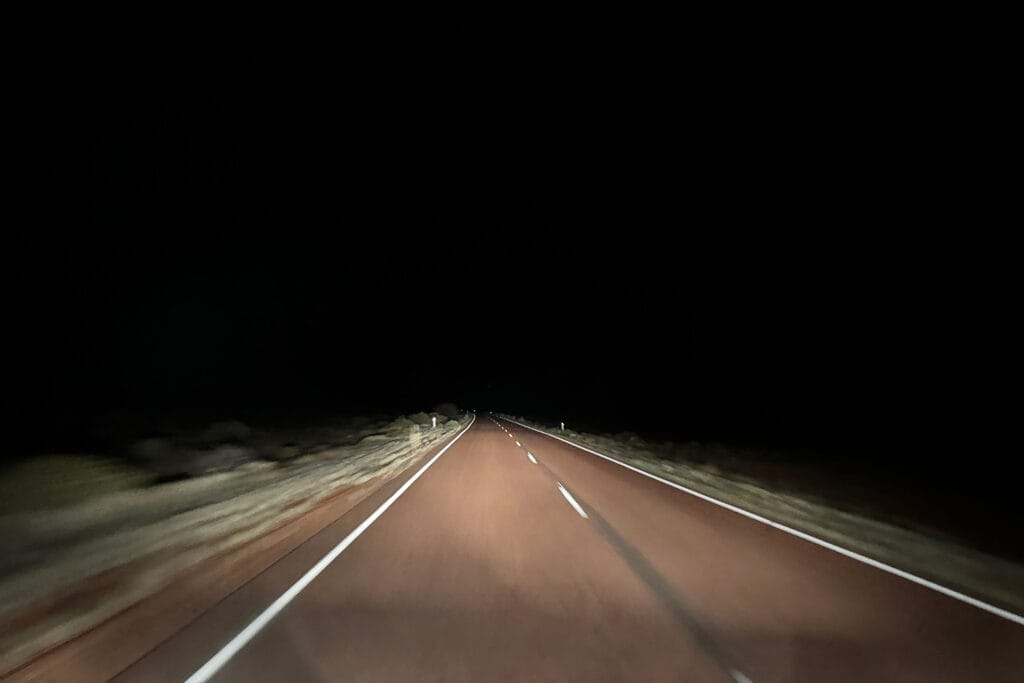
Another important thing to know is that you should avoid driving remote roads at night in the Red Centre.
Kangaroos, camels, cattle and other animals can appear on the road with very little warning. This is especially risky around dawn, dusk and after dark. The distances are long, the roads can feel empty, and help may not be close by if something goes wrong.
Try to plan your driving days so you arrive before sunset. It makes the whole trip feel much less stressful, and you’ll get to enjoy the scenery properly along the way.
This is especially important if you’re driving a motorhome or campervan, as stopping distances can be longer and you may not be able to react as quickly.
How Long Do You Need For Alice Springs To Uluru?

You can technically drive from Alice Springs to Uluru in one day, but I wouldn’t plan your whole trip around that.
If you have the time, I’d allow at least five to seven days for Alice Springs, Kings Canyon, Uluru and Kata Tjuta. This gives you enough breathing room to enjoy the stops properly, rather than spending the entire trip in the car.
We spent three days just at Uluru at Kata Tjuta and it didn’t feel enough. We also spent a few days in Alice Springs and didn’t get to see everything we wanted to.
A good itinerary could look like this.
Spend two or three days in Alice Springs. Use one day for the West MacDonnell Ranges, another for the East MacDonnell Ranges, and another for local experiences such as The Kangaroo Sanctuary.
Then drive from Alice Springs to Kings Canyon via the sealed route. Spend at least one night there so you can do the Kings Canyon Rim Walk early the next morning.
After that, continue to Yulara for Uluru and Kata Tjuta. I’d allow at least three nights here, especially if you want to do the Uluru Base Walk, the Valley of the Winds Walk at Kata Tjuta, Field of Light, Wintjiri Wiru, or a sunrise experience.
If you try to do everything too quickly, the distances will catch up with you.
How To Plan Your Time In Alice Springs
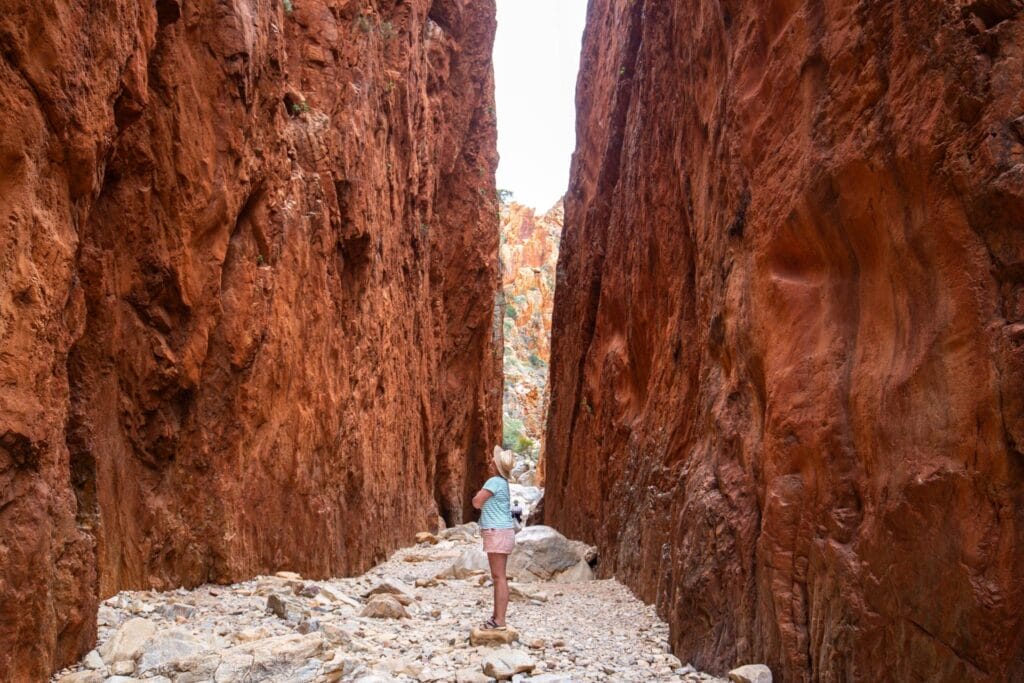
Alice Springs is worth more than a quick overnight stop. Many people use it as a launching point for Uluru, but there is a lot to see nearby.
The West MacDonnell Ranges should be high on your list. You can visit places like Simpsons Gap, Standley Chasm (pictured above), Ellery Creek Big Hole, Ormiston Gorge and Glen Helen.
If you’re in a 2WD, treat this as a day trip from Alice Springs rather than trying to continue through to Kings Canyon via the Mereenie Loop. We didn’t have time to visit all of the spots in West Macs and I wish we left earlier in the morning to see them all.
The East MacDonnell Ranges are also worth exploring if you have time. They tend to feel quieter than the West MacDonnell Ranges and offer a different side of the landscape.
Palm Valley is another popular trip, but you’ll need to check road conditions and vehicle requirements before going. It is not somewhere to casually attempt in the wrong vehicle.
I’d also recommend visiting The Kangaroo Sanctuary if it fits your itinerary. It’s one of the most memorable wildlife experiences in Alice Springs and gives you a completely different perspective on kangaroos and joey rescue.
What To See Between Alice Springs And Uluru
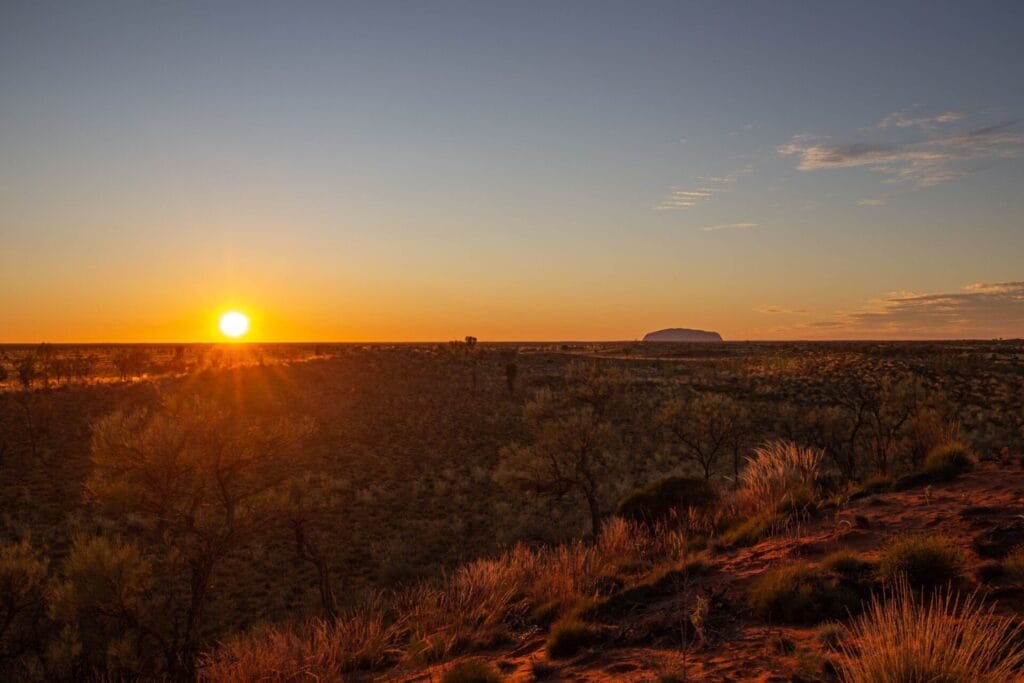
The drive from Alice Springs to Uluru is not just about getting to The Rock. There are several places worth building into your itinerary.
The main highlights are Mount Conner, Kings Canyon, Uluru and Kata Tjuta. You won’t necessarily see all of them in one straight drive, but they can form the backbone of a brilliant Red Centre road trip.
The most important thing is to plan the route properly. If you’re in a 2WD, you may need to drive a longer sealed route rather than taking a rougher shortcut.
That might feel frustrating at first, especially when the map makes the shorter road look tempting. But once you’re out there, you’ll understand why road conditions matter so much.
Stop 1: Mount Conner Lookout
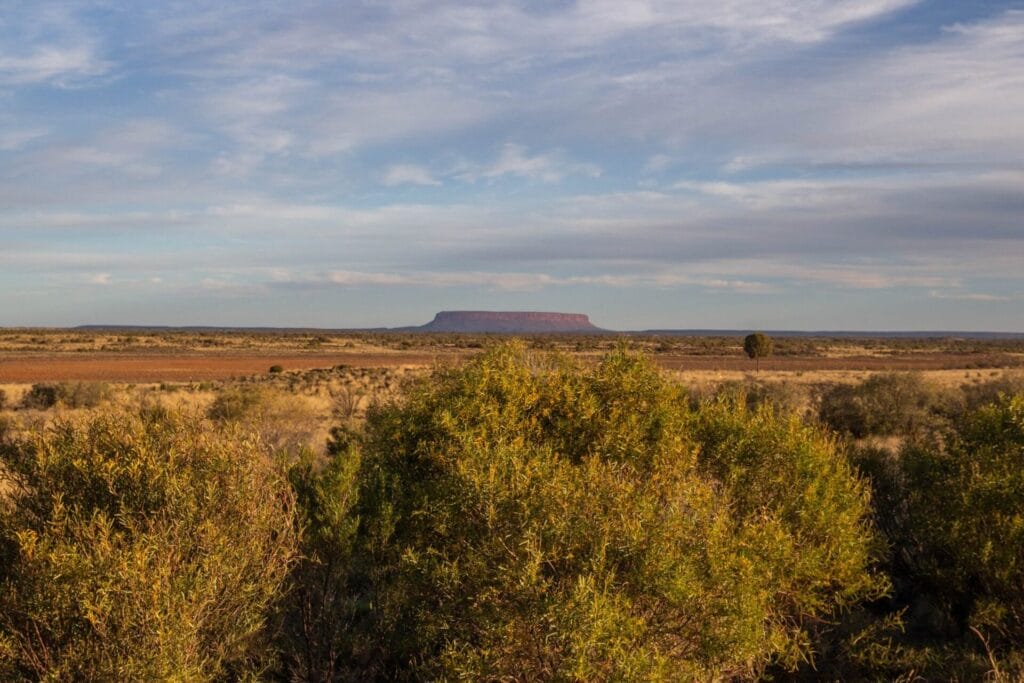
One of the first major landmarks you’ll see on the way to Uluru is Mount Conner.
A lot of people like we did mistake it for Uluru at first because it rises dramatically out of the flat desert landscape. It has a very different shape, but from a distance it still catches you off guard.
There is a lookout along the Lasseter Highway where you can stop and take photos. It’s a good place to stretch your legs and take in the scale of the landscape.
Mount Conner is located on private land, so you can’t just drive up to it independently. But even seeing it from the lookout is worthwhile, especially if it’s your first time in the Red Centre.
Stop 2: Kings Canyon And Watarrka National Park
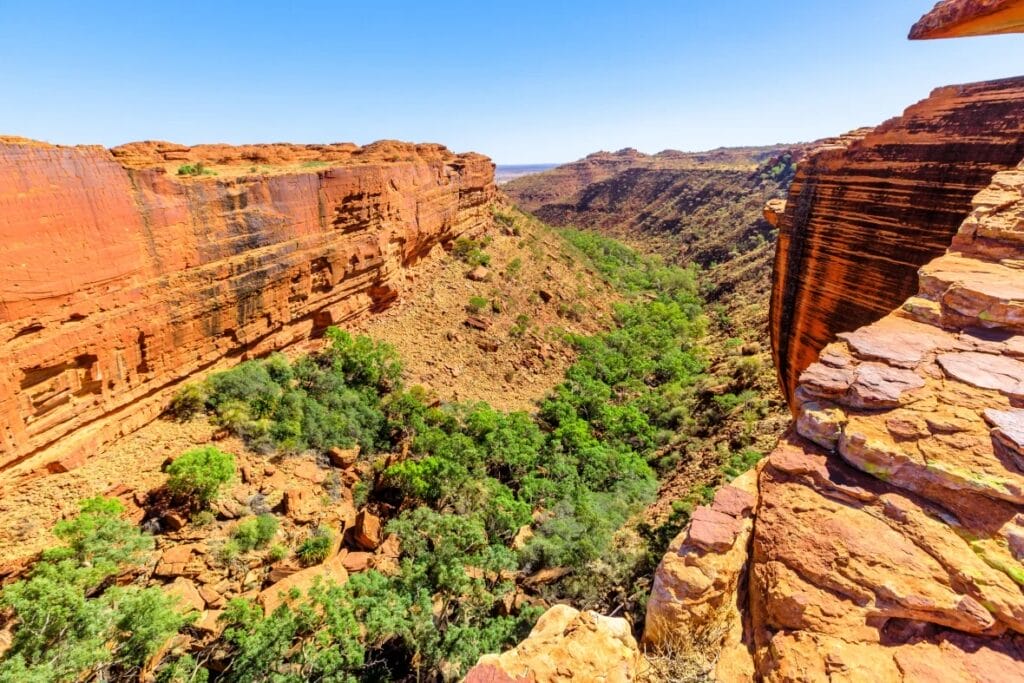
Kings Canyon is one of the absolute highlights of the Red Centre and unfortunately we missed out on this due to time restraints.
Located in Watarrka National Park, it is famous for its huge sandstone walls, dramatic views, and the brilliant Kings Canyon Rim Walk. If you’re driving in a 2WD, plan to reach Kings Canyon via the sealed route rather than trying to cut across from the West MacDonnell Ranges.
The Rim Walk is the walk most people come for. It takes you along the top of the canyon and past sandstone domes, ancient-looking landscapes, and incredible viewpoints. It’s one of those walks that feels completely different from anything you’ll do at Uluru or Kata Tjuta and one that people rave about.
Start early, especially in warm weather. Parts of the walk are exposed, and the first climb can be tough.
If you don’t want to do the full Rim Walk, you can do the shorter Kings Creek Walk instead. This takes you into the canyon floor and gives you a gentler way to experience the landscape.
I’d recommend staying overnight near Kings Canyon rather than trying to squeeze it into a long driving day. Kings Creek Station and Kings Canyon Resort are the main options in the area.
Stop 3: Uluru

Uluru is the reason many people plan this trip in the first place, and it really is worth the hype.
Standing 348 metres high, Uluru dominates the surrounding desert. But it’s not just the size that makes it special. The whole area has deep cultural significance for Anangu, the Traditional Owners of Uluṟu-Kata Tjuṯa National Park.
One of the best ways to experience Uluru is to walk around the base. The Uluru Base Walk gives you a much closer view of the rock’s textures, caves, waterholes and changing colours. It’s also one of the most memorable ways to understand the scale of the rock.
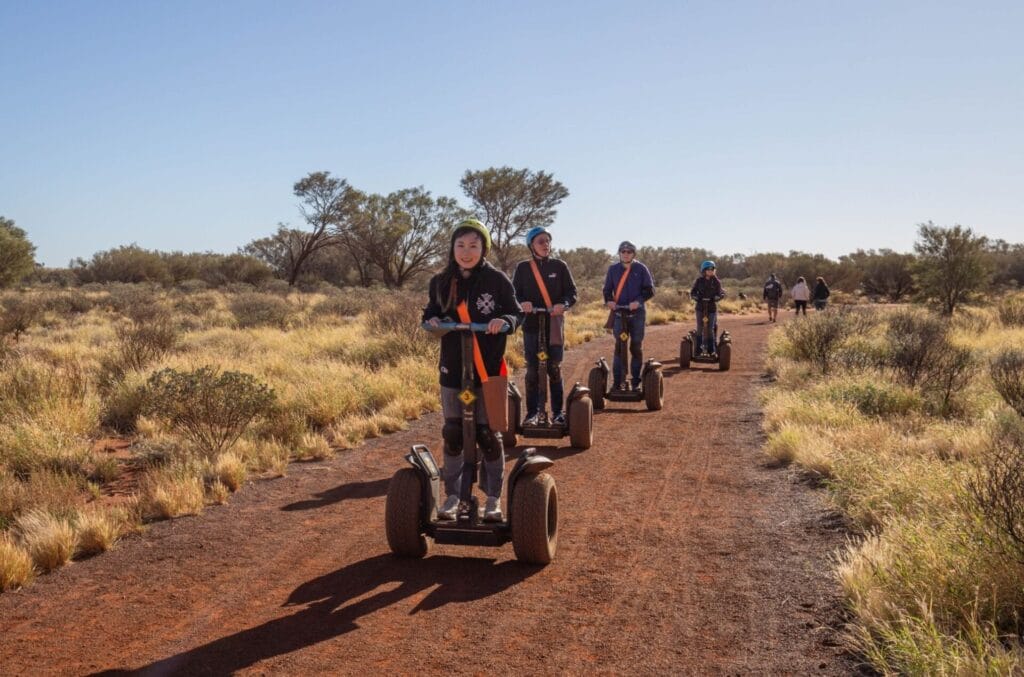
I’d also recommend joining a guided walk or cultural tour if you can. It helps you understand the stories, significance and cultural responsibilities connected to the area.
Sunrise and sunset are both popular times to see Uluru. Sunrise tends to feel quieter if you’re willing to get up early, while sunset gives you those famous changing colours as the rock glows in the evening light.
If you’d rather have someone else organise the logistics, I’ve also put together a guide to the best Uluru tours. It’s helpful if you’re deciding between guided walks, cultural tours, sunset experiences and day trips.
Stop 4: Kata Tjuta
Don’t make the mistake of going all the way to Uluru and skipping Kata Tjuta.
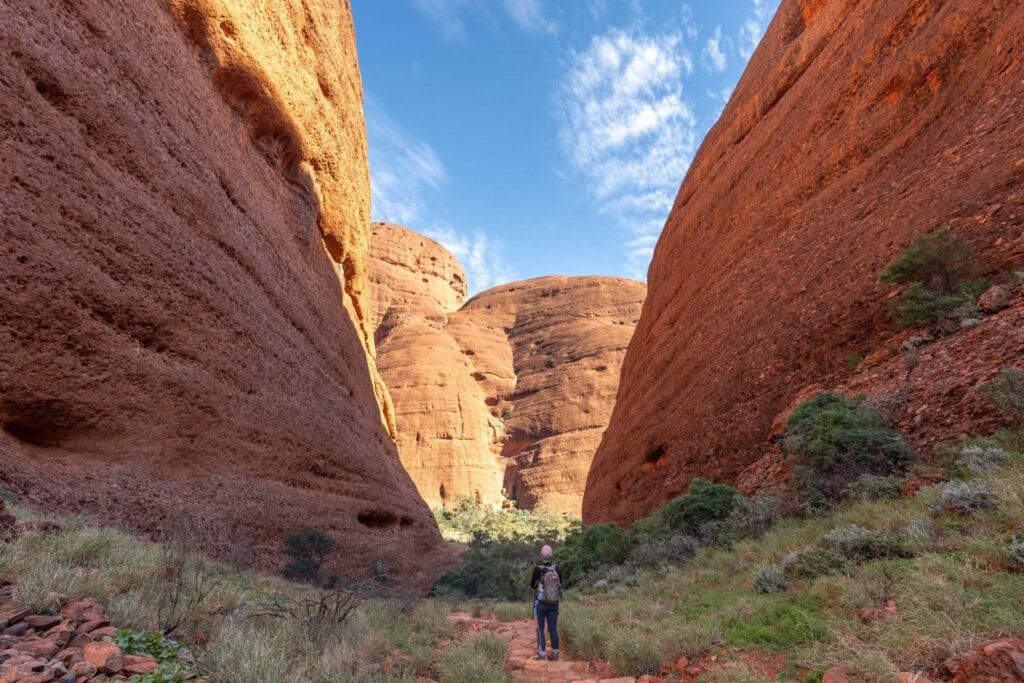
Kata Tjuta, also known as the Olgas, is around 50km from Uluru and feels completely different. Instead of one huge monolith, you’ll see a group of massive domed rock formations rising from the desert.
The Valley of the Winds Walk is one of the best walks in the national park. It takes you between the domes and gives you incredible views across the landscape.
There is also the shorter Walpa Gorge Walk if you want something easier. This is a good option if you’re short on time or visiting in hotter weather.
Kata Tjuta feels quieter than Uluru in some ways, but it is just as impressive. If you have two or three days at Yulara, make sure you give it enough time.
Guided Tours Or Self-Drive?
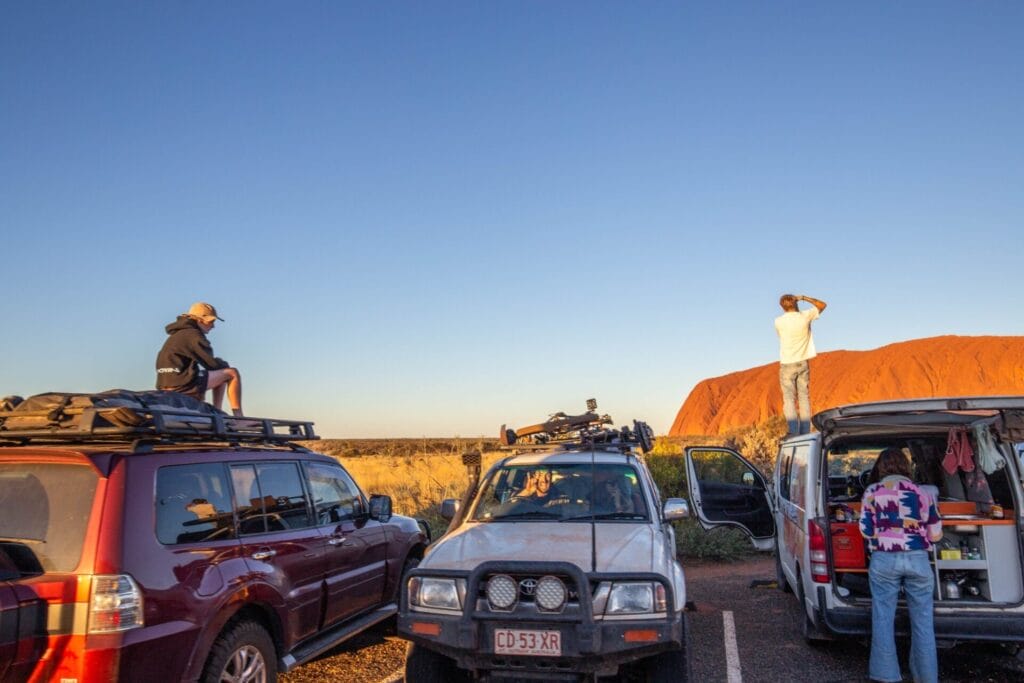
You can explore much of the Red Centre independently if you have your own vehicle and plan carefully.
Self-driving gives you flexibility, especially if you want to spend more time at certain stops or take photos along the way. It also lets you build your trip around your own pace, which is useful in such a remote region.
That said, guided tours can be a great option at Uluru. They help you understand the cultural significance of the landscape, especially around the Mala Walk and other important sites. If you’re not sure which one to choose, my guide to the best Uluru tours breaks down the main options.
If you don’t want to drive, there are coach services and organised tours between Alice Springs, Kings Canyon and Uluru. These can be a good option if you’re travelling solo, don’t feel confident driving long distances, or want someone else to handle the logistics.
Can You Fly A Drone At Uluru?
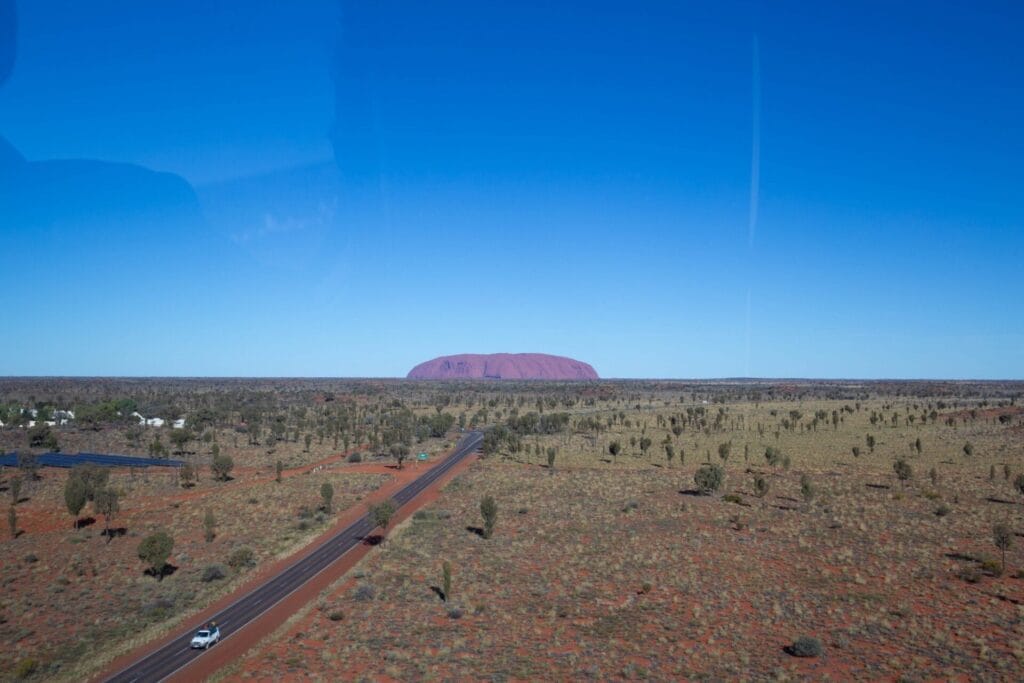
No, you cannot simply fly a drone at Uluru (picture above was taken on the helicopter flight).
Uluṟu-Kata Tjuṯa National Park has strict rules around drone use, and drones are not allowed unless you have the proper authorisation. This is especially important for bloggers, content creators and social media users.
Don’t assume you can use a drone just because you’ve brought one with you. The landscape is stunning enough without it, and there are plenty of viewpoints where you can still get beautiful photos.
If drone footage matters to you, check the official permit requirements before your trip. But for most visitors, the simplest answer is to leave the drone packed away.
Tips For Driving Alice Springs To Uluru
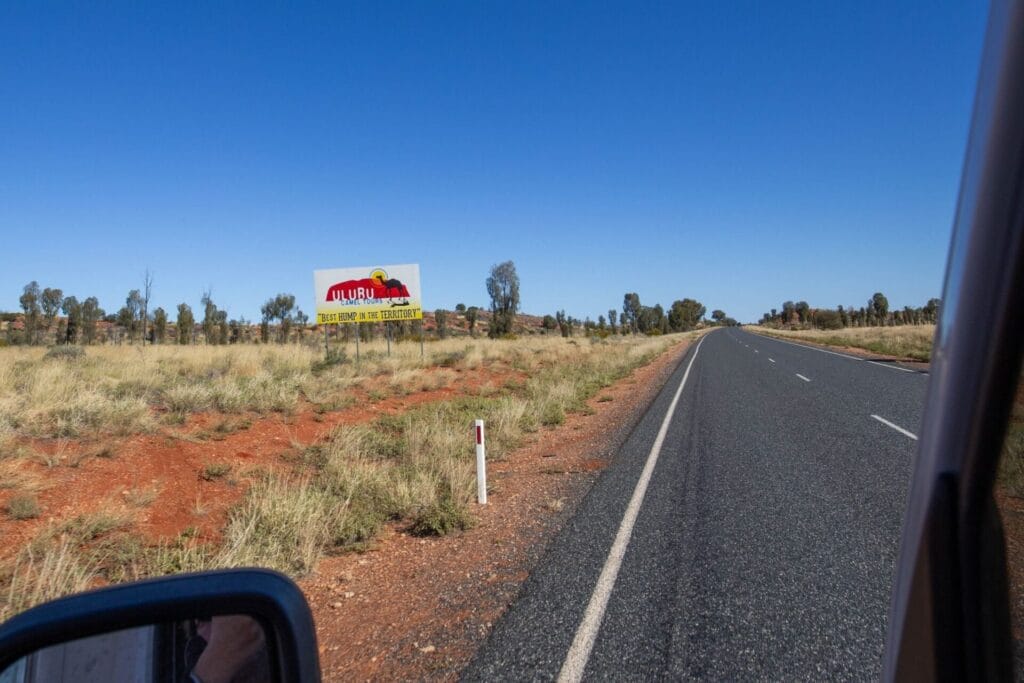
Fill up with fuel when you can, even if your tank is not empty. Distances are long, and fuel stops are limited compared with driving on the east coast. There is only one petrol station between Alice Springs and Uluru, so make sure you stop there. Unsurprisingly, it was the most expensive petrol station we came across on our big road trip from WA to SA via Darwin.
Carry plenty of water, especially if you’re travelling in the warmer months. I’d also keep snacks, sun protection, and a basic first aid kit in the car.
Check your tyres before long drives, especially if you’re in a hire car, campervan or motorhome. Make sure you know where the spare tyre is and what your rental agreement says about breakdowns.
Download offline maps before you leave Alice Springs. Mobile reception can be patchy or unavailable in parts of the Red Centre.
Most importantly, don’t rely only on Google Maps when choosing your route. Always check road conditions, vehicle restrictions and permit requirements before setting off.
Final Thoughts
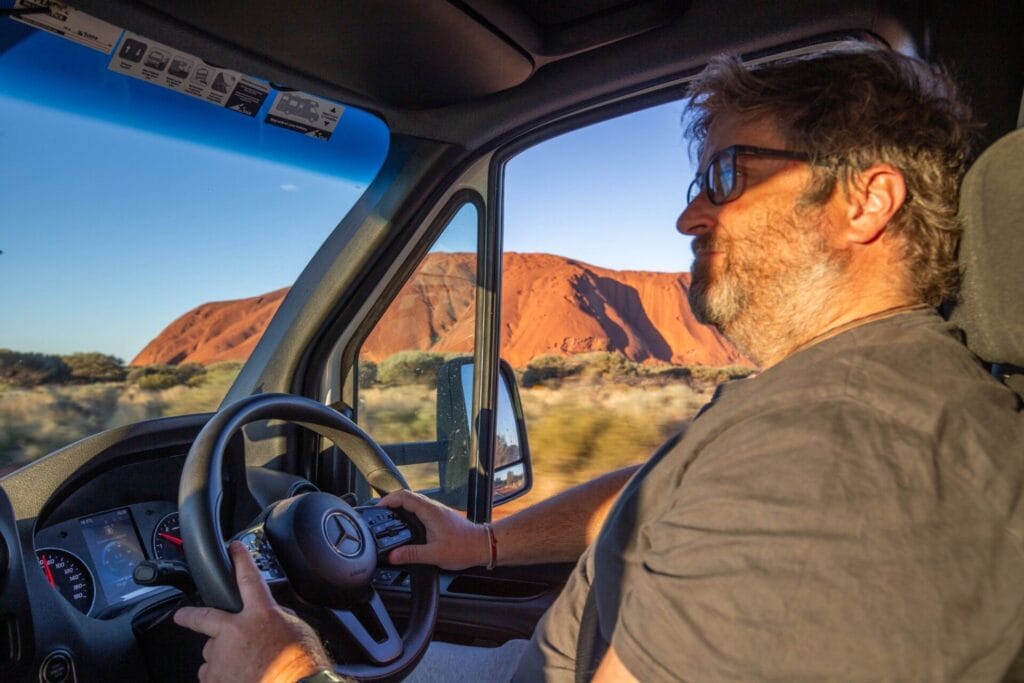
Driving from Alice Springs to Uluru is one of the best road trips you can do in Australia, but it needs proper planning.
The biggest lesson we learnt was not to assume that the shortest route is the best route. In the Red Centre, your vehicle matters. Road conditions matter. Permits matter. And distances can feel much bigger once you’re actually out there.
If you’re driving a 2WD, stick to the sealed route via the Stuart and Lasseter highways, and treat the West MacDonnell Ranges as a separate trip from Alice Springs. If you want to include Kings Canyon, plan your route carefully and allow enough time to enjoy it properly.
This part of Australia is full of unforgettable places, from the waterholes of the MacDonnell Ranges to the sandstone cliffs of Kings Canyon, the sacred presence of Uluru, and the domes of Kata Tjuta. If you’re planning the full journey, my Darwin to Uluru road trip guide is also worth reading.
Take your time, plan the route properly, and don’t rush it. The Red Centre is not just a drive from Alice Springs to Uluru. It’s the kind of journey that stays with you long after you leave.
Planning More Of Your Uluru Trip?

If this Alice Springs to Uluru road trip guide has helped you plan your route, I’ve got plenty more guides to help you make the most of your time in the Red Centre.
Start with my guide to the best things to do in Uluru if you’re still working out your itinerary. For walks, don’t miss my Uluru Base Walk guide and my guide to the Valley of the Winds Walk at Kata Tjuta.
If you’re deciding which experiences are worth booking, read my guide to the best Uluru tours, plus my honest reviews of the 15-minute Uluru helicopter flight, the Uluru Field of Light dinner, and the Wintjiri Wiru Uluru drone show.
And if you’re planning a bigger Northern Territory adventure, have a read of my Darwin to Uluru road trip guide too.