

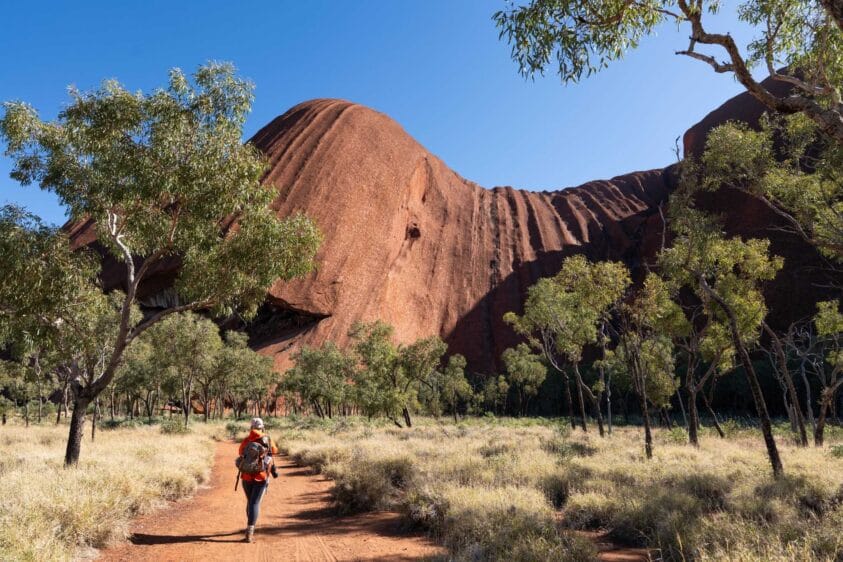

If you’re looking for the best Uluru walks, you really shouldn’t miss the Uluru Base Walk. It’s an absolute must-do when visiting the Red Centre and Uluru-Kata Tjuta National Park.
We were unsure whether we had enough time to do the 10.6km walking track, as we only had a couple of days to explore Uluru, also known as Ayers Rock. You see, most people wonder if there is enough to do in Uluru once they have seen the rock and nearby Kata Tjuta. But I have to say, there are so many things to do in Uluru that you’ll need to plan your time well.
At first, we wondered if it was worth spending three or four hours walking around the base of Uluru. Looking back, I can honestly say it is 100% worth doing.
We also considered doing the much shorter 2km Mala Walk instead. But I am so glad we spent our first morning seeing all sides of this incredible natural wonder.
In this guide, I’ll share everything you need to know about the Uluru Base Walk. I’ll also cover other ways to experience the same route, plus a few Uluru walks and tours worth adding to your itinerary.
Why consider the Uluru Base Walk?
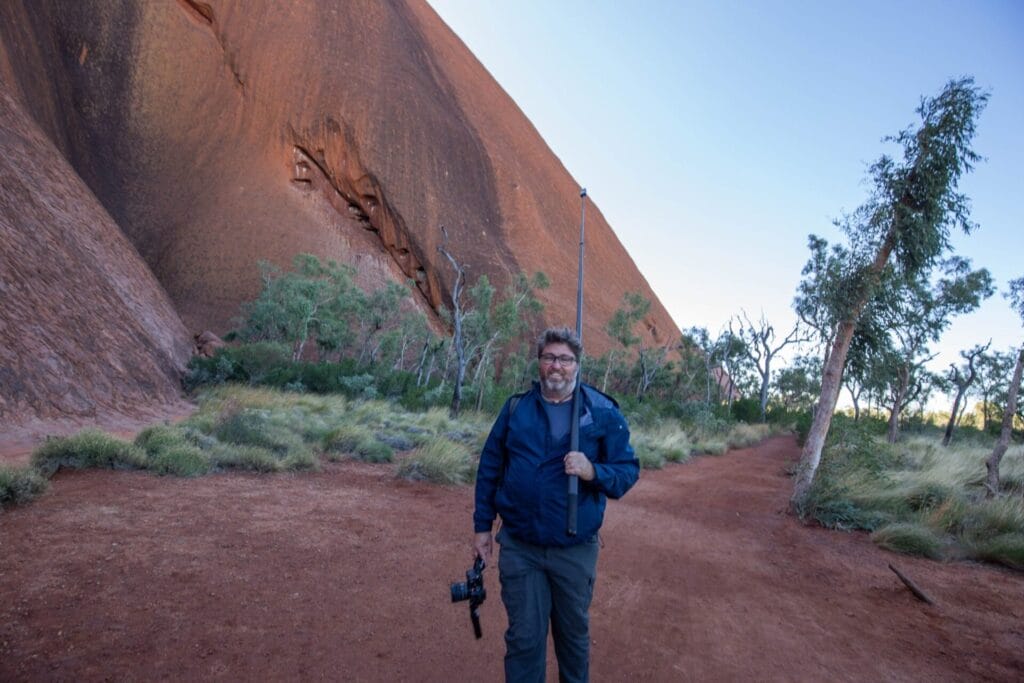
If you only do one walk in Uluru, make it the Uluru Base Walk. Once you complete it, you’ll truly appreciate the scale and importance of this spiritual rock.
The energy coming off Uluru is like nothing else we’ve seen in Australia. We had to stop so often just to take it all in.
After finishing the walk, we felt like we could appreciate Uluru so much more.
I know it’s hard to explain, but you see so much more on foot than you would from a car park or viewing platform.
What time of year to do this walk
It’s best to visit Uluru outside the summer months. Temperatures in the Australian outback can easily reach over 40°C, and walking tracks often close in extreme heat.
The best time to hike the Uluru Base Walk is during the cooler months, from May to September. Average daily highs sit around 18°C, which makes the walk much more manageable.
We visited in June, and it was actually really cold when we started. We wore layers and began the walk around 9:30am.
By the time we finished around 1pm, we had stripped down to T-shirts. Even though it was only 16°C, the sun felt strong because there is barely any shade.
Make sure you wear a hat, even if it feels cold at the start. If you visit in the warmer months, start very early and carry plenty of water.
How to find the starting point of the Uluru Base Walk
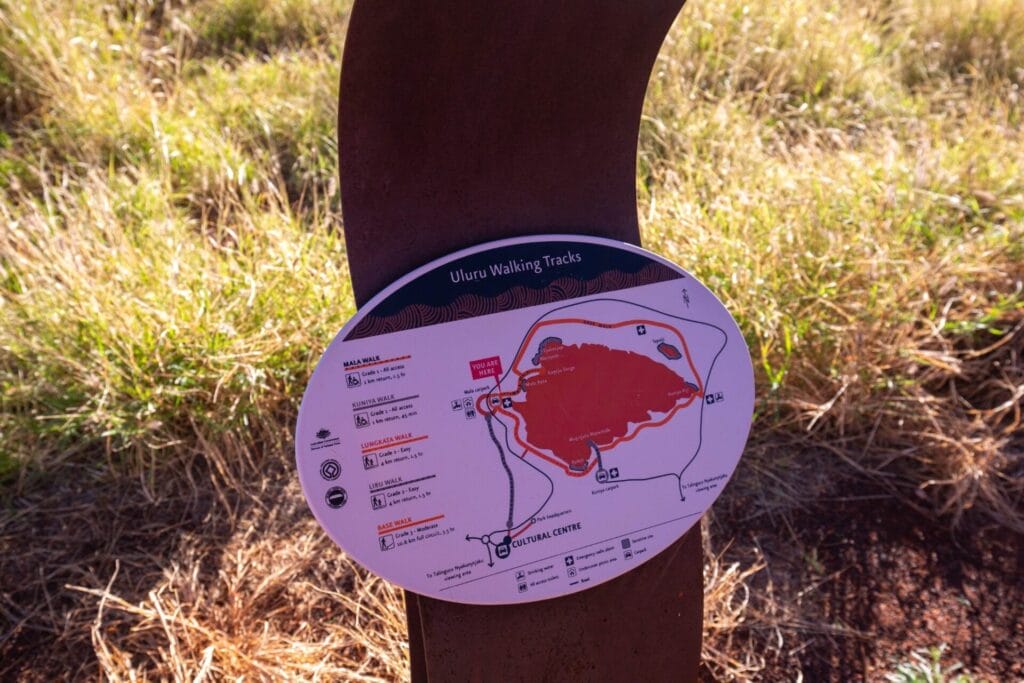
You’ll need to park at the Mala Car Park and start the walk clockwise. Look for the path on the left-hand side, near where the Uluru climb used to be.
You’ll probably see a few tours heading around the base too, so it’s easy to work out where to go.
If you’re interested in doing the Mala Walk, there is also a free guided walk led by an Aboriginal Ranger. The Ranger shares stories and history of the rock during the 10am tour.
You might not be expecting this
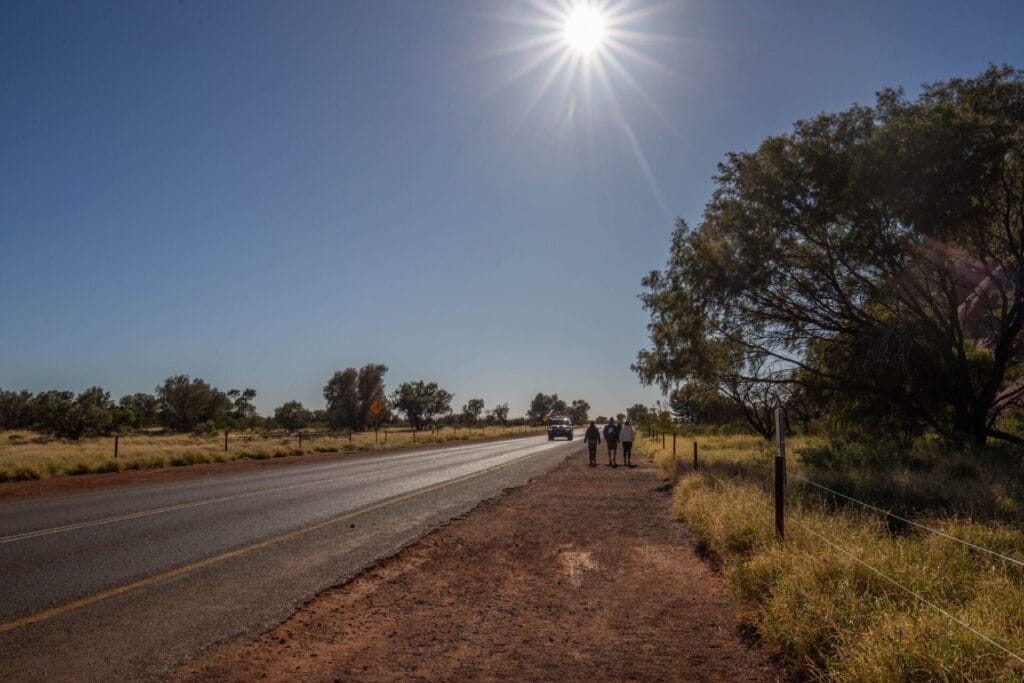
One thing to know is that you won’t walk right next to the rock for the entire distance. In fact, you only really start walking close to it around 7km into the track.
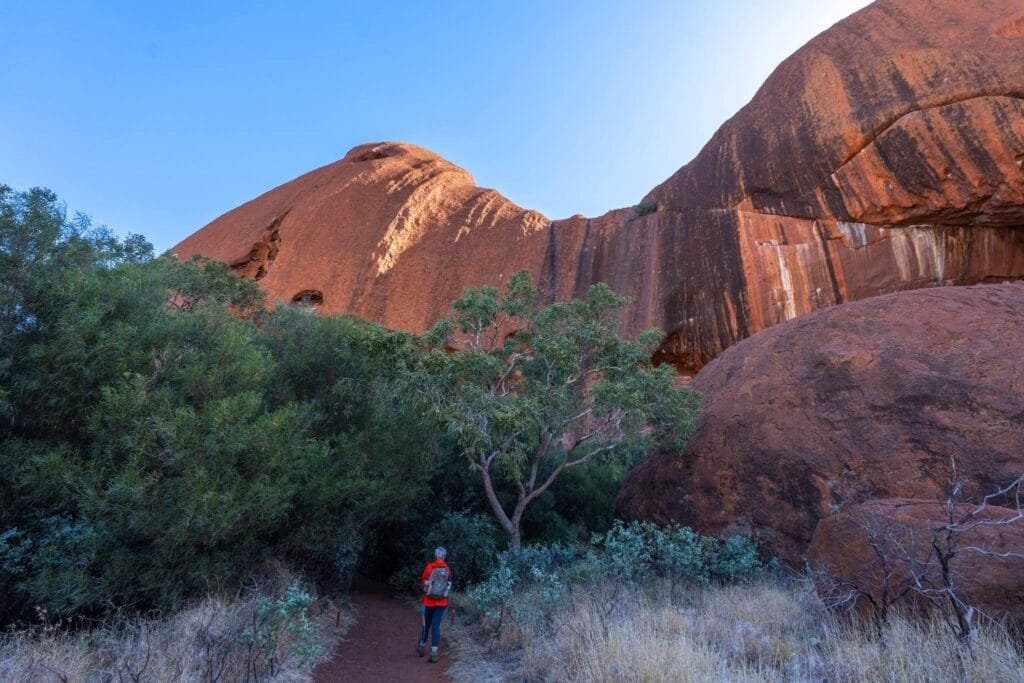
For most of the walk, the path sits quite far away from Uluru. That might not sound as exciting, but it is absolutely worth it once you reach the closer section.
At that point, you start to see the different shapes, colours and sheer size of the rock up close. This was easily one of my favourite parts of the walk.
How long the Uluru Base Walk takes and how much water to bring
The Uluru Base Walk took us 3 hours and 30 minutes from start to finish. We only had short breaks along the way, so allow longer if you want to stop more often.
It would have taken us longer, but we rushed a little to get away from a group who decided to bang a drum on the way around. Sound travels far in the desert, so it was hard to escape.
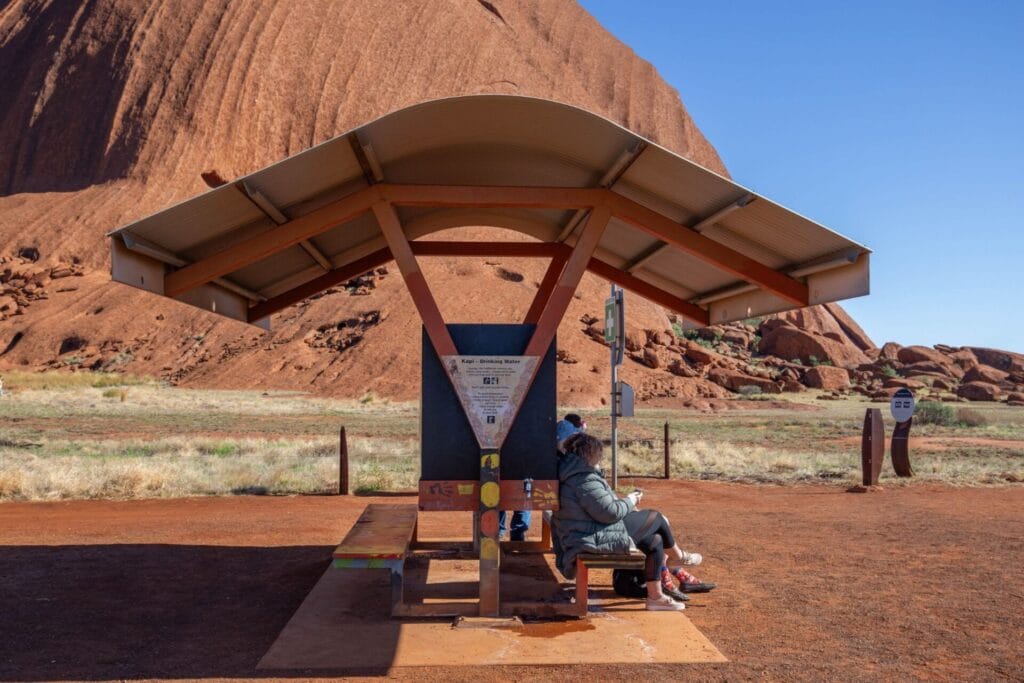
I would have loved to stop more, but there isn’t much seating along the route.
There is also only one refillable water station at the halfway point, next to the toilets.
We took a lot of water with us and easily drank 3 litres each. That surprised us, especially as the highest temperature during the walk was only 16°C.
Things you absolutely cannot do on this walk
Remember, this is a hugely spiritual area, so please respect it while you’re there.
Do not climb Ayers Rock
Most people know the climb has now closed, but this also applies to other parts of the rock. Even if you think it would make a quick photo, don’t do it.
Do not take photos in restricted areas
You’ll see signs along the walk asking visitors not to photograph certain parts of the rock. Please respect those signs, even if you see other people ignoring them.
Certain areas around the base are sacred Aṉangu men’s or women’s sites. The signs explain where photography is not allowed, so keep an eye out as you walk.
Do not swim at Mutitjulu Waterhole
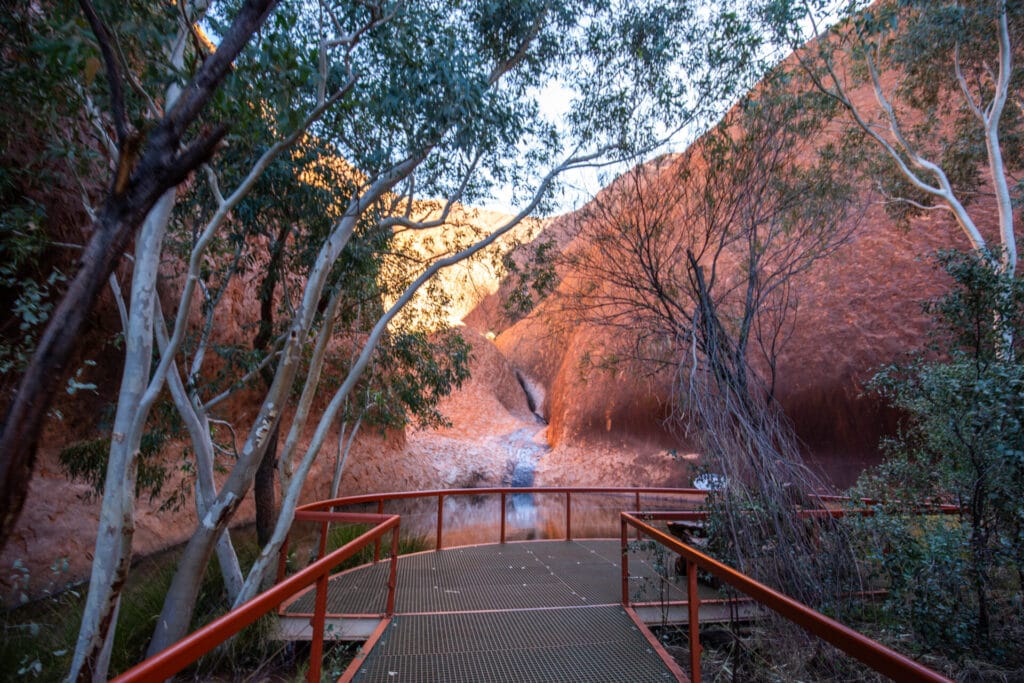
You’ll reach the beautiful Mutitjulu Waterhole around 8km into the walk (as pictured). A fence protects the area, and visitors cannot swim there.
If you visit after rain, I imagine it would look amazing with water flowing down into the waterhole. Even without that, it is such a beautiful place, with the curved rock towering over you.
If you don’t want to hike the whole base walk, you can still visit the waterhole. Park nearby and follow the 1km Kuniya Walk instead.
What does the Uluru walk look like?
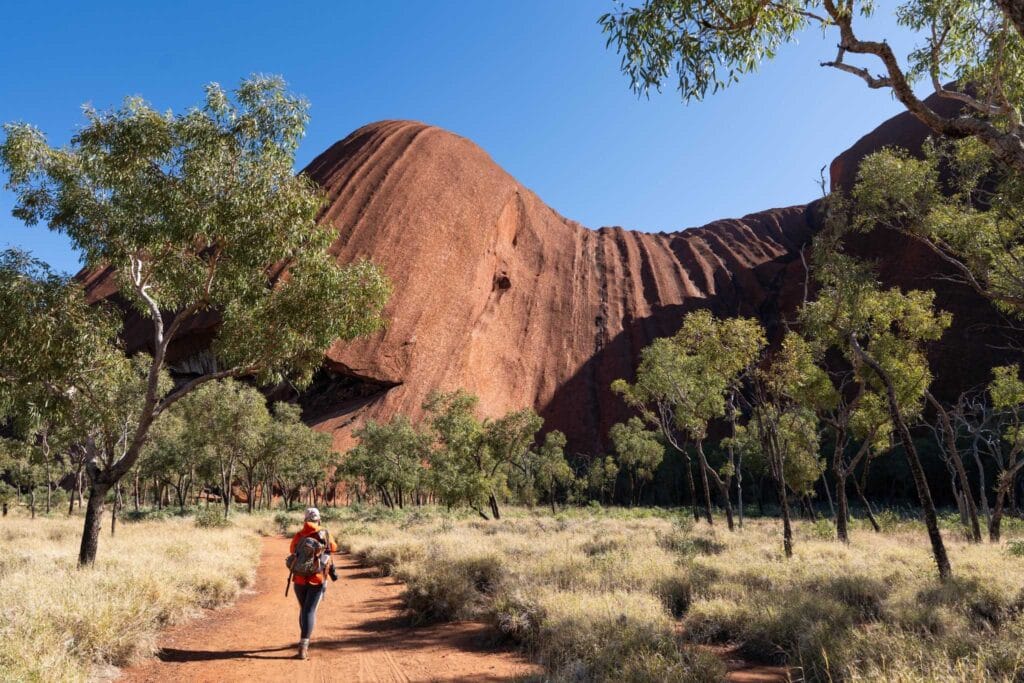
As I mentioned above, the walk starts at Mala Car Park. You begin right near the rock, before the path slowly takes you further away from it.
The track stays flat the entire way, so it isn’t hard in terms of elevation. The challenge is really the distance, the heat and the lack of shade.
Make sure you wear sturdy walking shoes, as you’ll walk through plenty of red desert dirt.
Around the 7km mark, the path brings you right beside Uluru again. From here, the walk becomes even more impressive.
As you move closer to the rock, you’ll find a little more shade and a few benches. This is a great place to stop, look up and take in the sheer size of Ayers Rock.
At the 8km mark, you can walk inland for a few hundred metres to see Mutitjulu Waterhole. You’ll also find Aboriginal rock art in the nearby caves, which is really amazing to see.
Bring snacks with you

We made sandwiches to eat along the way, and I’m glad we did. If you need supplies, you can pick some up from the IGA in Yulara before you go.
Just note that there are no bins on the walk. Please take all rubbish with you and leave the area exactly as you found it.
When we finished the walk, we were so glad we had done it. It really is incredible.
Other ways to do the Uluru Base Walk
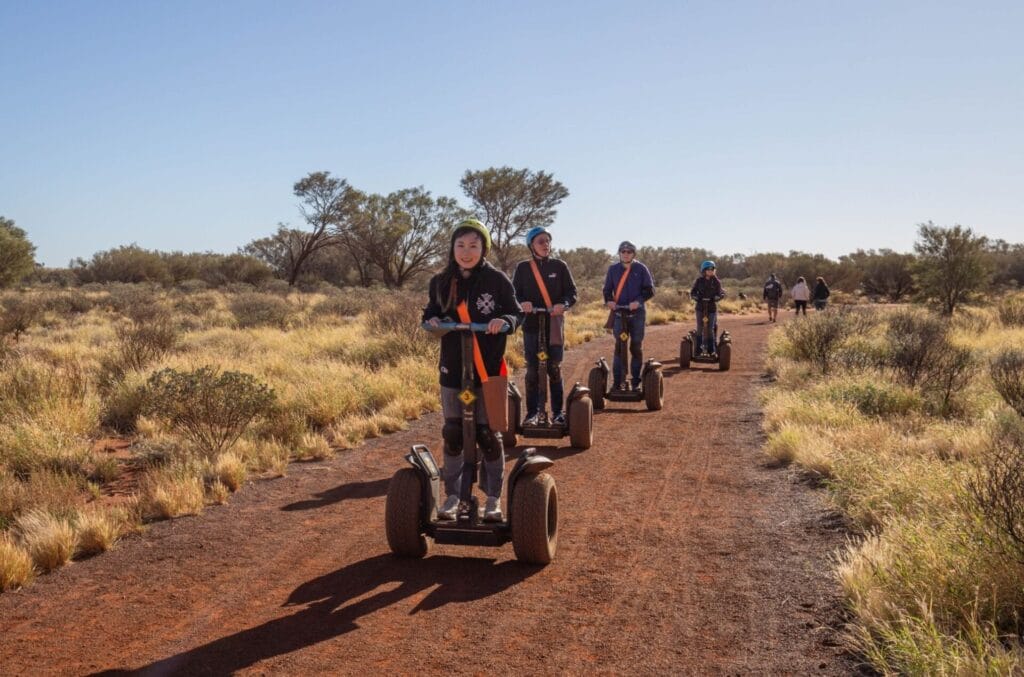
If you don’t fancy walking the full 10.6km track around Uluru, there are a few other ways to experience it.
Hire a bike
We saw loads of people on bikes, and I think this is a great way to see Uluru. Looking back, this is probably how we would have done it.
Because the path is flat, cycling gives you more flexibility than you might expect. You can still stop when you like and take everything in.
Do a Segway tour
You can also join one of the extremely popular Segway tours around the base of Uluru. This is a fun way to learn about the history of the area while seeing the rock up close.
Loads of Segway tours passed us, and I’ll admit we felt a little envious at times. The only downside is that you won’t have the same freedom to stop whenever you like, as you’ll be moving with a group.
Other Red Centre walks to consider
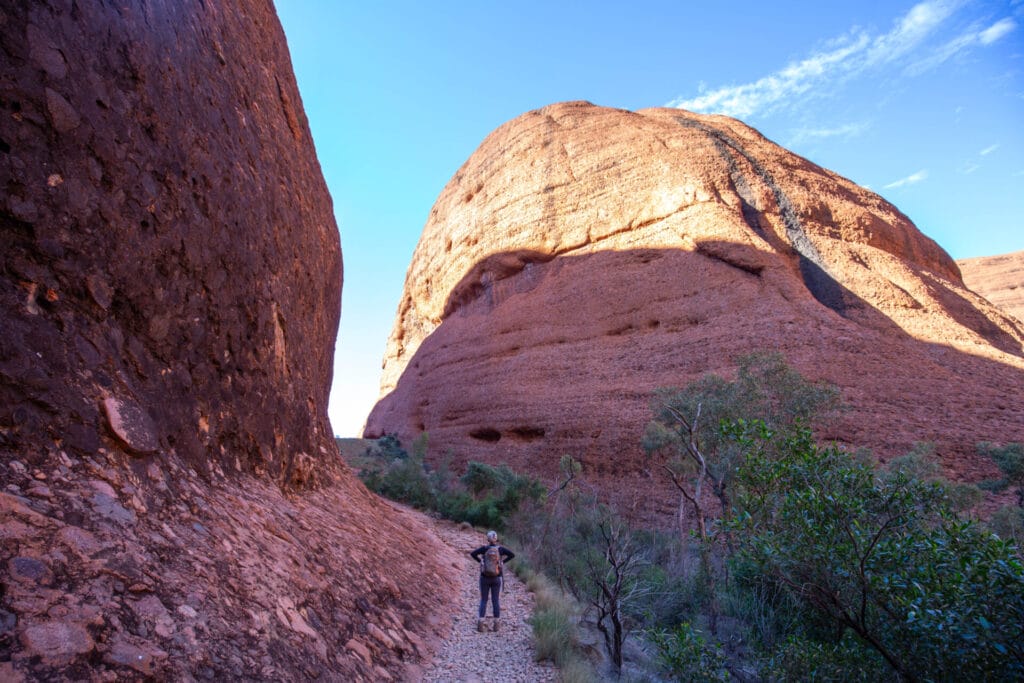
If there’s one other walk you should do in Uluru-Kata Tjuta National Park, make it the Valley of the Winds walk in Kata Tjuta. It’s absolutely incredible.
The 7.4km walk takes you right into the heart of Kata Tjuta, without the same crowds you’ll find around Uluru. It really is worth doing if you have enough time.
You can also do the Kuniya Walk, which I mentioned earlier. This short walk takes you to the incredible Mutitjulu Waterhole. It’s a great option if you don’t want to walk the full base track, but still want to see one of the main highlights.
Walpa Gorge Walk is another beautiful walk to consider in Kata Tjuta. It’s only 2.6km and runs between two of the tallest domes, which makes it a jaw-dropping experience.
If you’re driving from Alice Springs, do not miss the West MacDonnell Ranges. There are so many amazing gorges where you can hike and swim.
You’ll also want to stop by Kings Canyon if you have time. The famous Kings Canyon Rim Walk is a 6km hike that takes around 3–4 hours, and people rave about it. We would have totally visited Kings Canyon if we’d had more time.
Other Uluru tours to consider

There are so many Uluru activities to choose from, and you could easily spend a fortune here. During our three days at Uluru, we focused on the experiences that felt most worth doing.
Wintjiri Wiru Sunset Dinner
This was an absolutely incredible experience. You watch the sunset with 360-degree views while enjoying native ingredient cocktails and canapés.
After that, you sit down in an open-air amphitheatre with a gourmet hamper. Then you watch the largest permanent drone show in the world, which tells the Mala story in the night sky.
Field of Light Dinner
The Field of Light Dinner is another super special experience. You enjoy dinner under the stars before walking through the stunning Field of Light installation by British artist Bruce Munro.
15-minute Uluru helicopter scenic flight
The 15-minute Uluru helicopter flight was a real bucket-list moment for us. It gives you a completely different perspective of Uluru and the surrounding landscape.
To plan your activities properly, check out my guide 12 Best Uluru Tours.
Read our Uluru guides

If you’re planning a bigger Red Centre trip, make sure you read my other Uluru guides before you go.
They’ll help you work out what to book, where to stop and how to make the most of your time in this incredible part of Australia.