

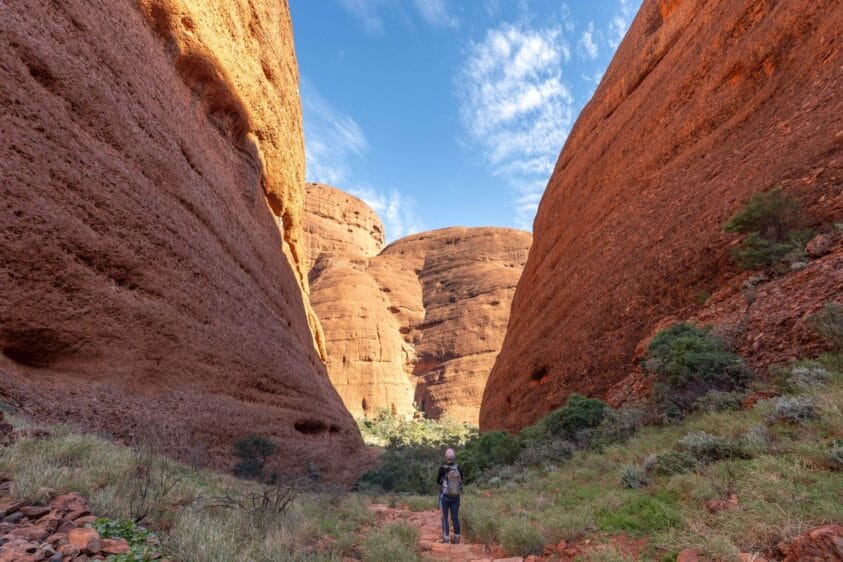

The Valley of the Winds walk is located within Uluṟu-Kata Tjuṯa National Park in Australia’s Northern Territory. It sits in the Red Centre region, not far from Uluru.
I hadn’t heard of it until I got to the Red Centre. But I’ll tell you what, I’m so glad I took the time to do this incredible walk. You should too.
If you’re looking for Uluru walks, or the best things to do in Uluru, you’ll soon see why I’m raving about the Valley of the Winds walk. It was one of the best things we did during our three days in Uluru.
It also felt so special to be there away from the crowds. We felt completely immersed in the nature and culture of this unique region.
While Uluru sits high on many bucket lists, nearby Kata Tjuṯa is just as jaw-dropping.
Why Kata Tjuta is so special
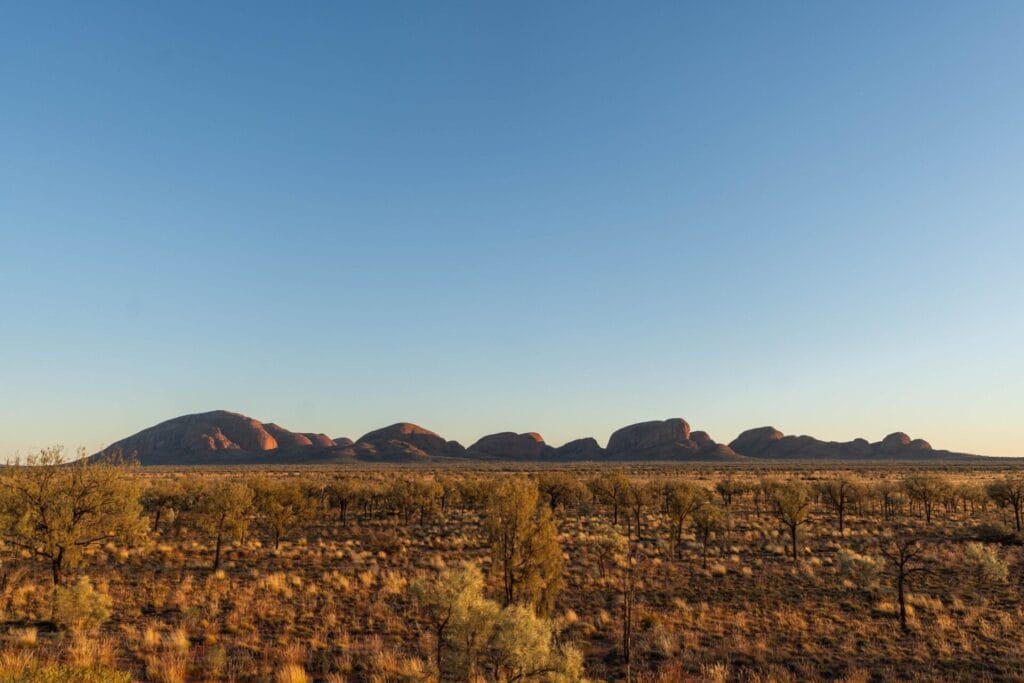
Kata Tjuṯa was previously known as The Olgas, before it changed back to its original name. Kata Tjuṯa means “many heads” in the local Pitjantjatjara language, which refers to the 36 massive rock domes.
Erosion has shaped this landscape over 500 million years. Today, you’ll see steep-sided inselbergs, gorges, canyons and valleys.
The spiritual presence here is absolutely amazing. If Kata Tjuṯa wasn’t overshadowed by Uluru, I think it would be far better known as one of the major places to visit in Australia.
Despite the harsh environment, the area supports 178 bird species and diverse desert flora and fauna. It’s a real haven if you’re interested in the natural world.
Kata Tjuṯa is considered even more sacred than Uluru in terms of Aboriginal Dreamtime stories and ceremonial celebrations.
Many of its secrets are reserved for Aboriginal men.
The Valley of the Winds is also a deeply sacred site for the traditional Aboriginal landowners, the Aṉangu people. Their stories and culture are woven into this landscape, reflecting the profound connection between people, Country and nature.
There’s something absolutely mesmerising about Kata Tjuṯa. You really need to see it for yourself, and there’s no better way than on the Valley of the Winds walk.
What is so special about the Valley of the Winds circuit?
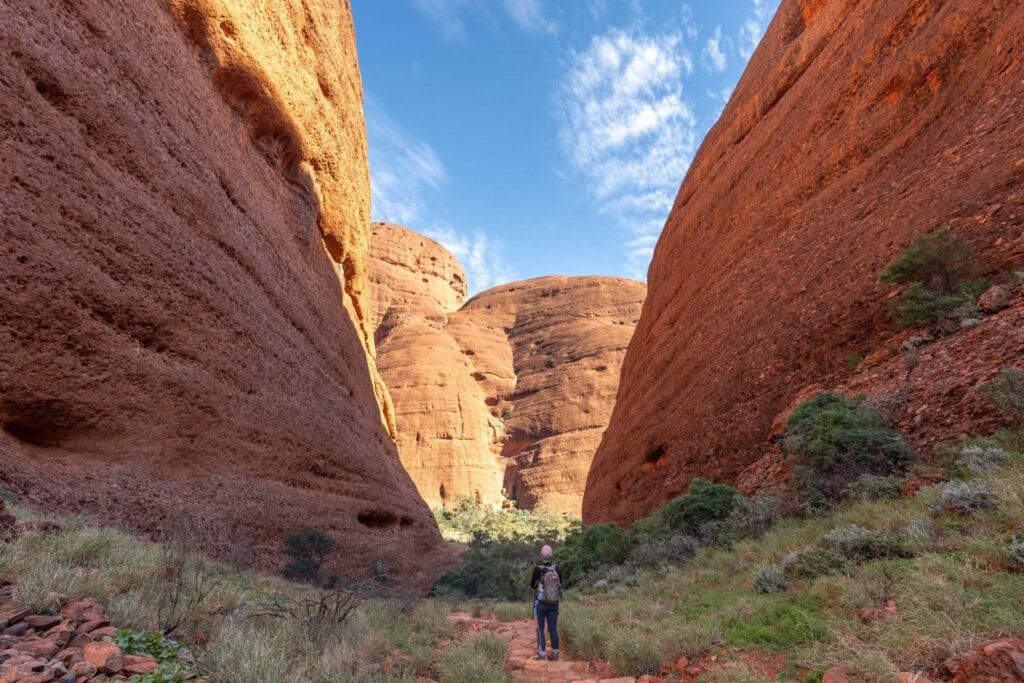
The Valley of the Winds walk gives you a unique chance to explore the natural beauty of Kata Tjuṯa. The 7.4km loop takes you right into the gorge, where the domes tower above you.
It is classified as a Grade 4 walk, which means it is steep, rocky and difficult in places. You’ll need a good level of fitness, but I didn’t find it too difficult overall.
Most visitors take around three hours to complete the full circuit. We took a bit longer, mainly because we stopped so often for photos and to take it all in.
The walk has two main lookout points with breathtaking views across the landscape. While it isn’t as flat as the Uluru Base Walk, the scenery makes the effort completely worth it.
Although as mentioned it is Grade 4 walk, it can still be suitable for kids if they are comfortable hiking that distance.
What time of year to do this walk
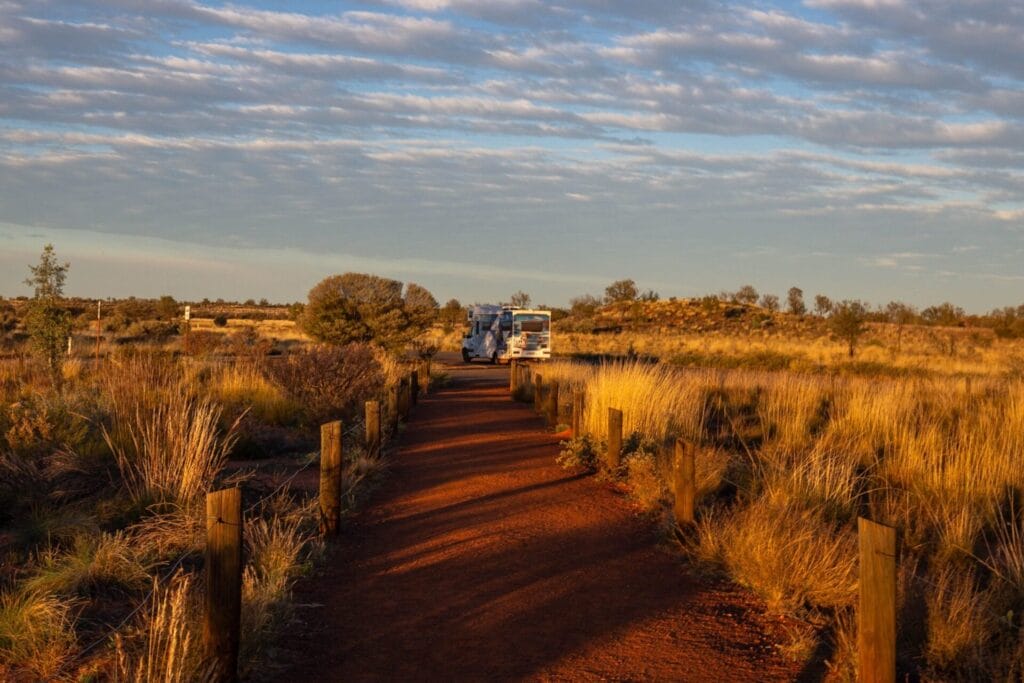
Kata Tjuṯa is about a 40-minute drive from Yulara, where we stayed at the Ayers Rock Campground. We drove there in our amazing Star RV motorhome during a two-month road trip from Perth to Adelaide via Darwin. You can read about our Star RV adventure here.
Even from Uluru, it’s around a 45-minute drive east to Kata Tjuṯa. Make sure you factor that into your plans before heading out.
You’ll also need to organise your park pass before arriving in Uluru-Kata Tjuṯa National Park.
Start early to avoid the heat
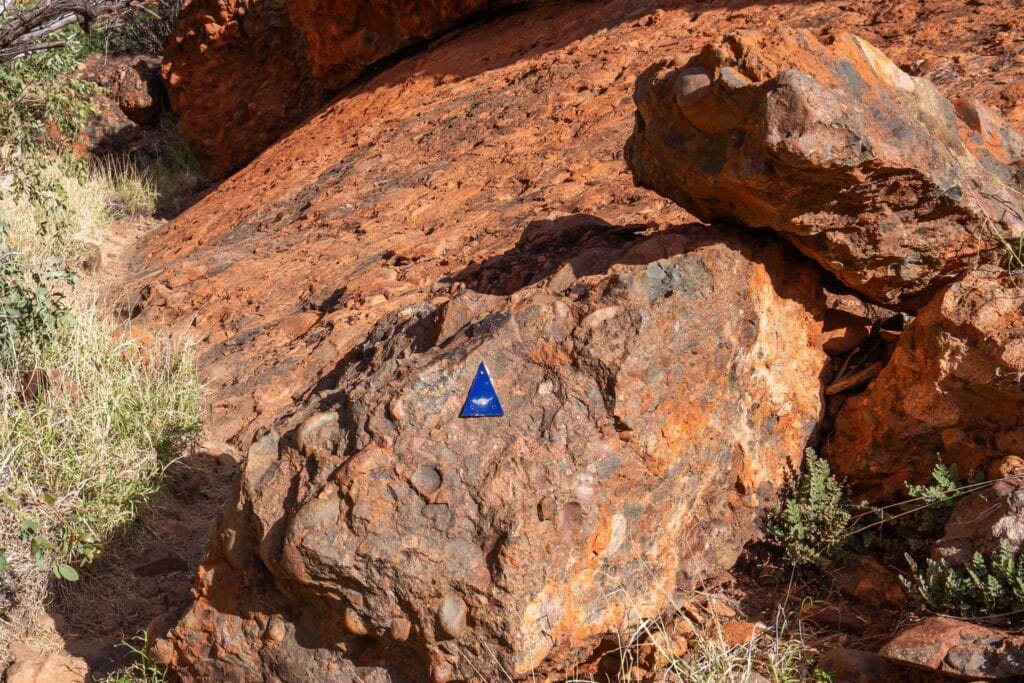
Visitors should start hikes at first light because the desert heat can be extreme. Park rangers may close walking tracks when temperatures get too high.
The Valley of the Winds walk closes at the first lookout, Karu Lookout, from 11am when the forecast or actual temperature reaches 36°C or above.
We visited in June, and it was unexpectedly cold at around 15°C during the day. Even then, the walk still felt quite warm once we got moving.
The Valley of the Winds walk has more shade than the Uluru Base Walk. But it still gets hot when you’re walking through the gorge.
I’d recommend starting early to avoid both the crowds and the heat. Early morning hikers may also spot native desert wildlife, including red kangaroos and wallabies.
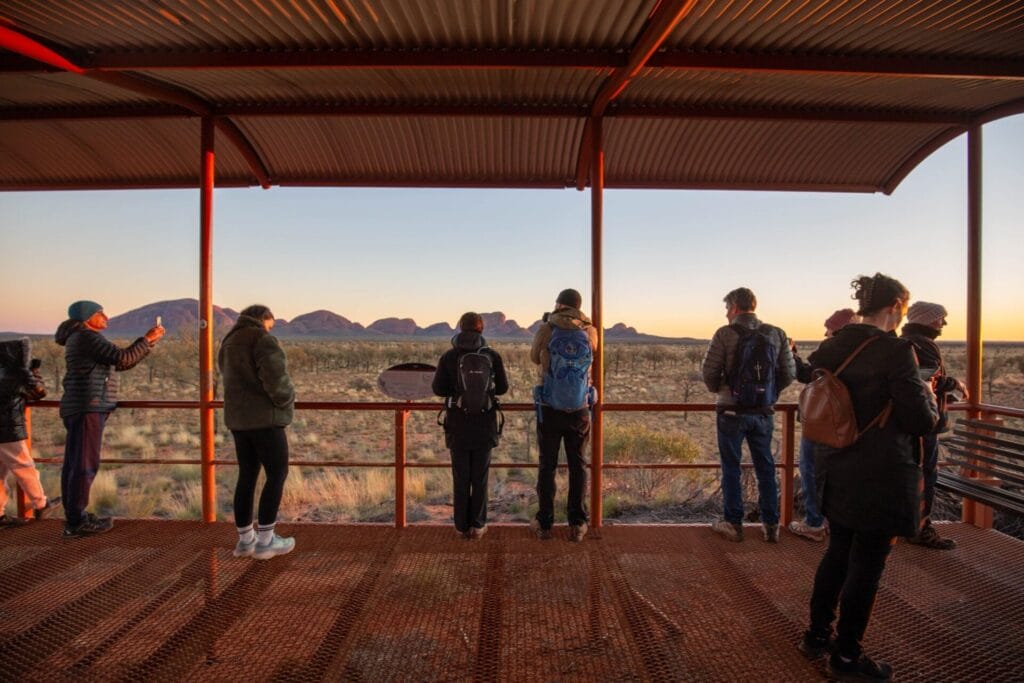
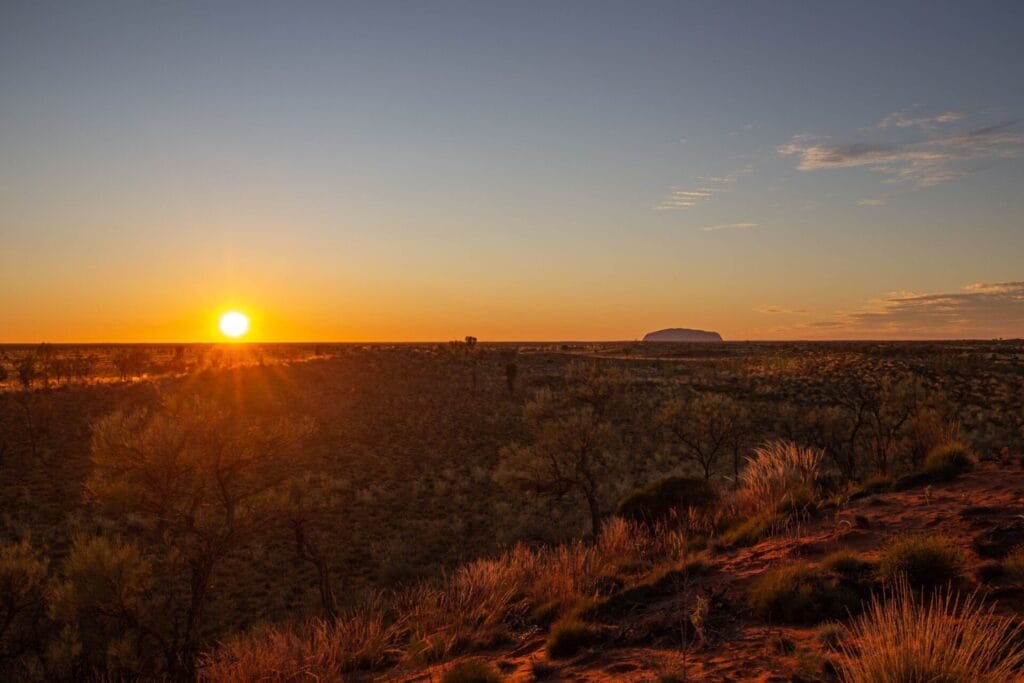
Before you start the walk, swing by the Kata Tjuṯa sunrise viewing platform. The sunrise here is incredible, and you’ll also see Uluru in the distance. Just be prepared, as there will be plenty of people at both the Uluru and Kata Tjuṯa sunrise viewing platforms.
There are two lookouts on this walk
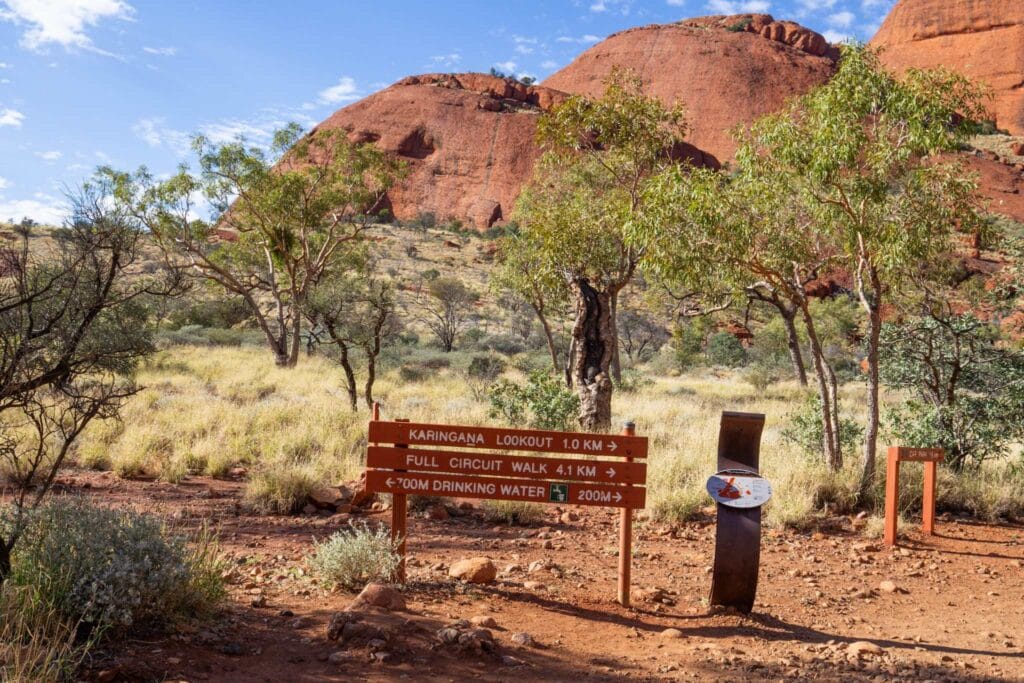
There are two spectacular lookout points along the Valley of the Winds path.
The first lookout is called Karu Lookout. It is 2.2km return from the car park, and many people walk to this point before turning back.
According to my Apple Watch, it took us about 20 minutes to reach the first lookout. It was roughly 1.7km from the start of the walk.
Karu Lookout gives you a beautiful perspective of the surrounding landscape before the circuit continues deeper into the canyon.
You’ll also see a sign here that tells you whether the path is open or closed due to temperature. If you’re thinking about hiking when it’s 36°C, it’s not going to happen as it’s too dangerous. Fatalities happen on hikes across Australia, so don’t attempt it in extreme conditions.
Karingana Lookout
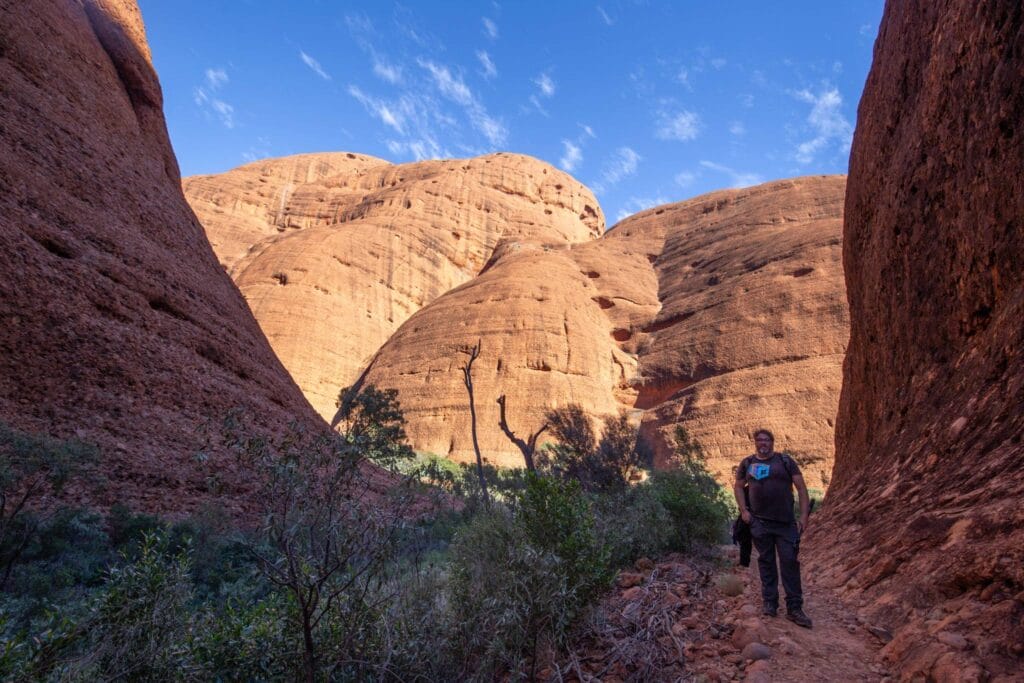
The second lookout is Karingana Lookout, which is 5.4km return from the car park. The path to Karingana has a few challenging sections, including steps and steeper inclines.
It took us around 1 hour and 30 minutes to reach it, although we spent ages taking photos and looking at everything along the way.
From Karingana, you get a breathtaking perspective of the valley and Kata Tjuṯa. The angles, light and sheer scale of the scenery make it truly spectacular.
We did see some people turn around at the second lookout and head back the way they came. But this isn’t the end of the path.
The track continues down into the valley, right in the centre of Kata Tjuṯa. It’s a circuit, not a return walk.
How long the Valley of the Winds walk takes
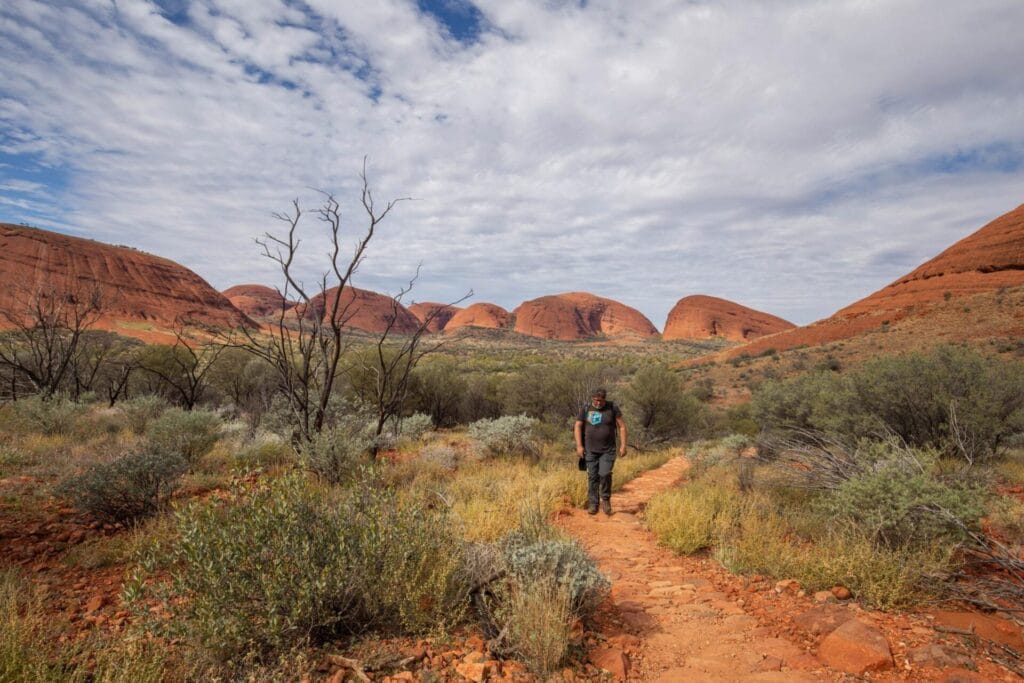
The Grade 4 walk definitely wasn’t too difficult for us. But it does get hot, especially after the second lookout when you walk down into the gorge and wide open space in the heart of Kata Tjuṯa.
The domes of Kata Tjuṯa are made of conglomerate rock. This is a mixture of gravel, pebbles, boulders, granite and basalt.
We wore hiking boots, and I’d recommend you do the same. You’ll want decent grip for the rocky sections.
My Apple Watch clocked the walk at 8.40km, and it took us 3 hours and 40 minutes to complete. Some hikers may finish in around two hours, while others will take closer to three or more.
It really depends on how often you stop. We tend to stop a lot for photos, videos and to simply take it all in.
The highest point of Kata Tjuṯa, Mount Olga, towers at 1,066 metres above sea level.
Our timings on the walk
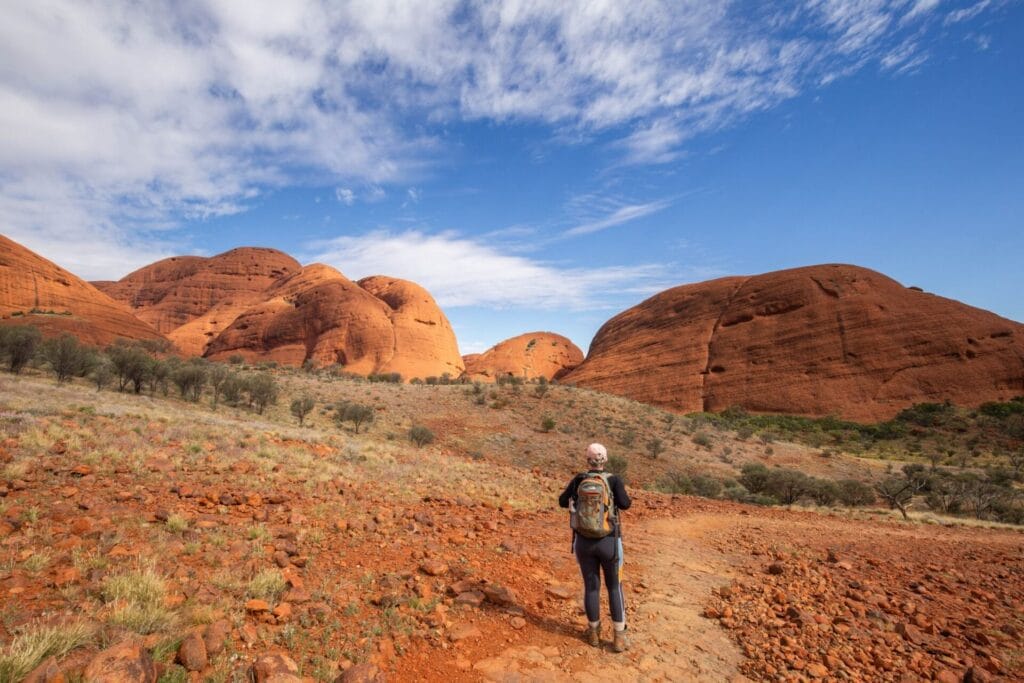
I wrote down our timings to give you an idea of what to expect.
From the car park to Karu Lookout and the start of the circuit, it took us around 20 minutes. There is a drinking water tap around 200m to the right or 700m to the left from here.
From Karu Lookout to Karingana Lookout, it took us around 1 hour and 30 minutes.
At around 6km, we reached the second drinking water fountain, although I forgot to clock the exact time here.
We returned to the car after 3 hours and 40 minutes, with my watch showing 8.40km.
You’ll probably do it faster if you don’t stop as often as we did.
What to bring with you
We brought at least three litres of water each, and you should too. Bring even more if it’s hot.
The Valley of the Winds walk is steep, rocky and difficult in places, so preparation really matters. Wear a hat, sunscreen and proper hiking boots whenever you hike in Australia.
You’ll need the grip from hiking boots when walking over some of the boulders at the beginning of the circuit. There are also a few loose rocks to navigate.
While on the walk, remember to protect both the environment and the cultural sensitivities of the area. Respect sacred sites and Indigenous traditions so future generations can experience this place too.
What the walk looks like
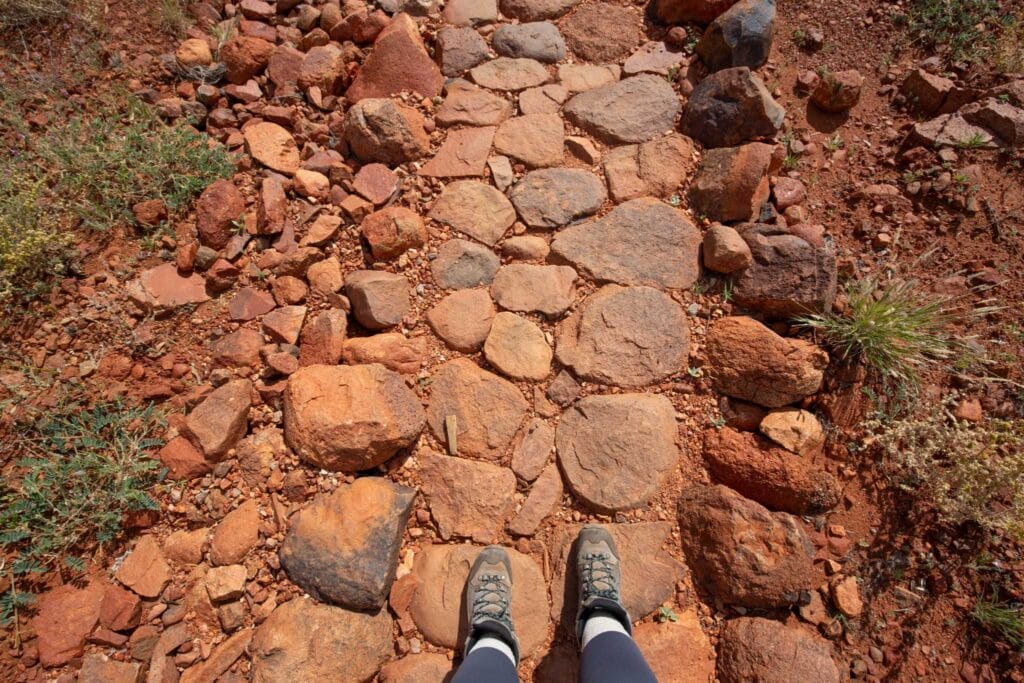
If you’re wondering what the Valley of the Winds walk looks like, expect a real mix of landscapes. You’ll pass through scrubland, creek beds, unique flora and a cool canyon.
The stunning surrounds and huge open sky create such a majestic atmosphere. It really does feel memorable from the moment you start.
At the beginning of the walk, we saw people at the first lookout. After that, the crowds fizzled out, and we barely saw anyone else on the track.
We couldn’t believe it, especially after seeing how busy the Uluru Base Walk was. There, people on Segways and bikes passed us all the time.
Here, we could only hear the silence of the canyon. It was incredible.
Walking into the canyon
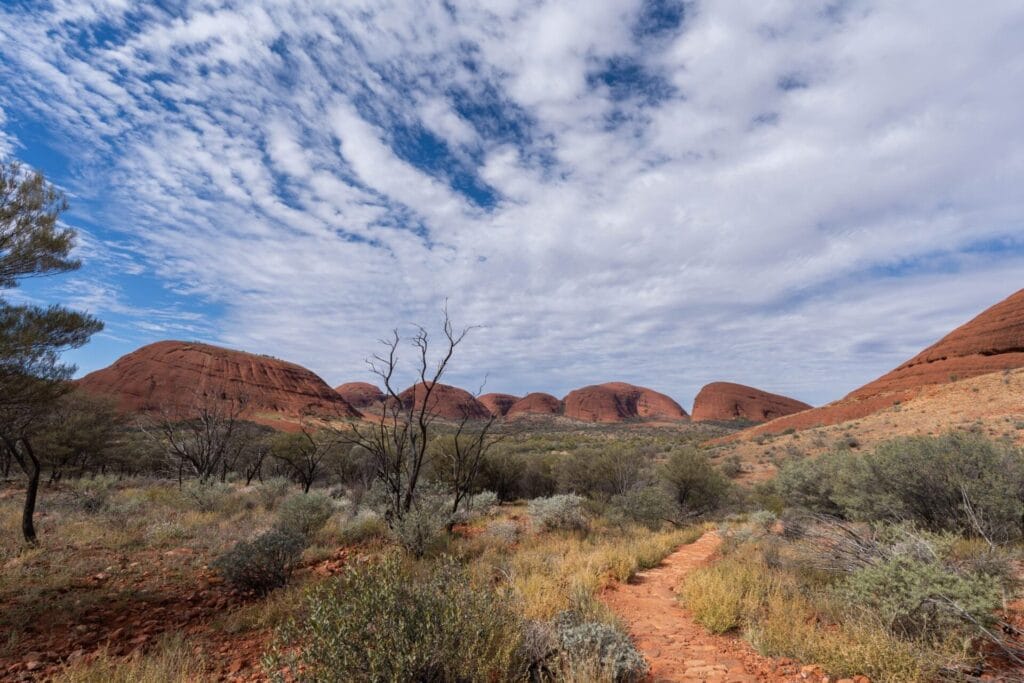
The walk starts from the car park and feels relatively easy and flat at first. Once you reach the circuit, the track slowly heads uphill.
It isn’t that steep, but you do feel like you’re walking deeper into the landscape. You continue along the canyon floor until you reach the second lookout.
This part of the walk was our favourite. It truly felt exceptional and so special.
The journey brings the landscape to life, with so many opportunities for memorable photos. Just keep in mind that photography and videography for commercial purposes are strictly prohibited in certain culturally sensitive sections.
We saw one family rush through it without looking up once. It really surprised me.
I don’t understand why people race through hikes and barely look at the landscape around them.
Cultural restrictions on photography at Kata Juta
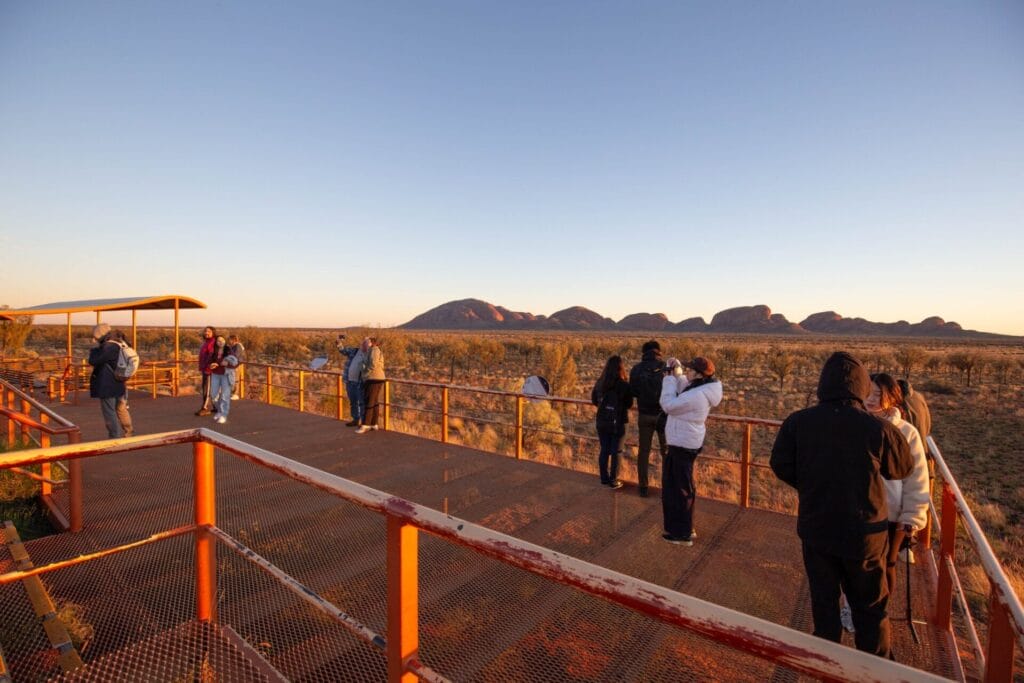
When we reached Karingana Lookout, we saw a sign asking visitors not to take photos. We also saw one at the first lookout.
This felt different to the Uluru Base Walk, where there were signs around many parts of the rock explaining where photography was forbidden.
The Valley of the Winds is a culturally sensitive men’s area. Photography of Kata Tjuṯa is restricted in certain areas to protect the spiritual knowledge linked to the rock formations.
The lookout itself is exceptional. You feel so small against the towering domes and rock formations around you.
We had a short rest here before descending down the hill and onto the canyon floor.
It’s amazing to see how the canyon opens into a flat floor, with the domes almost protecting it as they surround the space. From there, we walked through the canyon and back towards the first lookout.
Would we do the Valley of the Winds walk again?
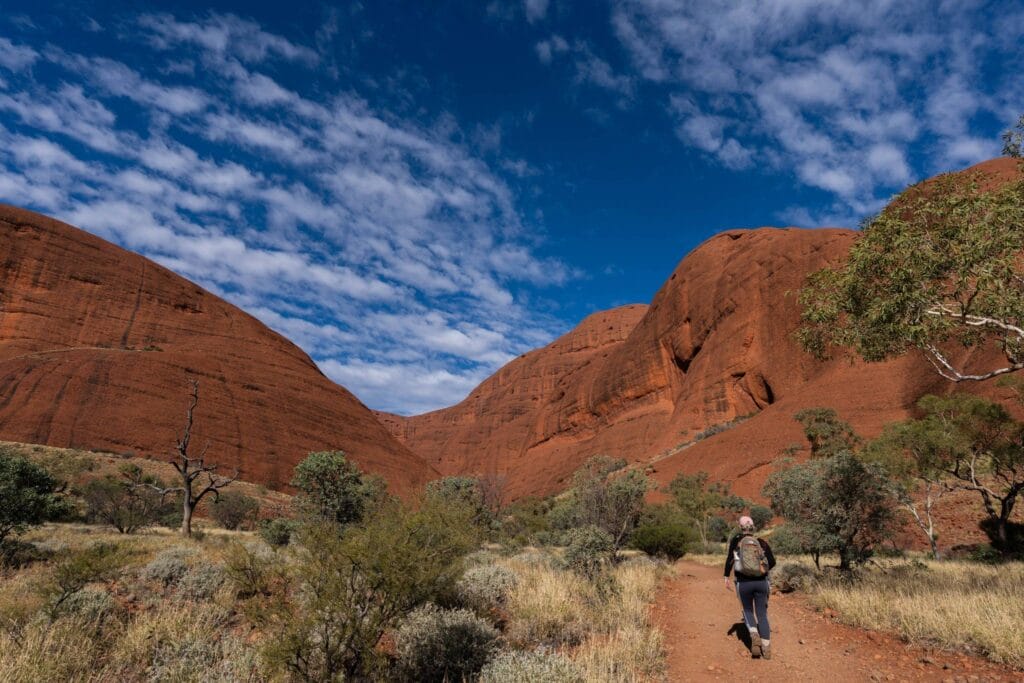
We absolutely loved this walk, and I’m so glad we did it in the end.
The Valley of the Winds walk made our trip even more memorable. It also deepened our connection with the landscape and the natural world around us.
While there are so many things to do in Uluru, I would absolutely say yes if you’re unsure about spending 3–4 hours on this hike. It was one of the highlights of the trip.
If you’re wondering whether to turn around at the second lookout and walk back the way you came, you can certainly do that. But we preferred completing the full circuit.
It meant we saw different sides of the amazing domes, which made the walk feel even more rewarding.
We came away saying how much we enjoyed it, and I honestly couldn’t recommend it more.
Other Uluru walks to consider
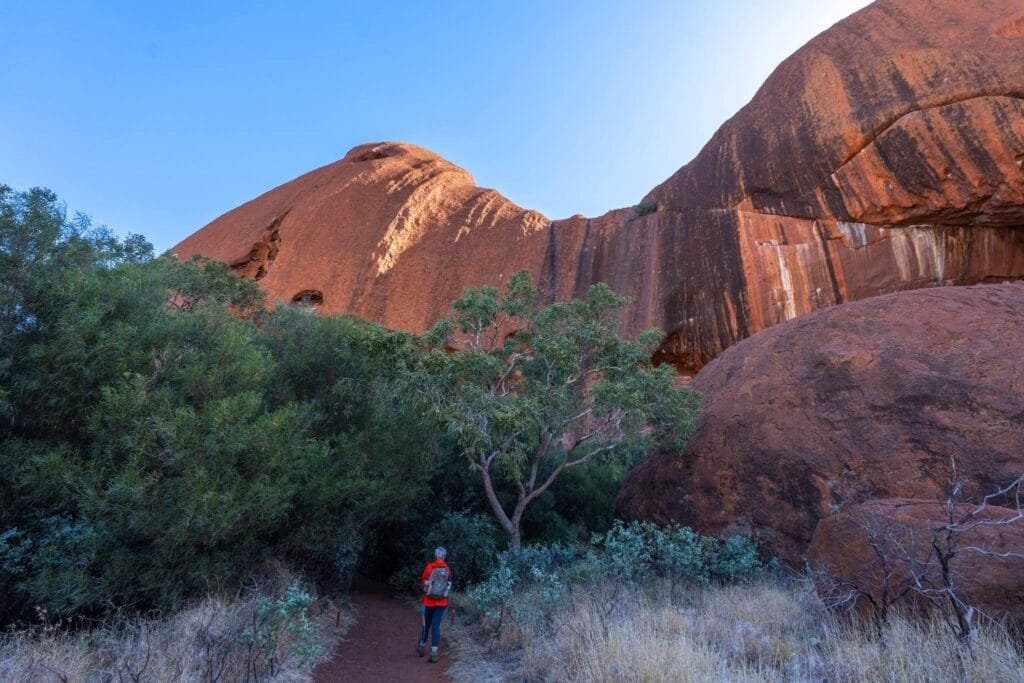
There are quite a few walks to consider at Uluru, with the main one being the Uluru Base Walk.
If you’re wondering which walk to choose when you only have time for one, that’s a tough decision. The Uluru Base Walk is slightly longer, although it took us around the same amount of time.
Honestly, both walks are worth doing while you’re in the Red Centre.
You could save time on the Uluru Base Walk by hiring bikes or joining a Segway tour around the base if you prefer.
Within Kata Tjuṯa, the two main walking routes are the Valley of the Winds and Walpa Gorge. The Walpa Gorge Walk is only 2.6km and runs between two of the tallest domes.
It looks like a jaw-dropping but much quicker walk. We didn’t have time for this one, but it is really popular too.
More Uluru travel guides

If you’re planning your Uluru trip, I’ve written a few more guides to help you work out what to do while you’re there.
For another incredible walk, read my Uluru Base Walk guide, which covers what to expect from the full walk around the base of Uluru, including where to start, how long it takes and what you need to bring.
If you’re looking for a special evening experience, my Wintjiri Wiru Uluru drone show review covers what it’s like to watch the Mala story come to life through drones, light and sound.
I’ve also written a full review of the Uluru Field of Light Dinner, which is another unforgettable experience to consider if you want dinner under the stars before walking through Bruce Munro’s famous light installation.
For something completely different, read my review of the 15-minute Uluru helicopter flight, which gives you a totally different perspective of Uluru and the surrounding Red Centre landscape.
If you’re still deciding what to book, my guide to the best Uluru tours will help you compare the main experiences and work out which ones are worth adding to your itinerary.
For a bigger outback adventure, check out my Darwin to Uluru road trip guide, which covers the route, stops and what to expect along the way.
And if you’re still at the early planning stage, start with my guide to the best things to do in Uluru so you can make the most of your time in this incredible part of Australia.