

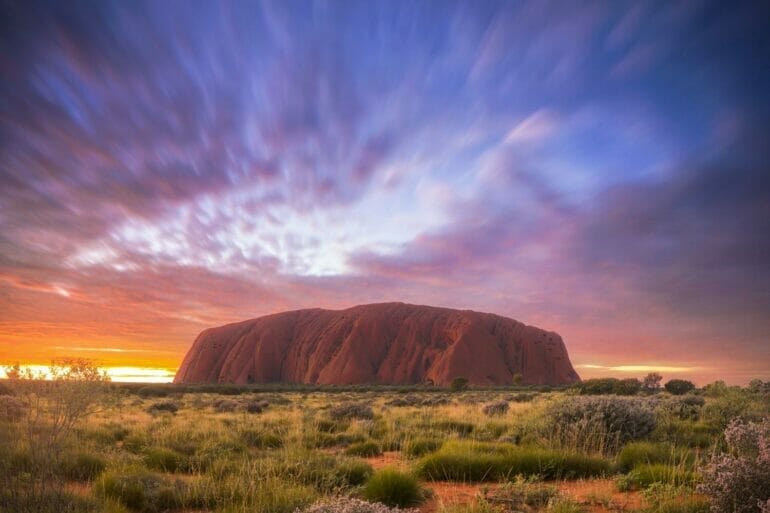

Looking for the best things to do in Uluru? Having just come back from an incredible trip, I’m sharing everything I learned about visiting one of the most sacred sites in Australia (previously known as Ayers Rock).
The iconic rock has one of the biggest cultural significance to Aboriginal people in Central Australia and is a natural wonder as one of the World’s largest rock formations.
Uluru is split into 3 main areas, the town of Yulara which is a 10-minute drive from Ayers Rock airport and then close by are the hotels of Ayers Rock Resort. Then there is the National Park which lies Uluru and Kata Tjuta rock formations.
It will cost you $38 each for a 3-day Uluru Kata Tjuta National Park Pass and most tour companies will also require you to have purchased your pass ahead of an activity.
So what is there to do apart from looking at a giant rock in the Red Centre? Quite a lot, actually. I’m going to share my favourite things to do in Uluru from our recent visit, including sunrise and sunset spots, walks, cultural experiences, bucket list tours and the paid experiences I think are worth knowing about.
If you’re still working out your itinerary, start with this guide, then have a read of my best Uluru tours guide to compare the top experiences before you book. And if you’re planning to self-drive through the Red Centre, don’t miss my Alice Springs to Uluru 2WD road trip guide before you finalise your route.
What is so special about Uluru?
The local Anangu people (pronounced Arn-ung-oo) are one of the World’s oldest living cultures and are the traditional owners of Uluru and Kata Tjuta National Park. In 1985 the deeds were officially handed back to the Aboriginal custodians and since then Ayers rock resort has changed from purely drawing in tourists to celebrating the cultural heritage, creation stories, Aboriginal art and Anangu culture.
Not only do you get incredible views in Uluru kata Tjuta national park, but you get to celebrate indigenous people and preserve their history.
Seeing the magnificent rock, particularly at sunrise, sunset or under the stars, blows you away and makes you wonder how awe-inspired the traditional owners would have been when they first laid their eyes on it. It is no wonder this natural beauty was of such cultural significance and features in so many Aboriginal creation stories. It really is an unforgettable experience.
The best time to visit Uluru
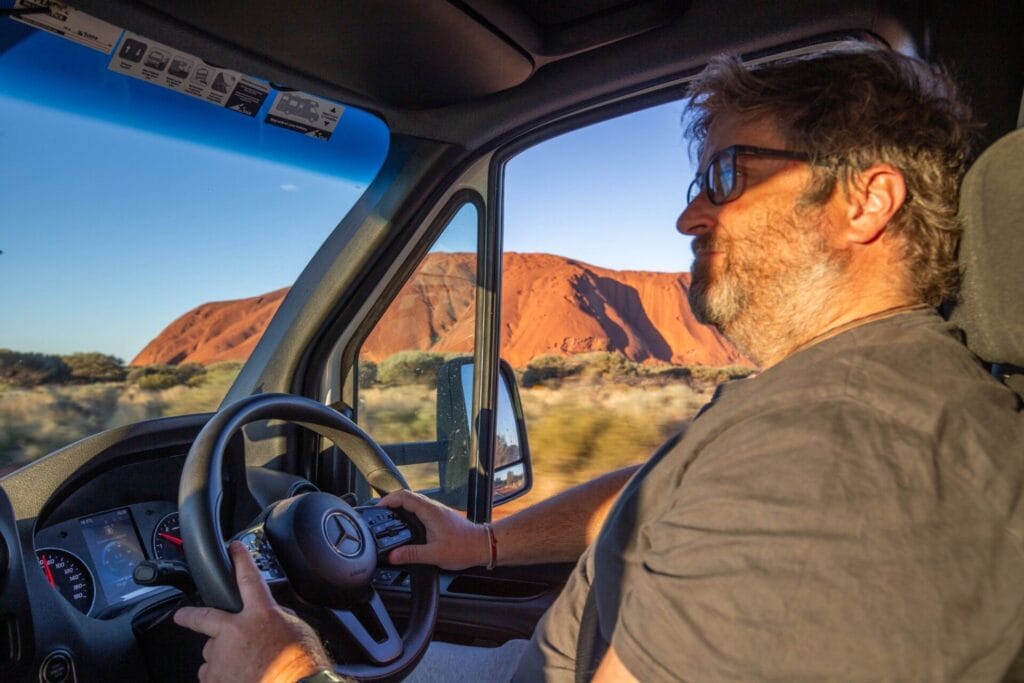
The best time for visiting Uluru and the Northern Territory is in the dry season and winter months, from May to October. As the name suggests, it is the driest time of year to visit and the temperatures range between 5 and 20 degrees, which is a pleasant temperature for a desert trip.
The summer months, November to April, are a lot hotter and range between 30 and 45 degrees. If you visit in summer, it is often too hot to go to the National Park during the day and so tour buses only run in the morning or evening.
How long should you spend in Uluru?
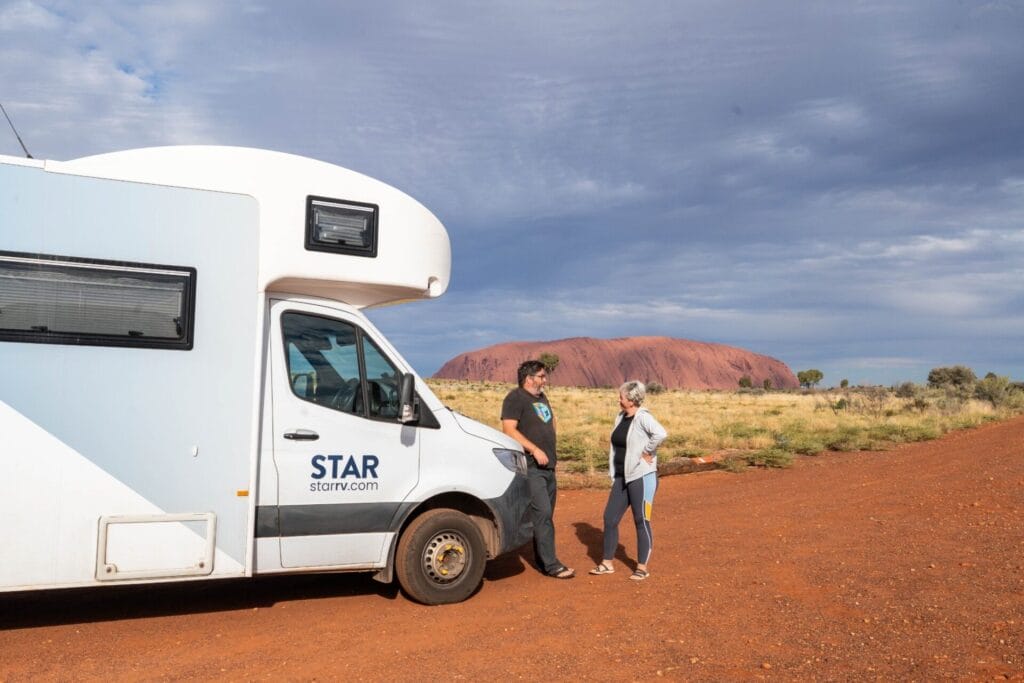
The minimum amount of time I’d recommend in Uluru is three nights. This gives you enough time to see sunrise and sunset, visit Kata Tjuta, do at least one walk, and book one or two special experiences.
If you can, I’d stay for four nights. This gives you more breathing room, especially if you want to do the Uluru Base Walk, the Valley of the Winds Walk at Kata Tjuta, the Uluru Field of Light dinner, Wintjiri Wiru, or a 15-minute Uluru helicopter flight.
If you can stretch your trip to five or six days, I’d continue on to Alice Springs as well. There is so much more to see in the Red Centre, including Kings Canyon, the West MacDonnell Ranges and The Kangaroo Sanctuary Alice Springs.
One thing to note is that if you are thinking about doing a road trip from Darwin to Uluru, it can be difficult to find a campervan company that lets you drop the vehicle at Uluru. Many will make you leave the car in Alice Springs, which is around a 4.5 to 5.5 hour drive from Uluru.
If you’re planning this route, read my Darwin to Uluru road trip guide and my Alice Springs to Uluru 2WD guide before you book. We nearly made a big mistake with our route, so it’s worth understanding which roads suit a 2WD, campervan or motorhome.
Before we get started with our best things to do in Uluru, if you’re not up for doing any tours at all, at least get a self-guided audio tour so you can learn as much as possible about this hugely important place.
1. Join a Star Talk with Uluru Astro Tours
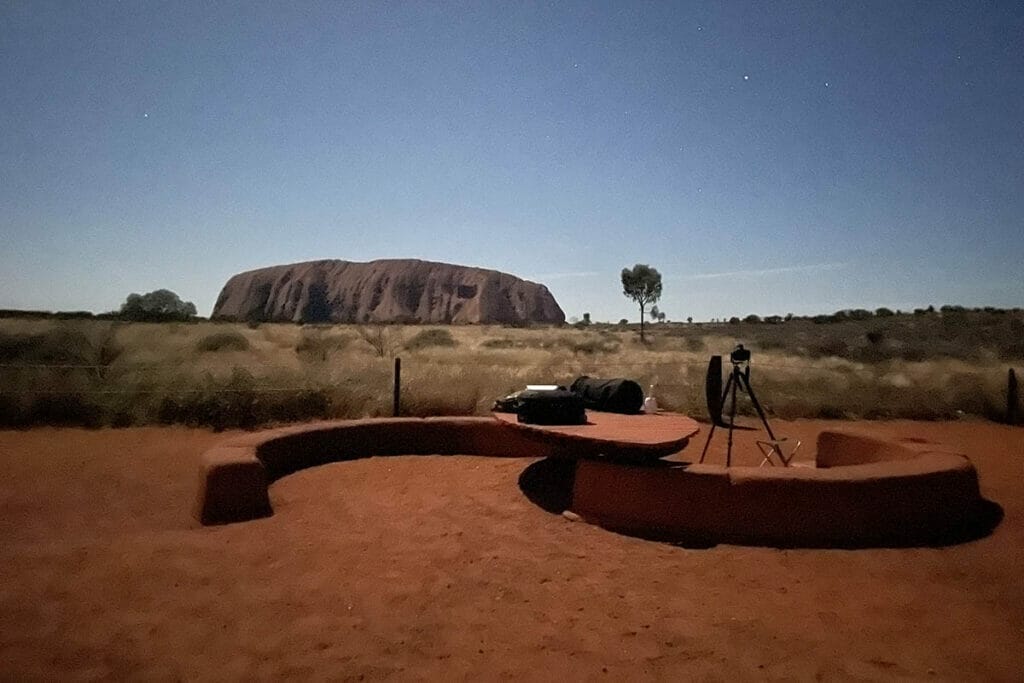
Uluru Astro Tours have special access to the National park after hours, giving them an exclusive view of Uluru under the Southern night sky. The tour bus picks you up from your Ayers rock hotel and starts with a laser guides tour of the stars and constellations in the sky. You can then view the moon and pluto through a powerful telescope and get a professional photo in front of Uluru and the Southern night sky.
The tour guide was incredibly knowledgeable and passionate about astrology. The tour was not fact-heavy, instead, he gave the group a lot of opportunities to ask questions which gave way to open conversation and interesting stories. I would recommend booking this tour as the red centre is one of the least light-polluted areas in Australia so it is worth being guided through the studding Southern cross and milky way.
Pro Tip: To get the clearest night for an Astro tour, track the full moon calendar. On the night of the full moon, it rises in the sky at 7 pm making the night sky too bright to see all the constellations, but the day after it rises 45 minutes later. So the best time to do your tour would be on day 4 or 5 after the full moon, as your tour will start before the moon has risen.
2. Explore the Field of Light
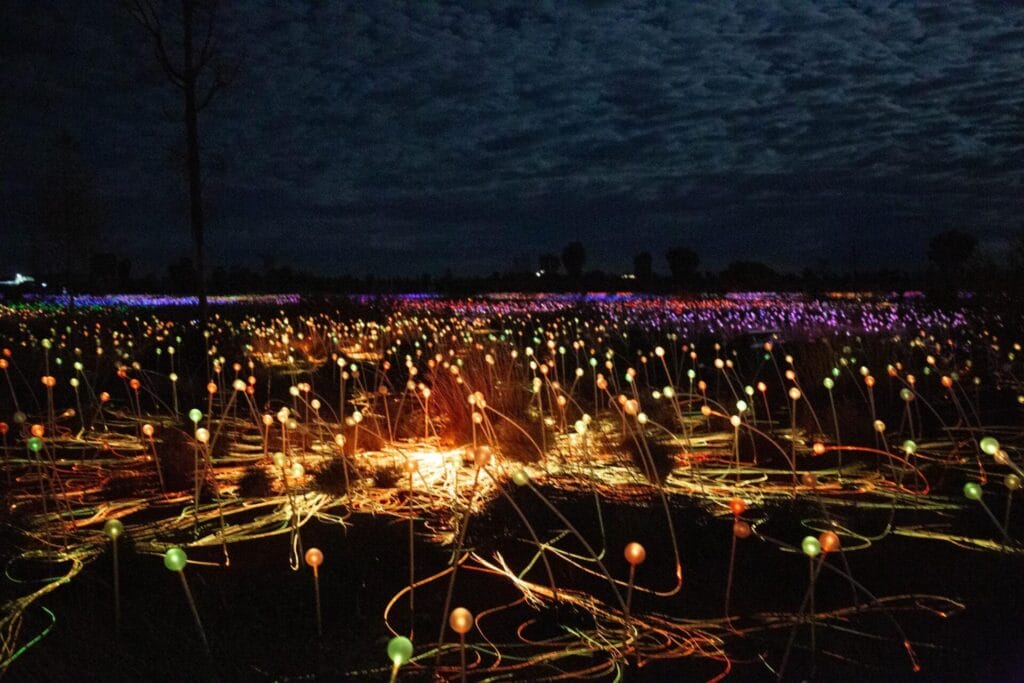
Field of Light was originally created as an art installation by British artist Bruce Munro in 2016, but it has become one of the most iconic experiences in Uluru.
The twinkling installation is made up of more than 50,000 glowing stems spread across the red dirt. As you walk through it, the lights slowly change colour, giving the impression that the whole desert is gently moving around you.
You can book a simple Field of Light sunrise or evening tour, but you can also make more of a night of it with the dinner experience. If you’re deciding whether it’s worth the money, read my full Uluru Field of Light dinner review before you book.
3. Experience a legendary Uluru sunset
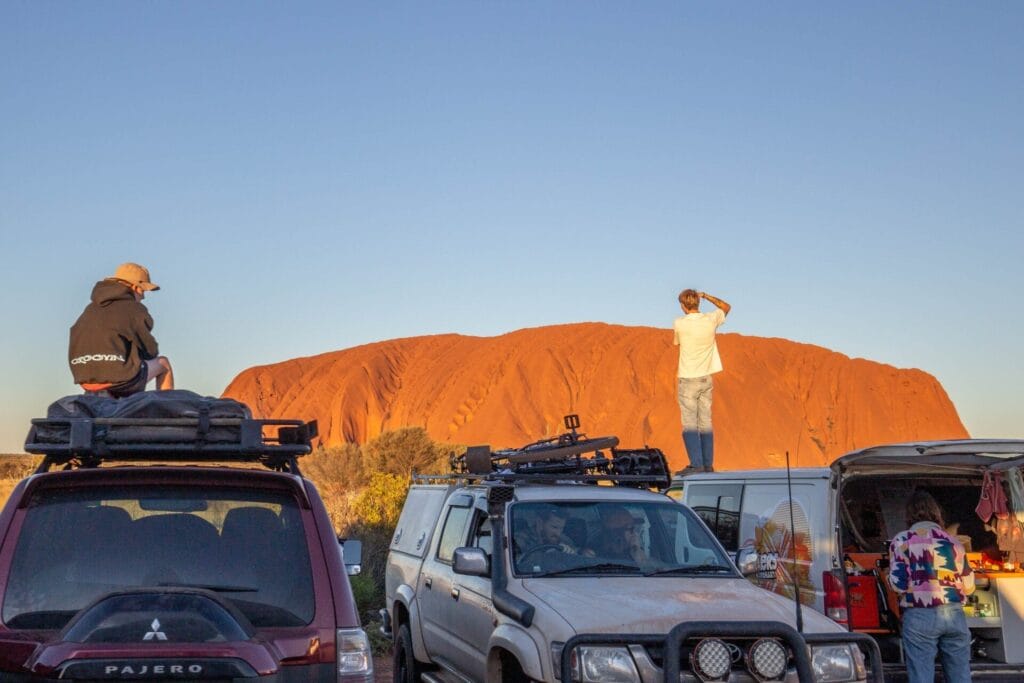
One of the main Uluru attractions is experiencing the famous Uluru sunset where the big rock changes colour in the light to an orangery red. This is a moment that will honestly stay with you forever so it’s best to make the most of it, by booking a 1h30m Sunset Tour which includes sparkling wine and a cheeseboard.
If you’re going to the Uluru sunset viewing platform, I would highly recommend staying well after sunset. When we visited, we witnessed the full moon rise above Uluru. It was one of the most memorable experiences of the entire trip.
4. See Uluru from above

It’s an incredible sight when you first see Uluru from the ground, but seeing it from above is something else entirely. From the air, you get a much better sense of how huge and isolated it is in the middle of the desert.
You can book longer scenic flights that include Uluru and Kata Tjuta, but we did the shorter 15-minute helicopter flight and still found it absolutely worth it. It’s a good option if you want the bucket list moment without spending too long in the air.
If you’re wondering whether the short flight is enough, read my honest review of the 15-minute Uluru helicopter flight before booking.
5. Zoom and Learn on a Segway Tour
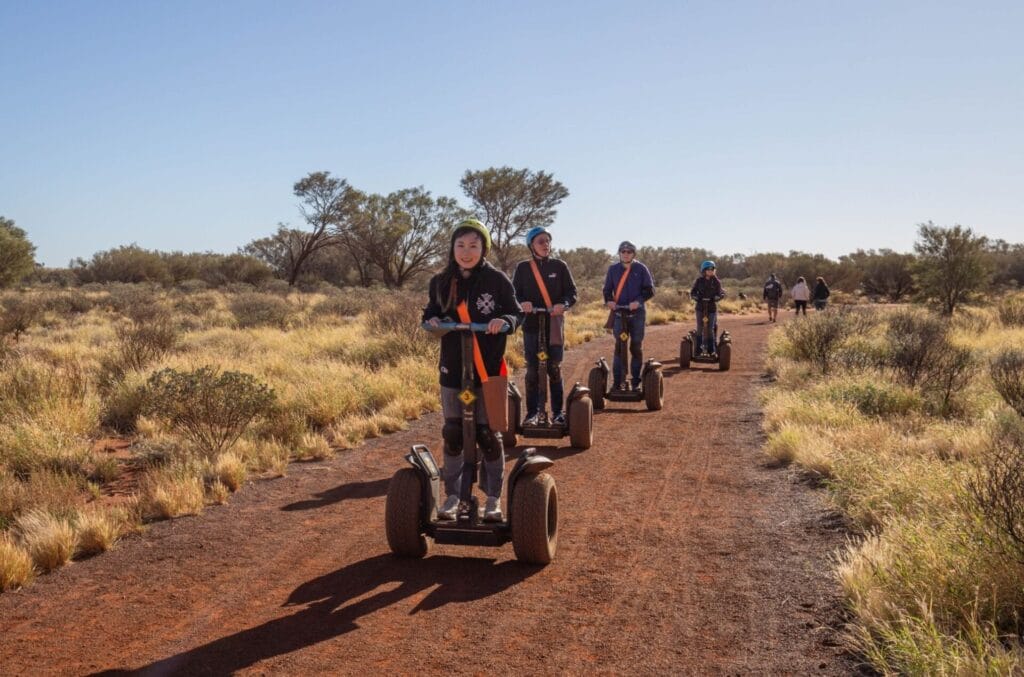
An awesome way to do the full base walk track, especially if you are unable to hike for various reasons, is via an Uluru Segway tour. Not only do you get the experience of riding a cool segway, but the local guide also teaches you about the Angu culture and stories told about the rock, the local history and ecological systems, something you don’t get if you just completed the base track alone.
Don’t worry, you do get trained on how to ride the Segway and you get to practice on a training track before setting off. There is only one Uluru segway company in the National Park so it is not overcrowded, and you get time to fully explore the rock. After finishing the base track, there is an optional guided walk to see the kantju gorge and rock art cave tucked within Uluru which is really worth it.
6. Join a Free Didgeridoo Workshop
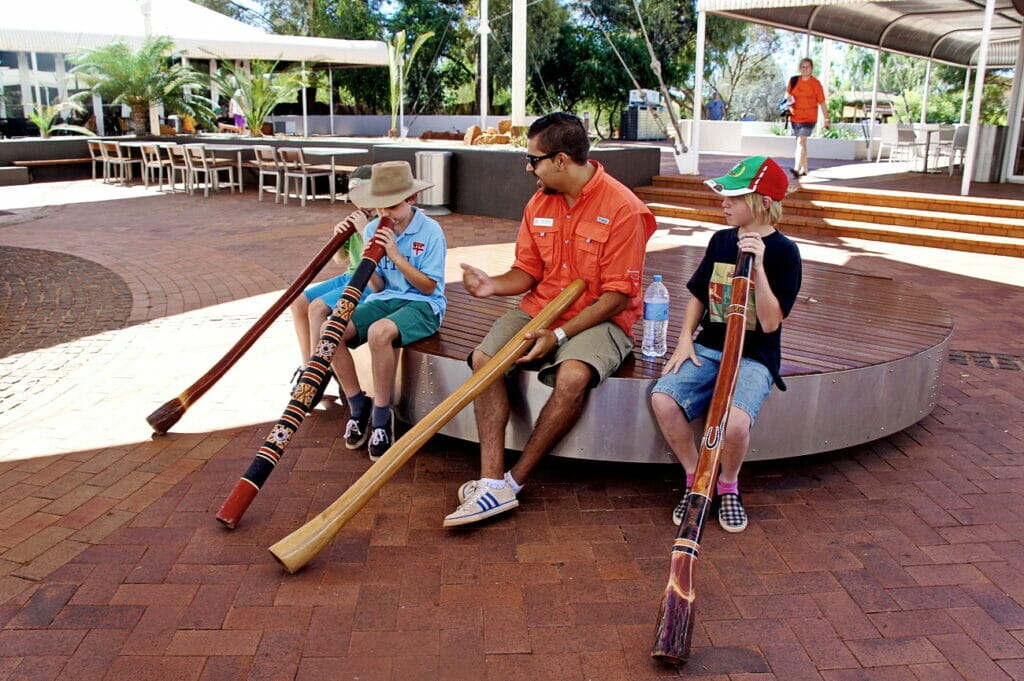
One of the best things about Yulara township cultural centre is the free cultural experiences they offer in the town centre, led by Aboriginal guides. The Didgeridoo performance and workshops are particularly awesome if you haven’t had a chance to see a didgeridoo performance and understand how they work.
The guide teaches you how to breathe and which sounds to make to play, and selected males (as males only can play in the Indigenous culture) are able to practice on the instrument.
Interesting fact: Didgeridoos were not actually called didgeridoos, they were named Yidaki by Aboriginal people. But when European settlers arrived, they heard the sound “Didgeridoo” as it was played and the name has since stuck. If you listen, a lot of people vibrate the sound “didgeridoo” into the instrument.
7. Join a Sunset BBQ
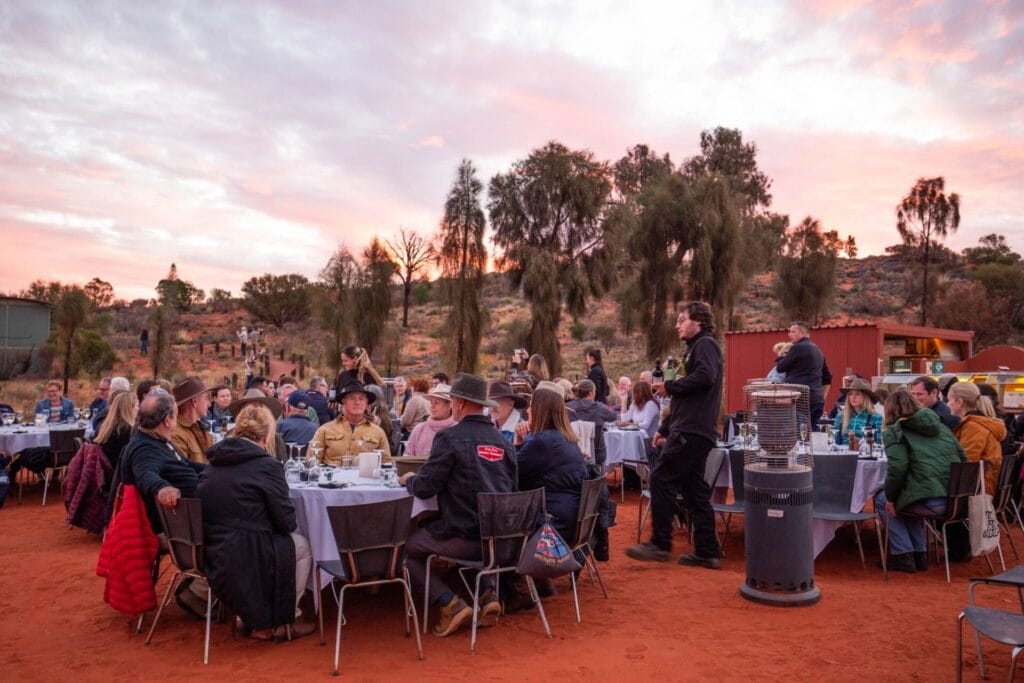
The most awesome thing about sunsets here is that it turns Uluru rock into a beautiful glowing red. I’d recommend booking a dinner tour for the ultimate sunset experience. You are picked up from your accommodation in the Ayers rock resort and taken to the Sunset viewing area in which the sun sets behind you so you can see the colours shine off the rock.
Here you get wine or beer and canapes as you watch the epic views and the sun go down which takes around an hour. The tour bus then takes you to another location under the rock in the National Park for a delicious BBQ.
There was a lot of food and wine followed by a star talk. In the Kata Tjuta National Park, there is minimal light pollution so you can see part of the milky way. It’s an incredible experience and a highlight to end your trip with. Check out this Sunset BBQ tour I know you’ll love.
8. Start the day with a beautiful Sunrise
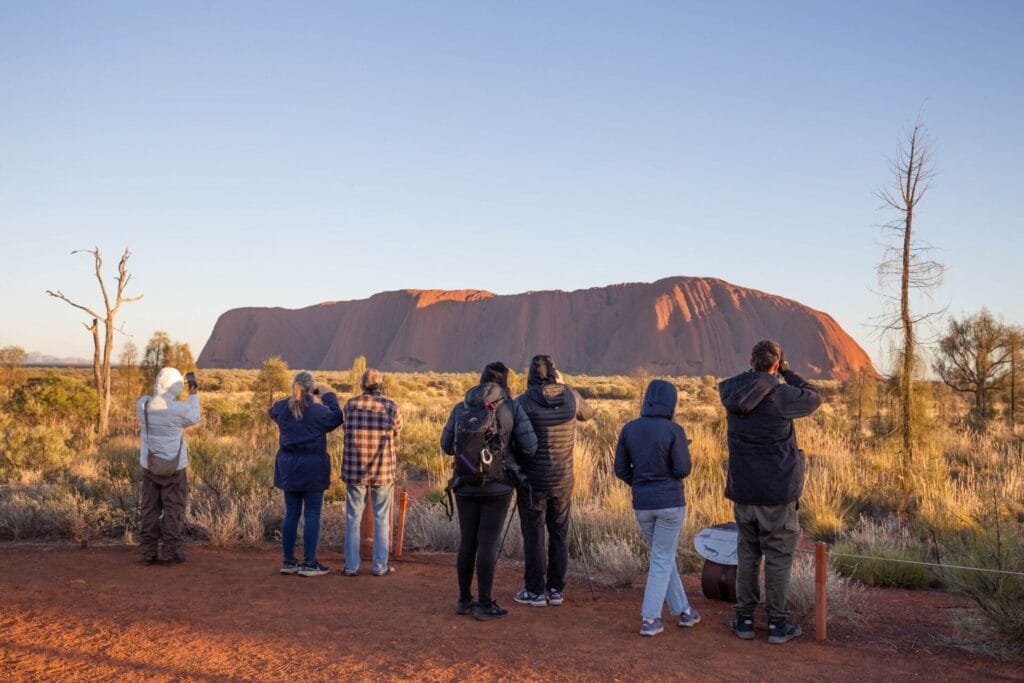
There is a dedicated sunrise viewing area in Uluru Kata Tjuta national park in which the sun rises behind you and you can see the colours reflected off Uluru’s red rock. If you have time, I would recommend watching the sun rise from both here and the sunset viewing area. That way you can see both the colours reflected and the sun rising from behind the rock.
Prefer to do a guided Sunrise tour? You’ll have time to snooze while your guide does all the driving to and from your accommodation, and waking you up with a hot cup of coffee or tea, just in time for sunrise. Pre-book your Sunrise Tour here to avoid missing out.
9. Hike Kata Tjuta, also known as The Olgas
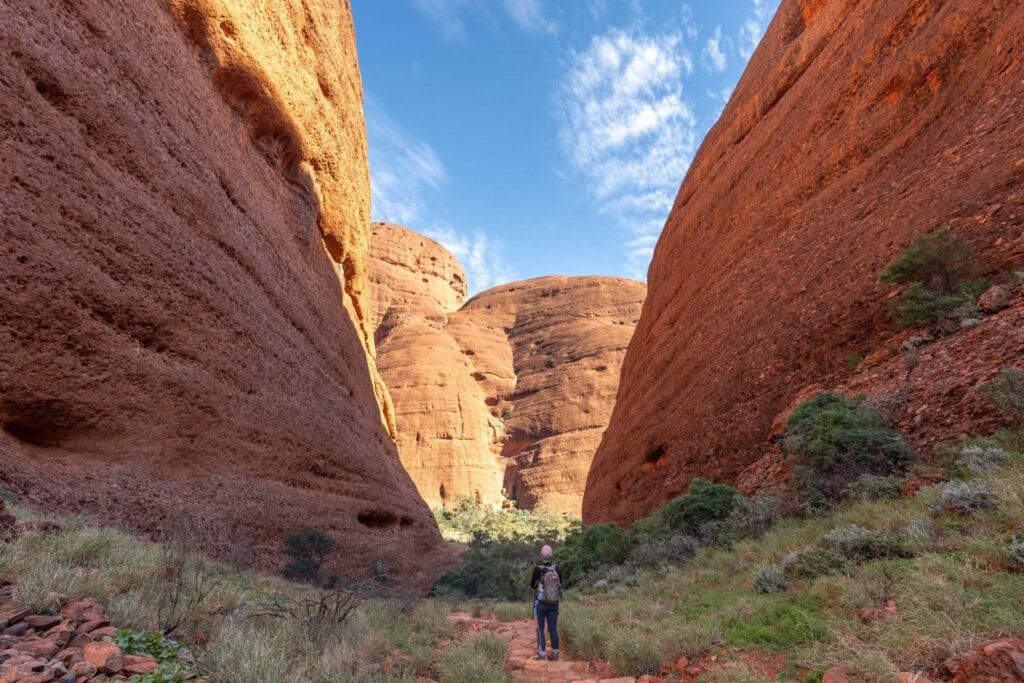
Many people focus so much on Uluru that they forget about Kata Tjuta, also known as The Olgas. Don’t make that mistake, because this was one of the most impressive places we visited in the national park.
Kata Tjuta feels completely different from Uluru. Instead of one huge rock, you’ll see a group of massive domed formations rising out of the desert. The landscape feels dramatic, ancient and surprisingly peaceful.
The best walk here is the Valley of the Winds Walk at Kata Tjuta. It takes you between the domes and gives you incredible views across the desert. There are a couple of lookout points, so you can choose how far you want to go depending on the heat, your fitness and how much time you have.
There is a steep section of rock without much to hold onto, so wear proper walking shoes and take your time. I’d also start early if you’re visiting in warmer weather.
If you’d rather visit with a guide, you can join a Kata Tjuta tour and learn more about the landscape, stories and cultural significance of the area.
10. Visit the cultural centre
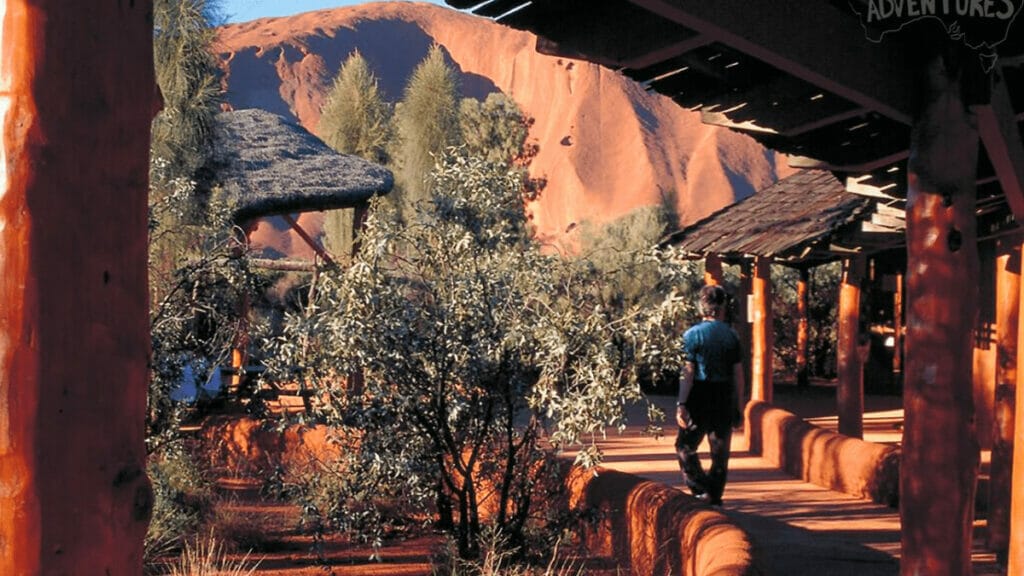
Within the National Park is the Aboriginal-owned Cultural Centre where you can learn about the Anungu people, local history and surrounding landscape. Complete with two art galleries showcasing Aboriginal local artists, a cafe and a shop where you can buy bush tucker native ingredients. It is worth a visit, especially to learn about life in Australia’s red centre and the indigenous culture.
11. Get menu inspiration from a Bush Tucker Workshop

Another free workshop by the Ayers Rock Cultural Centre will give you tips for a bush tucker-inspired menu. The Aboriginal guides take you through the different bush tucker native ingredients, how the Indigenous people would hunt for these in the Australian outback and where these ingredients are not being used today. They also warn you against plants that should not be eaten but i’m not sure I 100% trust myself to tell the difference between the plants out in the bush.
You then watch a fun cooking demonstration and are given a recipe you can follow at home! More bush tucker foods are being sold in shops and restaurants today so it’s cool to learn how they taste and what they can be used in.
12. Sing along to Live Music at Outback Pioneer Hotel
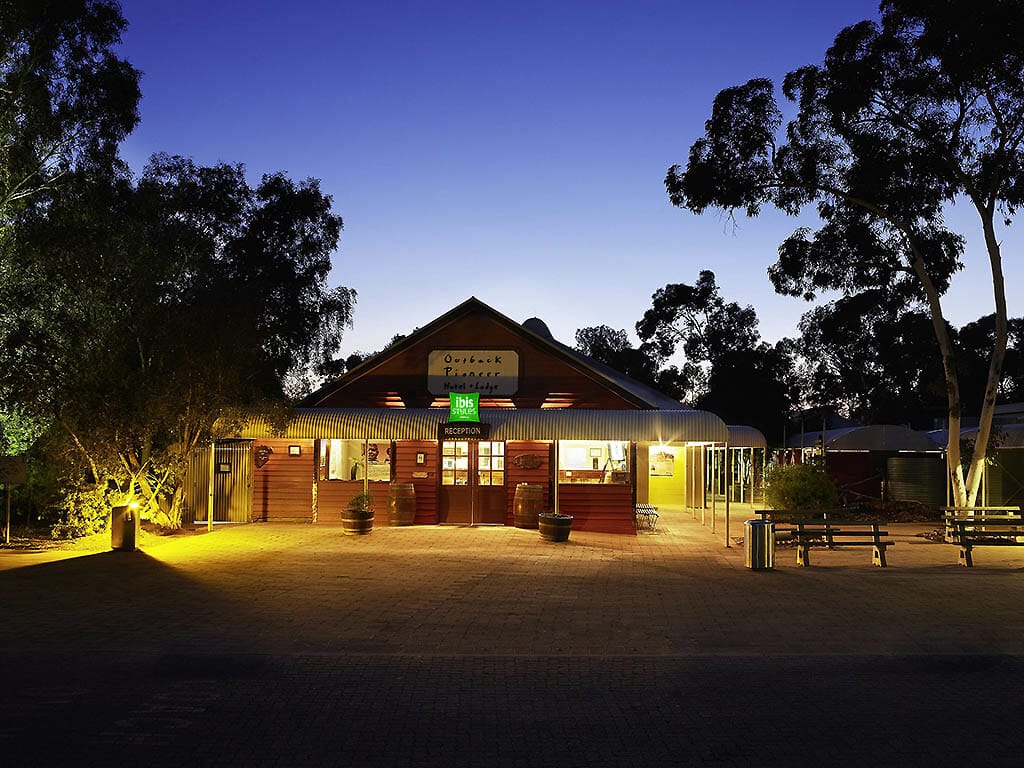
One of the more budget-friendly hotels in the Ayers rock resort is the Outback Pioneer Hotel and it has the liveliest bar, so much so that guests from other hotels come here on an evening. Every night I stayed there was live music from Country music artists, live sports, pool tables and a “DIY” BBQ station. It’s an awesome way to end your night in a place that feels like a classic Australian outback pub.
Note that Uluru is a “dry area”, meaning no alcohol is sold to the locals. In order to buy alcohol at any venue, you must show your hotel room key to prove you are a tourist staying here. This means there are no bottle shops and you can’t take any alcohol out of the bar vicinity.
13. Do a famous Camel Ride
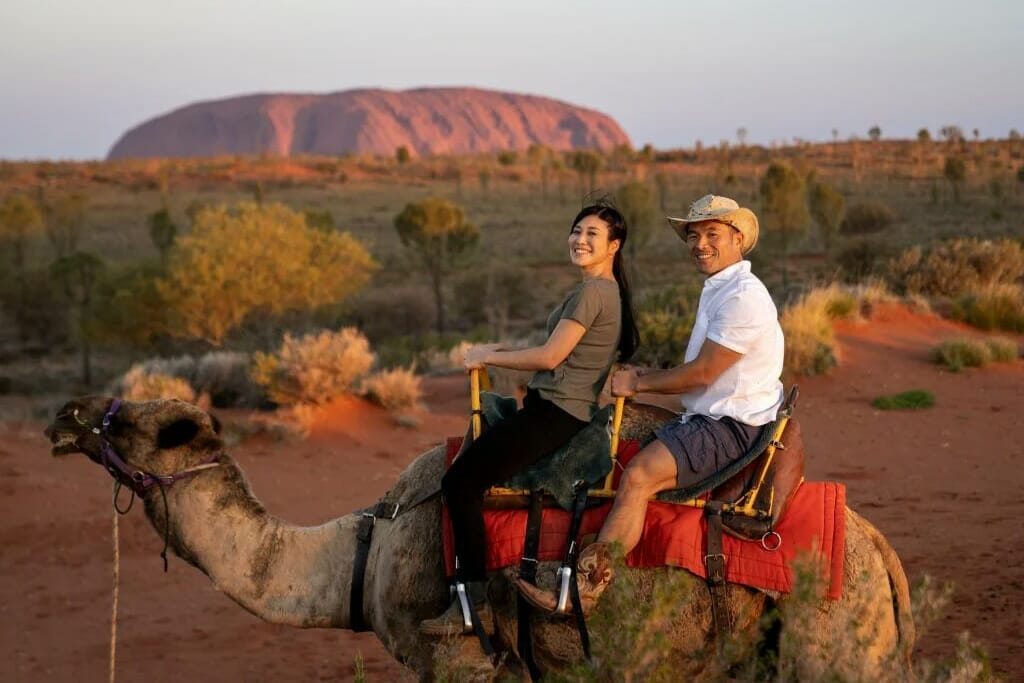
Did you know that one million camels roam the Australian outback? They were introduced in 1840 after European settlers realised their horses did not take to the extreme desert weather in Australia’s red centre.
With Uluru Camel Tours, you can join them for a camel ride morning, afternoon or evening for a unique experience and view of Uluru. The sunrise camel ride is the most popular, starting in the dark and watching the whole sky turn red and orange from the high seat on a camel is spectacular.
Riding a camel is pretty fun, they don’t go fast and always walk in single file so you get used to it. It is a bit of a shock when they go from lying to standing and you jolt around as they are taller than you think they are. A great experience nevertheless, especially in Uluru.
14. Do the Uluru base walk
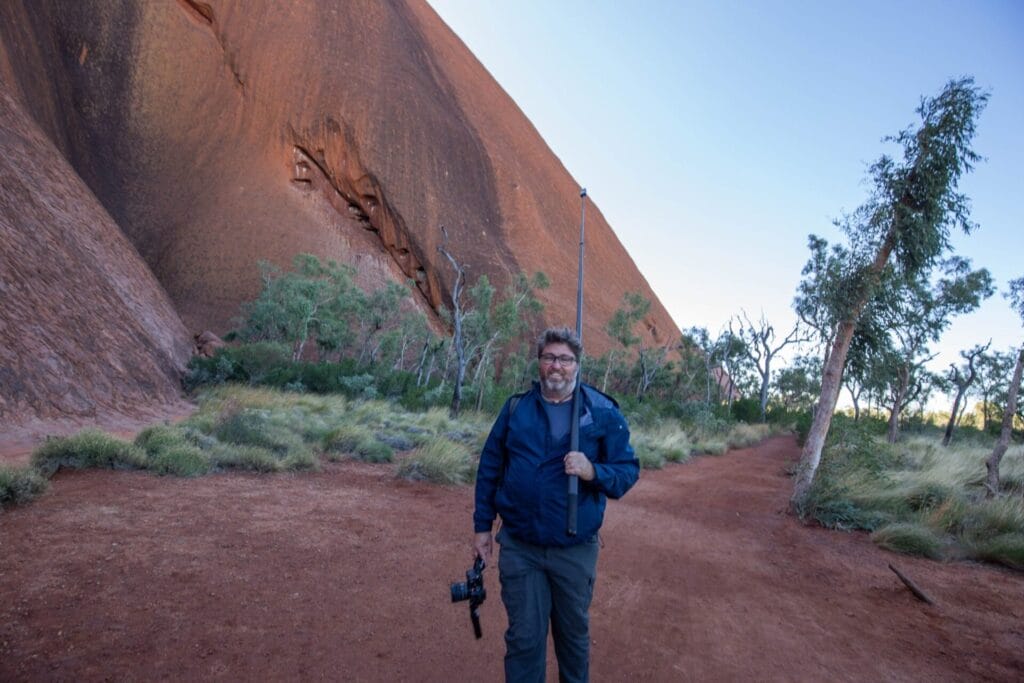
The full Uluru Base Walk is around 10km and takes you around the entire base of the rock. It gives you a completely different perspective from the viewing platforms because you can see the caves, textures, waterholes and sacred areas up close.
There are signs along the way that explain some of the stories and cultural significance of the area. You’ll also see sections where photography is not allowed, as parts of Uluru are especially sacred to the Anangu people. Make sure you respect these signs and keep your camera away when asked.
My favourite part was seeing how much the rock changes as you walk around it. From a distance, Uluru can look like one huge smooth rock, but up close it has so much detail.
If you don’t want to do it alone, you can book a guided base walk or combine it with another experience such as sunrise, sunset or a BBQ dinner.
15. Watch the Wintjiri Wiru Drone Show
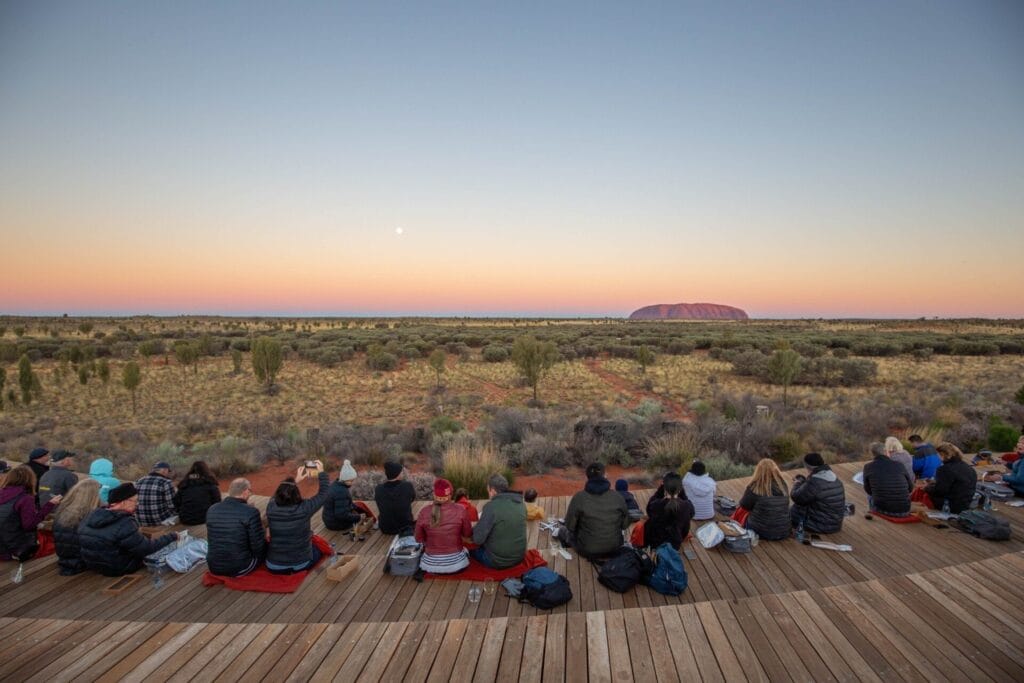
Another unforgettable evening experience at Uluru is Wintjiri Wiru, the drone, light and sound show that tells an Anangu story using modern technology.
It’s very different from Field of Light. Field of Light is more of a walk-through art installation, while Wintjiri Wiru feels like a bigger storytelling experience. You sit outdoors with Uluru in the distance as drones, projections, lights and music bring the desert sky to life.
If you’re trying to choose between the two, I’d read my Wintjiri Wiru Uluru drone show review first. They are both popular night-time experiences, but they offer completely different atmospheres. But wow, I have to admit the drone show was by far my favourite Uluru activity.
Where to go after Uluru?
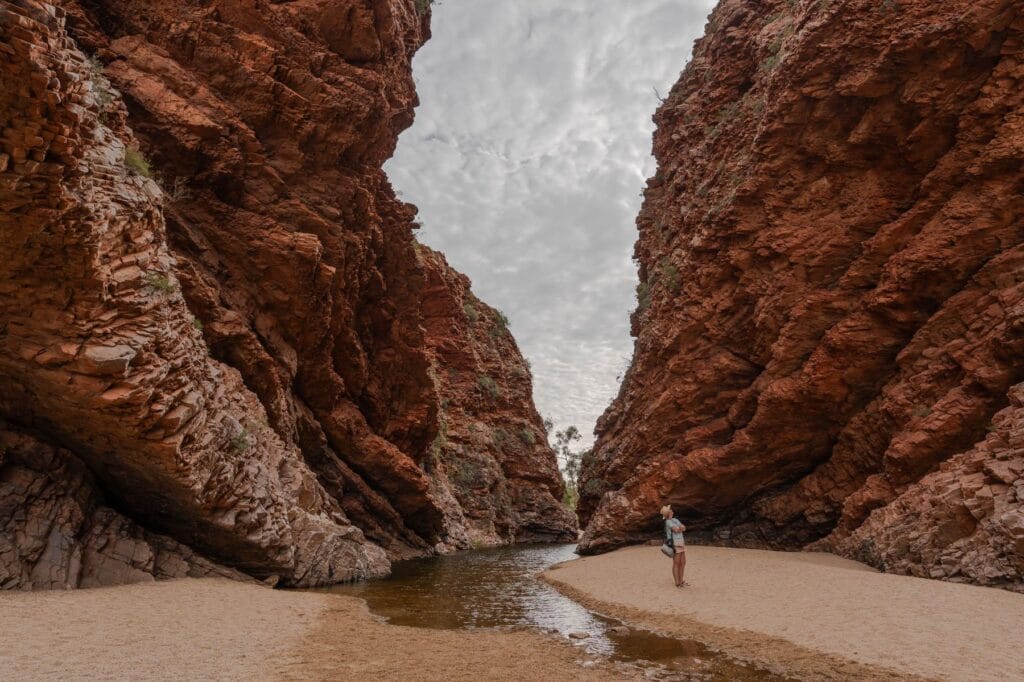
Ayers Rock Airport is only around 10 minutes from Yulara, so you can easily fly out after your Uluru trip. But if you have more time, I’d really recommend continuing through the Red Centre.
Alice Springs is around a 4.5 to 5.5 hour drive from Uluru, depending on your stops. It’s worth spending a few days there rather than treating it as just a place to pick up or drop off a hire car.
Before you drive, read my Alice Springs to Uluru 2WD road trip guide. We nearly made the mistake of planning a route that wasn’t suitable for our 2WD motorhome, so it’s worth knowing which roads are sealed and which routes to avoid.
Once you’re in Alice Springs, one of the best things to do is visit The Kangaroo Sanctuary Alice Springs. It’s a moving and memorable wildlife experience where you can learn about rescued joeys, kangaroo rehabilitation and the work being done to protect orphaned kangaroos in Central Australia.
I’d also make time for the West MacDonnell Ranges, where you can visit places like Simpsons Gap, Standley Chasm, Ellery Creek Big Hole and Ormiston Gorge. It’s one of the best day trips from Alice Springs and a brilliant way to see another side of the Red Centre.
Another amazing place to visit is Kings Canyon in Watarrka National Park. It’s around a four-hour drive from Uluru and is famous for the Kings Canyon Rim Walk, sandstone cliffs and incredible views across Central Australia.
If you’re planning a bigger Northern Territory trip, have a read of my Darwin to Uluru road trip guide as well.
Where to stay in Uluru
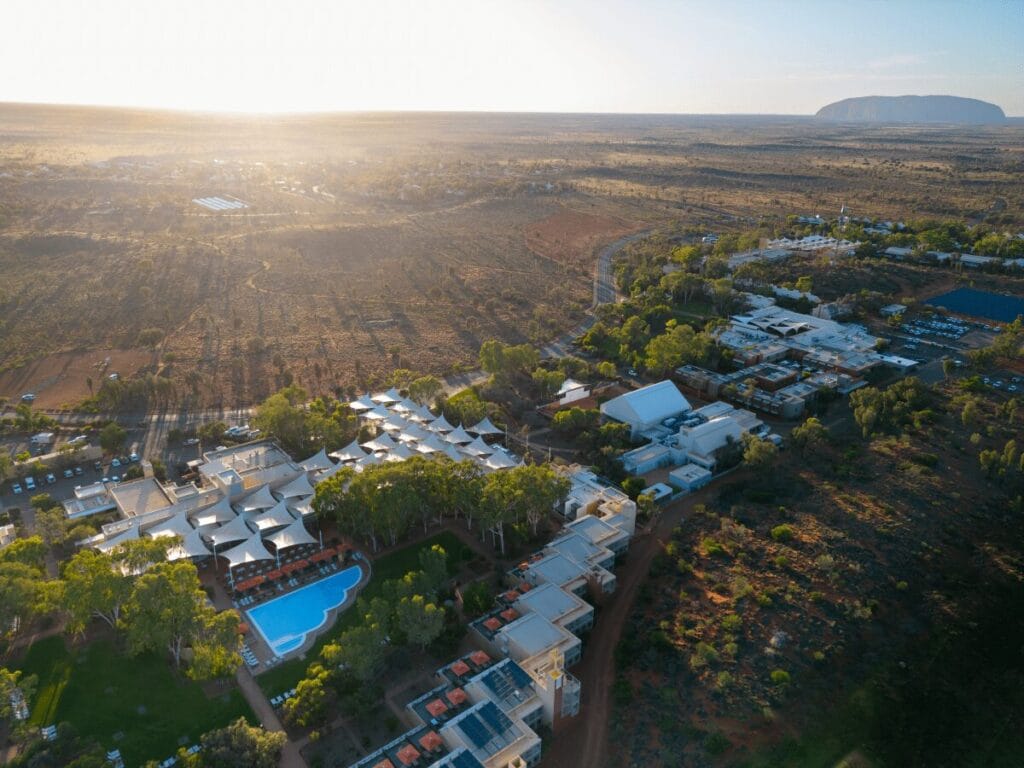
Wondering where to stay in Uluru? Here are our top options.
- Sails in The Desert – five minute walk from Uluru lookout to roll out of bed for sunrise. Doesn’t get much better right?
- Longitude 131 – A luxury wilderness camp with direct views to Uluru.
Read More Of My Uluru And Alice Springs Guides

If you’re planning a Red Centre trip, I’ve written more guides to help you work out what’s worth doing, how long you need and how to plan your route properly.
Start with my best Uluru tours guide if you’re deciding which experiences to book. For walks, read my Uluru Base Walk guide and my Valley of the Winds Walk guide.
If you’re comparing the bigger paid experiences, check out my reviews of the 15-minute Uluru helicopter flight, the Uluru Field of Light dinner and the Wintjiri Wiru Uluru drone show.
For road trip planning, read my Darwin to Uluru road trip guide and my Alice Springs to Uluru 2WD guide. And if you’re spending time in Alice Springs, don’t miss my Kangaroo Sanctuary Alice Springs review and my guide to the best things to do in the West MacDonnell Ranges.
Pin it!

This article is written by Amii Freeman, our resident writer at Londoner In Sydney.