Move Regional
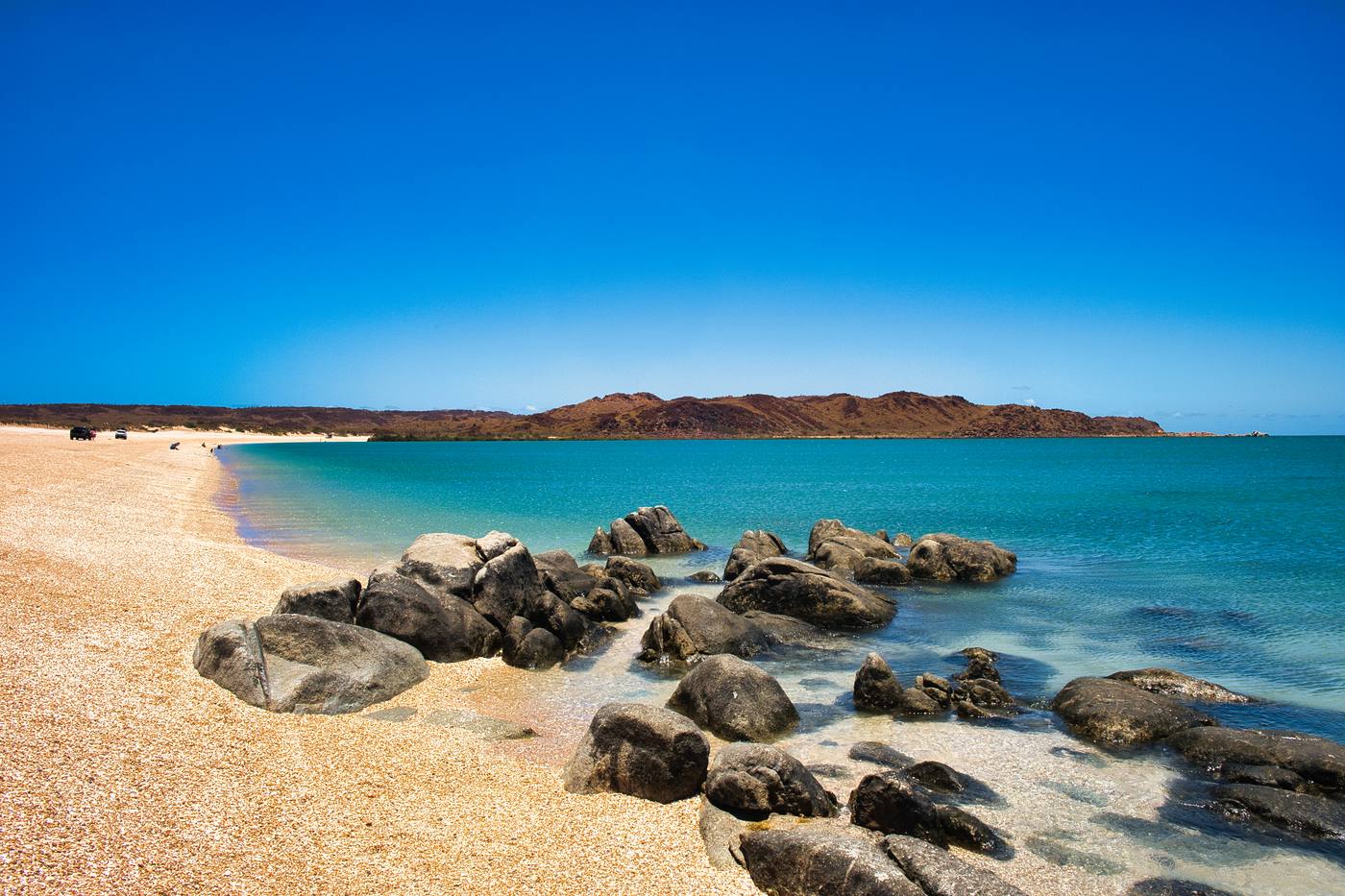
Remote beach and crystal clear water. The Indian Ocean near Karratha, Western Australia.

Pilbara, WA

Karratha

iron-ore · pilbara-city · rock-art · archipelago

To Perth
15h 57m

Want to find out if you can afford to move?

Move Regional compares towns across QLD, NSW and WA on price, work, schools and lifestyle, so you can find the one that fits.

© OpenStreetMap contributors

At a glance

Drive to the coast

7 min

By road

Nearest major hospital

5 min

By road

Airport access

21 min

By road

Schools access

Good

Average daytime temp

32.5°C

Rainfall

Very dry

Overview

Karratha is one of the youngest and hottest regional centres we cover. Around 17,000 people live here, the median age is only 32 and population has grown strongly, up roughly 20% since 2016. That gives the city a much more working-age profile than the older south-west towns.

Perth is almost 16 hours away by road, so flying is the realistic connection to the capital; the airport is about 20 minutes away and a major hospital only five minutes. The climate is a defining part of life, with average daytime temperatures above 32°C, extremely hot summers and very low rainfall. Winters are warm rather than cold.

Digital access is supported by fixed-line internet, providing reliable everyday connectivity. Karratha’s scale means it can support more services and employment than a tiny remote settlement, but the distance from Perth still changes how people organise travel, family visits and specialist needs.

Recent growth suggests ongoing demand rather than decline. Anyone moving here needs to be comfortable with heat and remoteness as structural features of the lifestyle, not occasional inconveniences. In return, Karratha offers a substantial regional base with a young population and local healthcare, rather than the minimal infrastructure of a much smaller north-west community.

Photos

11 photos

Is Karratha for you?

Best for

Karratha is primarily a working regional city for people in resources, construction, engineering, trades, health and education. It suits younger families and professionals who want high-value employment and serious outdoor access without living in a tiny Pilbara settlement. Boaters and four-wheel-drive enthusiasts will get more from the location than people seeking café culture, mild weather or easy capital-city access.

Watch out for

The heat is extreme and Perth is almost 16 hours away by road, so flights become routine for many households. The economy is closely tied to resources and major projects, which can influence housing and employment conditions. If your priority is low bustle or a diversified local economy, Karratha is a weaker fit.

Things to do

  • Walk the Yaburara Heritage Trail

  • Explore Murujuga rock engravings

  • Boat through the Dampier Archipelago

  • Visit Millstream Chichester National Park

Lifestyle

OutdoorsBeachFamily friendly

How it compares to similar towns

  • Karratha offers the deepest service and employment base among the Pilbara towns we cover.
  • Compared with Dampier, you gain far more shops, schools and jobs; compared with Kalgoorlie, you get the coast rather than an inland Goldfields setting.
  • The combination of resource-sector opportunity and proximity to the Dampier Archipelago makes it a distinctive work-and-lifestyle proposition.

Property

No median price is published for Karratha — too few sales are recorded here for one to be released.

Services

Healthcare access

Excellent

Shopping & everyday services

Good

4–9 shopping centres within 20km

Internet connection

Fixed line

Schools

  • Karratha Primary School0.4 kmGovernment · Primary
  • St Paul's Primary School0.8 kmCatholic · Primary
  • Pegs Creek Primary School2.8 kmGovernment · Primary
  • Karratha Senior High School3.8 kmGovernment · Secondary
  • Millars Well Primary School4.3 kmGovernment · Primary
  • St Luke's College4.7 kmCatholic · Secondary
  • Tambrey Primary School6 kmGovernment · Primary
  • Baynton West Primary School6.6 kmGovernment · Primary

Plus 1 more within 20km — showing the 8 closest.

Job market

Job market by industry

Trades — 14.8%

Largest share of local jobs

Employment breakdown

  • Trades14.8%
  • Healthcare9.4%
  • Professional & office-based6.7%
  • Education4.4%
  • Agriculture3.5%
  • Hospitality & tourism1.7%

Employment figures cover this town's wider statistical region, not the town alone — you'll see the same figures for Broome, Kununurra and Dampier.

Biggest employers around here

  • Drillers, Miners and Shot Firers5.7%
  • Metal Fitters and Machinists4.9%
  • Truck Drivers3.8%
  • Sales Assistants (General)3.1%
  • Other Building and Engineering Technicians2.6%

Where the hiring is

  • Automotive and Engineering Trades2,351/yrScore 5/5
  • General-Inquiry Clerks, Call Centre, Receptionists1,437/yrScore 4/5
  • Electrotechnology and Telecommunications Trades1,187/yrScore 5/5
  • Medical Practitioners and Nurses1,061/yrScore 1/5
  • Drivers and Storepersons951/yrScore 5/5

The score ranks this region against other regions for the same occupation, not against other jobs here — a low score means it isn't a regional stronghold for that field, not that there are no vacancies. Counts online job advertisements, so trades and farm work hired by word of mouth are undercounted, and outside capital cities this is published at a regional level larger than one town.

Climate

  • Extremely hot summers
  • Mild winters

Demographics

Karratha (UCL 513003) · 2021 Census

Younger than the national profile, with 2.8% aged 65 or over against 17.2%. Among households, families with children make up 56.3% of families, above the national 43.7%, and renting is well above the national rate, at 60% of dwellings against 30.6%.

Population

17,013

Population growth

+20.1%

Karratha (SA2 510031272)

Median age

32 years

Labour force participation

72.9%

Growth is measured across the wider area named under the figure, which can be a different size to the town.

Age

0–1426.4%
15–2410.7%
25–4438.5%
45–6421.7%
65+2.8%

Share of total population in each band — rounding means these won't land on exactly 100%.

Households

  • Couples with children56.3%
  • Couples without children33.1%
  • Lone-person households21.8%

Couples are a share of total families; lone-person households are a share of total households — different bases, not one breakdown.

Income

Median personal income

$1,570

Per week · ≈ $81,640/year

Median family income

$3,497

Per week

Median household income

$3,194

Per week

Personal is one person's income; family and household cover everyone living together — a single-income household will show a lower household figure than its highest earner's personal one. Personal income also covers every resident aged 15 and over, retirees included, so it reads low in a town with an older population even where household income is solid.

Housing & background

Owner-occupied

31.6%

Rented

60%

Born in Australia

64.9%

Born overseas

20.2%

Doesn't sum to 100% — people who didn't state a birthplace are excluded rather than redistributed.

Source: Australian Bureau of Statistics, 2021 Census