Move Regional
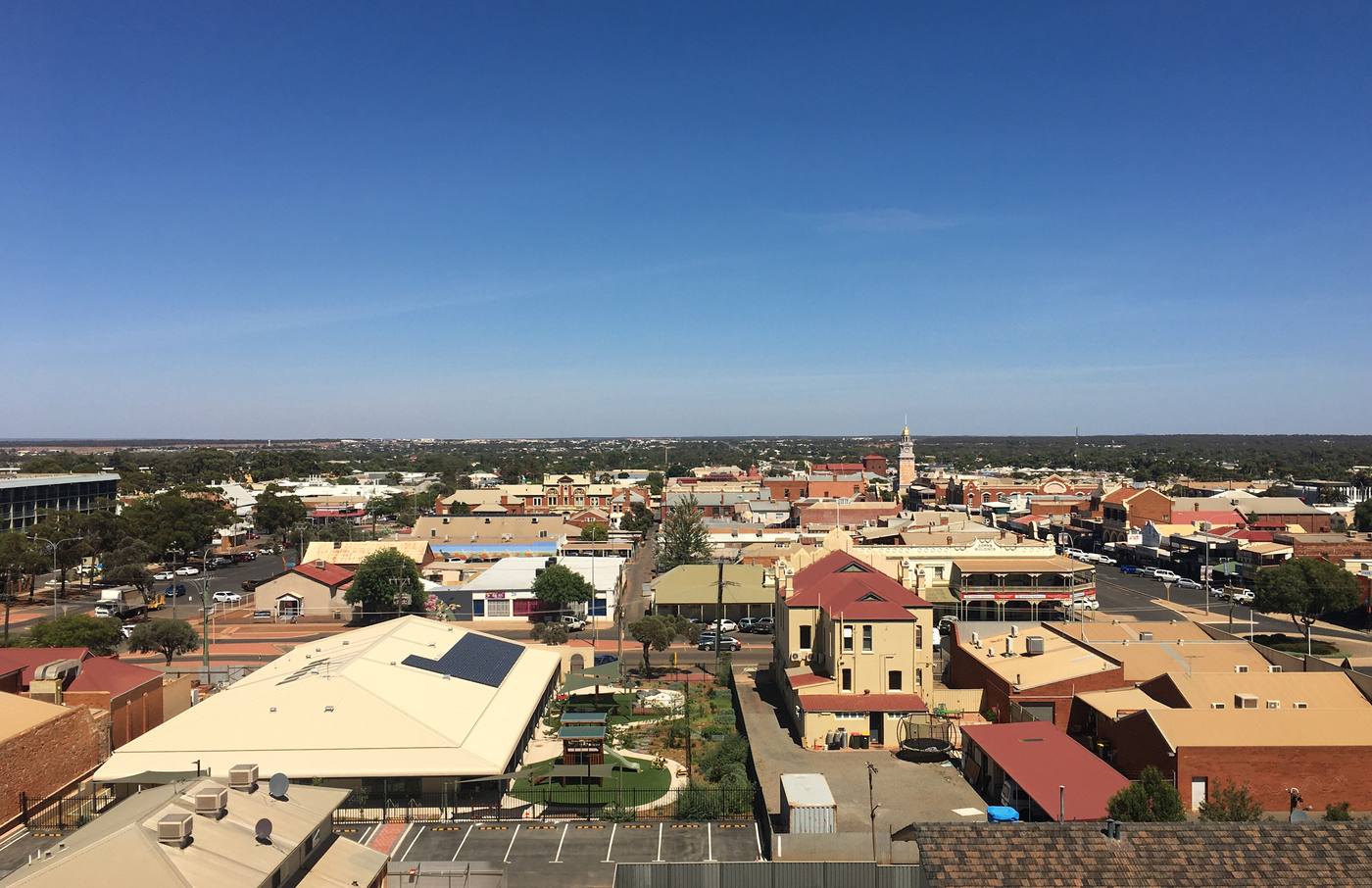
Aerial landscape view of Kalgoorlie-Boulder City Western Australia

Goldfields-Esperance, WA

Kalgoorlie-Boulder

gold-rush · mining · outback · heritage

Median house price
$480,000
To Perth
6h 47m

Want to find out if you can afford to move?

Move Regional compares towns across QLD, NSW and WA on price, work, schools and lifestyle, so you can find the one that fits.

© OpenStreetMap contributors

At a glance

Drive to the coast

4h 14m

By road

Nearest major hospital

3 min

By road

Airport access

30 min

By road

Schools access

Excellent

Average daytime temp

25.7°C

Rainfall

Very dry

Overview

Kalgoorlie-Boulder is a remote regional city that has to function independently because Perth is more than 6 hours 45 minutes away by road. Around 29,000 people live in the urban area, with a young median age of 34 and a population decline of roughly 4% since 2016.

That combination suggests a working-age community without the strong recent growth seen in some coastal WA centres. One practical strength is major-hospital access only a few minutes away and the airport about half an hour, both important in a city this far inland.

Climate-wise, the daytime average is roughly 26°C, but the climate is more extreme than the annual figure suggests: summers are hot, winters are cool and rainfall is very low. Fixed-line service gives residents solid connectivity for home and work. The practical reality of living here is distance.

Perth is not somewhere you casually drive for a shopping day or appointment, so local services and the airport carry much more weight than they would closer to the capital. The city’s regional status means there is more day-to-day infrastructure than a small country town can offer, but anyone moving here should be comfortable with an inland environment and a social world that is physically far removed from metropolitan WA.

Photos

20 photos

Is Kalgoorlie-Boulder for you?

Best for

Kalgoorlie-Boulder suits people who are moving for work and want a real outback city around them: miners, tradespeople, engineers, health workers, teachers and professionals in resource-linked services. It also works for people who enjoy strong local identity, heritage pubs and wide-open country, but it is less natural for anyone primarily chasing beaches, café culture or a quiet retirement town.

Watch out for

The economy is heavily influenced by mining, so career prospects can be strong but concentrated. Perth is nearly seven hours away by road, summers are hot and the landscape is very different from coastal WA. Population decline since 2016 also suggests this is not a simple growth-town story.

Things to do

  • Tour the Super Pit

  • Visit the Museum of the Goldfields

  • Explore Kalgoorlie-Boulder's gold-rush architecture

  • See Inside Australia at Lake Ballard

Lifestyle

Up-and-coming townsBest for first-home buyersFamily friendly

How it compares to similar towns

  • Few regional centres have such a clear economic and cultural identity.
  • Kalgoorlie-Boulder combines major mining employment, gold-rush heritage and the infrastructure needed to function independently a long way from Perth.
  • Compared with Karratha, the environment and history are unmistakably inland and Goldfields-based.

Similar towns

Property

Median house price

$480,000

No WA-wide median published

Median weekly rent (3-bed house)

$700

≈ $3,033/month

Sourced from REIWA (Real Estate Institute of Western Australia) · REIWA, 12 months ending August 2026

Services

Healthcare access

Excellent

Shopping & everyday services

Good

4–9 shopping centres within 20km

Internet connection

Fixed line

Schools

  • Kalgoorlie Primary School0.6 kmGovernment · Primary
  • John Paul College0.7 kmCatholic · Secondary
  • St Mary's Primary School0.9 kmCatholic · Primary
  • Eastern Goldfields College0.9 kmGovernment · Secondary
  • North Kalgoorlie Primary School1.3 kmGovernment · Primary
  • South Kalgoorlie Primary School1.8 kmGovernment · Primary
  • East Kalgoorlie Primary School1.9 kmGovernment · Primary
  • Fairbridge College - Kalgoorlie Campus2.5 kmIndependent · Secondary

Plus 10 more within 20km — showing the 8 closest.

Job market

Job market by industry

Trades — 14.6%

Largest share of local jobs

Employment breakdown

  • Trades14.6%
  • Healthcare9.7%
  • Professional & office-based6.2%
  • Agriculture4.8%
  • Education4%
  • Hospitality & tourism1.8%

Employment figures cover this town's wider statistical region, not the town alone — you'll see the same figures for Geraldton, Kalbarri, Esperance, Hopetoun, Exmouth, Denham, Coral Bay and Carnarvon.

Biggest employers around here

  • Drillers, Miners and Shot Firers5.3%
  • Metal Fitters and Machinists4.3%
  • Truck Drivers3.9%
  • Sales Assistants (General)3.4%
  • Electricians2.2%

Where the hiring is

  • Automotive and Engineering Trades2,288/yrScore 5/5
  • Machine and Stationary Plant Operators1,130/yrScore 5/5
  • General-Inquiry Clerks, Call Centre, Receptionists1,020/yrScore 1/5
  • Drivers and Storepersons1,019/yrScore 5/5
  • Sales Assistants and Salespersons798/yrScore 1/5

The score ranks this region against other regions for the same occupation, not against other jobs here — a low score means it isn't a regional stronghold for that field, not that there are no vacancies. Counts online job advertisements, so trades and farm work hired by word of mouth are undercounted, and outside capital cities this is published at a regional level larger than one town.

Climate

  • Very hot summers
  • Cold winters

Demographics

Kalgoorlie - Boulder (UCL 512004) · 2021 Census

Younger than the national profile, with 9.1% aged 65 or over against 17.2%.

Population

29,068

Population growth

-4.3%

Kalgoorlie (SA2 511031279)

Median age

34 years

Labour force participation

69.5%

Growth is measured across the wider area named under the figure, which can be a different size to the town.

Age

0–1422.3%
15–2412.3%
25–4431.3%
45–6425.1%
65+9.1%

Share of total population in each band — rounding means these won't land on exactly 100%.

Households

  • Couples with children47.1%
  • Couples without children36.3%
  • Lone-person households27.2%

Couples are a share of total families; lone-person households are a share of total households — different bases, not one breakdown.

Income

Median personal income

$1,204

Per week · ≈ $62,608/year

Median family income

$2,825

Per week

Median household income

$2,325

Per week

Personal is one person's income; family and household cover everyone living together — a single-income household will show a lower household figure than its highest earner's personal one. Personal income also covers every resident aged 15 and over, retirees included, so it reads low in a town with an older population even where household income is solid.

Housing & background

Owner-occupied

59.5%

Rented

36.8%

Born in Australia

66.6%

Born overseas

24%

Doesn't sum to 100% — people who didn't state a birthplace are excluded rather than redistributed.

Source: Australian Bureau of Statistics, 2021 Census