Move Regional
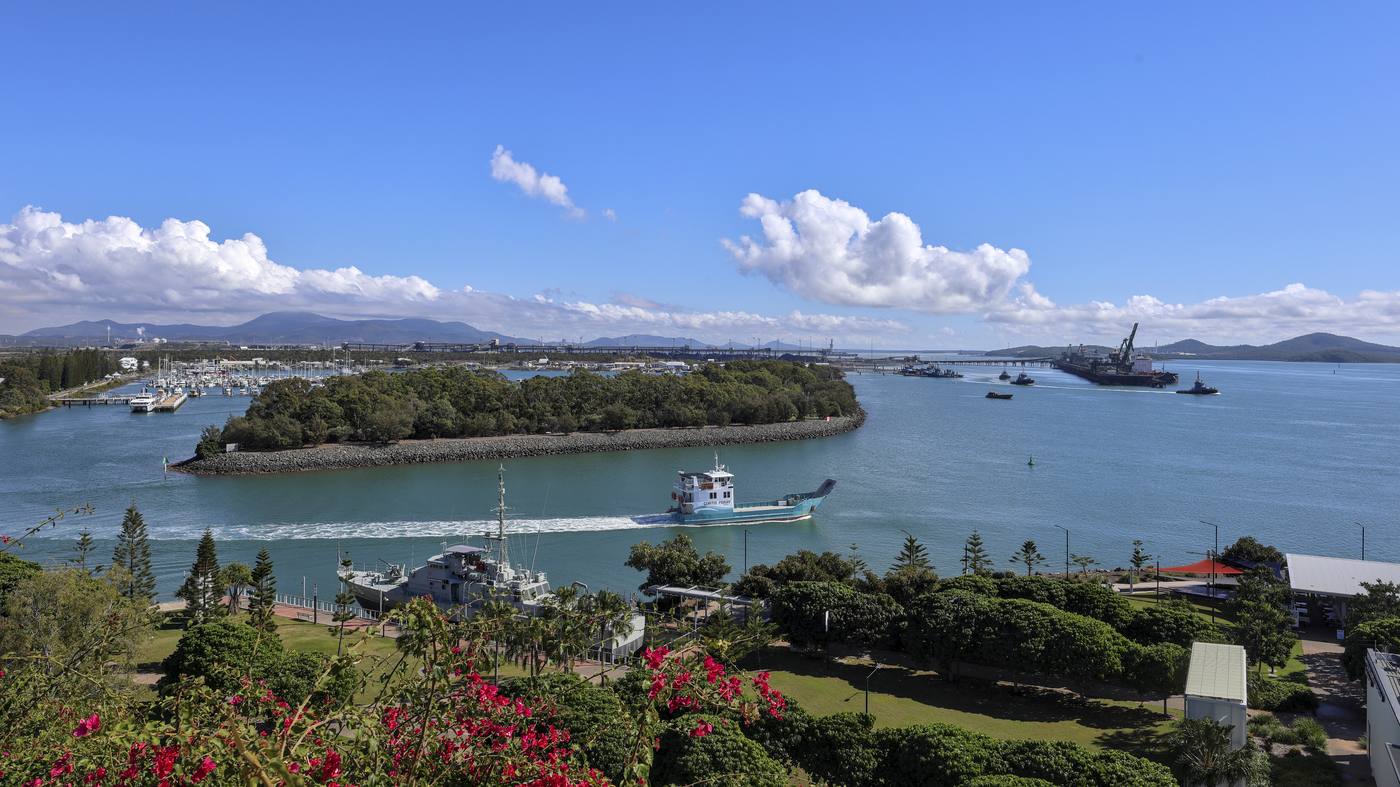
Part of Gladstone harbor seen from Auckland Hill lookout on a beautiful sunny day, Queensland, Australia

Gladstone Region, QLD

Gladstone

industrial-port · harbour · reef-access · regional

Median house price
$613,500
To Brisbane
6h 23m

Want to find out if you can afford to move?

Move Regional compares towns across QLD, NSW and WA on price, work, schools and lifestyle, so you can find the one that fits.

© OpenStreetMap contributors

At a glance

Drive to the coast

2 min

By road

Nearest major hospital

4 min

By road

Airport access

9 min

By road

Schools access

Excellent

Average daytime temp

27.5°C

Rainfall

Dry

Overview

Gladstone is a harbour city where heavy industry is not hidden in the background; it is part of the skyline, economy and local identity. Around 34,700 people live here, the median age is a young 35 and population has grown by roughly 11% since 2016. Schools, healthcare, shopping and the airport are all strong and close, which gives families and workers a practical regional base.

The housing market is still within regional reach, with a median around $614,000 and three-bedroom rents near $510 a week. The East Shores precinct, botanic gardens and maritime history add places to spend time locally, while island access provides a very different side of the region beyond the industrial port.

The coast is technically immediate, although classic beach living generally involves travelling outside the central urban area. Summers are hot, rainfall is lower than farther north and the city is car-oriented. Brisbane is about 6 hours 20 minutes away by road, so flying from the airport nine minutes away is often the easier option.

Gladstone is a strong fit when employment, affordability and regional services lead the decision. People moving purely for a romantic sea-change atmosphere need to be comfortable with the fact that this is first and foremost an industrial working city on the coast.

Photos

10 photos

Is Gladstone for you?

Best for

Engineers, tradespeople, resources and energy workers, healthcare staff and families wanting affordable housing with solid services are the clearest fit. It can also work for people who value boating and regional access but do not need a tourism-focused or café-led town centre.

Watch out for

Heavy industry is visually and economically prominent, so this is not a classic sea-change setting. The city is car-oriented, summers are hot and Brisbane is about 6 hours 23 minutes away. Beach access generally means travelling beyond the central urban area.

Things to do

  • Walk the East Shores precinct

  • Explore Tondoon Botanic Gardens

  • Visit Gladstone Maritime Museum

  • Ferry to Heron Island

Lifestyle

CommunityUp-and-coming townsBest for first-home buyersBest value coastal townsFamily friendly

How it compares to similar towns

  • Gladstone offers stronger industrial employment and lower housing costs than lifestyle-driven coastal towns such as Yeppoon or Bargara.
  • Compared with Rockhampton, it is smaller and more directly defined by the port.
  • The case for living here is practical: jobs, services and value, with coastal recreation available beyond the city.

Property

Median house price

$613,500

34% below the QLD median

Median attached price (townhouse/apartment)

$395,000

Median weekly rent (3-bed house)

$510

≈ $2,210/month

Sourced from Queensland Government Statistician's Office · 12 months ending 31 March 2026

Services

Healthcare access

Excellent

Shopping & everyday services

Excellent

10+ shopping centres within 20km — a real retail hub

Internet connection

Fixed line

Schools

  • Gladstone Central State School0.2 kmGovernment · Primary
  • Star of the Sea Catholic Primary School0.7 kmCatholic · Primary
  • Gladstone State High School1.1 kmGovernment · Secondary
  • Rosella Park School1.3 kmGovernment · Combined
  • Gladstone West State School1.9 kmGovernment · Primary
  • Gladstone South State School2.5 kmGovernment · Primary
  • Trinity College - South Gladstone Campus2.5 kmIndependent · Secondary
  • Chanel College3 kmCatholic · Secondary

Plus 16 more within 20km — showing the 8 closest.

Job market

Job market by industry

Trades — 12.8%

Largest share of local jobs

Employment breakdown

  • Trades12.8%
  • Healthcare12.5%
  • Professional & office-based6.9%
  • Agriculture4.1%
  • Education4%
  • Hospitality & tourism3.8%

Employment figures cover this town's wider statistical region, not the town alone — you'll see the same figures for Yeppoon, Agnes Water, Byfield and Rockhampton.

Biggest employers around here

  • Drillers, Miners and Shot Firers3%
  • Electricians3%
  • Sales Assistants (General)2.9%
  • Metal Fitters and Machinists2.7%
  • Aged and Disabled Carers2.4%

Where the hiring is

  • Automotive and Engineering Trades2,187/yrScore 5/5
  • Medical Practitioners and Nurses1,778/yrScore 2/5
  • General-Inquiry Clerks, Call Centre, Receptionists1,663/yrScore 3/5
  • Carers and Aides1,547/yrScore 2/5
  • Drivers and Storepersons1,401/yrScore 5/5

The score ranks this region against other regions for the same occupation, not against other jobs here — a low score means it isn't a regional stronghold for that field, not that there are no vacancies. Counts online job advertisements, so trades and farm work hired by word of mouth are undercounted, and outside capital cities this is published at a regional level larger than one town.

Climate

  • Very hot summers
  • Cool winters

Demographics

Gladstone (UCL 312002) · 2021 Census

Younger than the national profile, with 12.2% aged 65 or over against 17.2%. Among households, renting is well above the national rate, at 41.6% of dwellings against 30.6%.

Population

34,703

Population growth

+11%

Gladstone (SA2 308051534)

Median age

35 years

Labour force participation

63.9%

Growth is measured across the wider area named under the figure, which can be a different size to the town.

Age

0–1421.8%
15–2412.7%
25–4427.8%
45–6425.5%
65+12.2%

Share of total population in each band — rounding means these won't land on exactly 100%.

Households

  • Couples with children41.8%
  • Couples without children36.8%
  • Lone-person households28.5%

Couples are a share of total families; lone-person households are a share of total households — different bases, not one breakdown.

Income

Median personal income

$780

Per week · ≈ $40,560/year

Median family income

$2,054

Per week

Median household income

$1,622

Per week

Personal is one person's income; family and household cover everyone living together — a single-income household will show a lower household figure than its highest earner's personal one. Personal income also covers every resident aged 15 and over, retirees included, so it reads low in a town with an older population even where household income is solid.

Housing & background

Owner-occupied

56.2%

Rented

41.6%

Born in Australia

79.1%

Born overseas

14.8%

Doesn't sum to 100% — people who didn't state a birthplace are excluded rather than redistributed.

Source: Australian Bureau of Statistics, 2021 Census