Move Regional
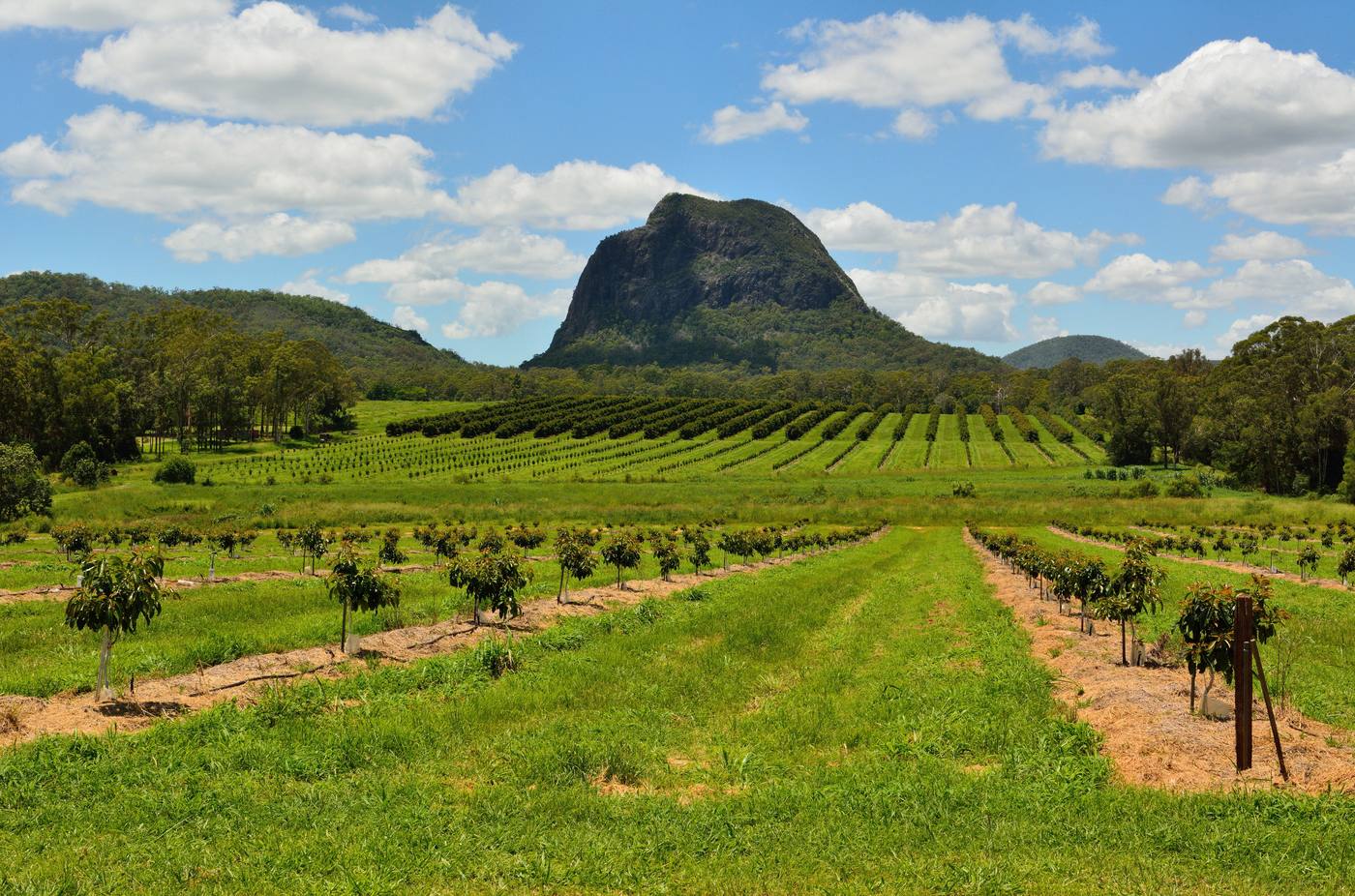
View of Mountain Tibrogargan across a garden nursery in Glass House Mountains region in Queensland, Australia.

Sunshine Coast hinterland, QLD

Beerwah

country · green · hinterland-gateway · family

Median house price
$1,080,000
To Brisbane
1h 10m

Want to find out if you can afford to move?

Move Regional compares towns across QLD, NSW and WA on price, work, schools and lifestyle, so you can find the one that fits.

© OpenStreetMap contributors

At a glance

Drive to the coast

16 min

By road

Nearest major hospital

24 min

By road

Airport access

38 min

By road

Schools access

Excellent

Average daytime temp

26.4°C

Rainfall

Wet

Overview

Beerwah is defined more by location and practicality than by a polished village identity. It sits between the Glass House Mountains, the Sunshine Coast and Brisbane, which lets residents reach very different parts of south-east Queensland without living in a dense coastal suburb.

The population is around 7,700 and has grown strongly, up about 19% since 2016, giving the town a noticeably expanding family base. Couples with children make up a substantial share of households, while work in healthcare, retail, trades and local services fits the everyday economy.

Schools are strong, shopping is useful and the coast is only about 16 minutes away; Brisbane is around 1 hour 10 minutes and the airport roughly 40 minutes. Australia Zoo and the Glass House Mountains bring visitors through the area, but the town itself is more functional than tourist-led.

Housing is no longer cheap, with a median house price around $1.08 million and three-bedroom rents near $680 a week. The trade-off for convenience is character: Beerwah is less walkable and has a smaller food and arts scene than the better-known hinterland villages. It works particularly well when access, schools and transport connections matter more than living somewhere that feels like a destination in its own right.

Photos

6 photos

Is Beerwah for you?

Best for

Beerwah is a practical choice for families, commuters, tradespeople and others who care about strong schools, services and easy access to both the coast and hinterland. Its strength is position and everyday convenience. People looking for a distinctive café, arts or tourism scene within the town itself will find that side much less developed.

Watch out for

Beerwah is not particularly walkable or culturally distinctive, and the food and creative scenes are modest. It sits between destinations rather than functioning as one itself. If you are moving mainly for a strong village atmosphere, Maleny or Montville may feel more rewarding, while Beerwah wins on practicality.

Things to do

  • Visit Australia Zoo

  • Explore the nearby Glass House Mountains

  • Enjoy the small-country-town base between coast and hinterland

Lifestyle

CommunitySpaceFamily friendly

How it compares to similar towns

  • Maleny has far more arts, cafés and hinterland-village identity, while Beerwah keeps you closer to Brisbane and the coast.
  • Beerwah sits closer to the Glass House Mountains and Brisbane, so it is the stronger option when access and convenience matter more than destination character.

Similar towns

Property

Median house price

$1,080,000

17% above the QLD median

Median attached price (townhouse/apartment)

$749,999

Median weekly rent (3-bed house)

$680

≈ $2,947/month

Sourced from Queensland Government Statistician's Office · 12 months ending 31 March 2026

Services

Healthcare access

Good

Shopping & everyday services

Good

4–9 shopping centres within 20km

Internet connection

Fixed line

Schools

  • Beerwah State High School0.7 kmGovernment · Secondary
  • Glasshouse Christian College0.8 kmIndependent · Combined
  • Beerwah State School1.9 kmGovernment · Primary
  • Glass House Mountains State School5.3 kmGovernment · Primary
  • Landsborough State School6.1 kmGovernment · Primary
  • Peachester State School7.8 kmGovernment · Primary
  • Mooloolah State School9.9 kmGovernment · Primary
  • Nirimba State Primary School10.3 kmGovernment · Primary

Plus 33 more within 20km — showing the 8 closest.

Job market

Job market by industry

Healthcare — 16.7%

Largest share of local jobs

Employment breakdown

  • Healthcare16.7%
  • Professional & office-based12.3%
  • Trades10.3%
  • Education4.7%
  • Hospitality & tourism4.5%
  • Agriculture3.1%

Employment figures cover this town's wider statistical region, not the town alone — you'll see the same figures for Maleny, Noosa, Mapleton, Montville, Mooloolaba, Nambour and Yandina.

Biggest employers around here

  • Sales Assistants (General)4.2%
  • Registered Nurses3.7%
  • Aged and Disabled Carers3.2%
  • Retail Managers2.1%
  • General Clerks1.9%

Where the hiring is

  • Carers and Aides3,088/yrScore 3/5
  • General-Inquiry Clerks, Call Centre, Receptionists2,882/yrScore 5/5
  • Sales Assistants and Salespersons2,613/yrScore 5/5
  • Medical Practitioners and Nurses2,225/yrScore 1/5
  • Hospitality, Retail and Service Managers1,542/yrScore 5/5

The score ranks this region against other regions for the same occupation, not against other jobs here — a low score means it isn't a regional stronghold for that field, not that there are no vacancies. Counts online job advertisements, so trades and farm work hired by word of mouth are undercounted, and outside capital cities this is published at a regional level larger than one town.

Climate

  • Hot summers
  • Cold winters

Demographics

Beerwah (SAL 30205) · 2021 Census

The age profile is close to the national one, with 20.2% aged 65 or over against 17.2% and 19.5% children against 18.2%.

Population

7,734

Population growth

+18.7%

Beerwah (SA2 316061439)

Median age

40 years

Labour force participation

57.9%

Growth is measured across the wider area named under the figure, which can be a different size to the town.

Age

0–1419.5%
15–2411.5%
25–4424.4%
45–6424.4%
65+20.2%

Share of total population in each band — rounding means these won't land on exactly 100%.

Households

  • Couples with children40.6%
  • Couples without children40.1%
  • Lone-person households20%

Couples are a share of total families; lone-person households are a share of total households — different bases, not one breakdown.

Income

Median personal income

$692

Per week · ≈ $35,984/year

Median family income

$1,731

Per week

Median household income

$1,512

Per week

Personal is one person's income; family and household cover everyone living together — a single-income household will show a lower household figure than its highest earner's personal one. Personal income also covers every resident aged 15 and over, retirees included, so it reads low in a town with an older population even where household income is solid.

Housing & background

Owner-occupied

70.9%

Rented

26.5%

Born in Australia

79.1%

Born overseas

15.2%

Doesn't sum to 100% — people who didn't state a birthplace are excluded rather than redistributed.

Source: Australian Bureau of Statistics, 2021 Census