Move Regional
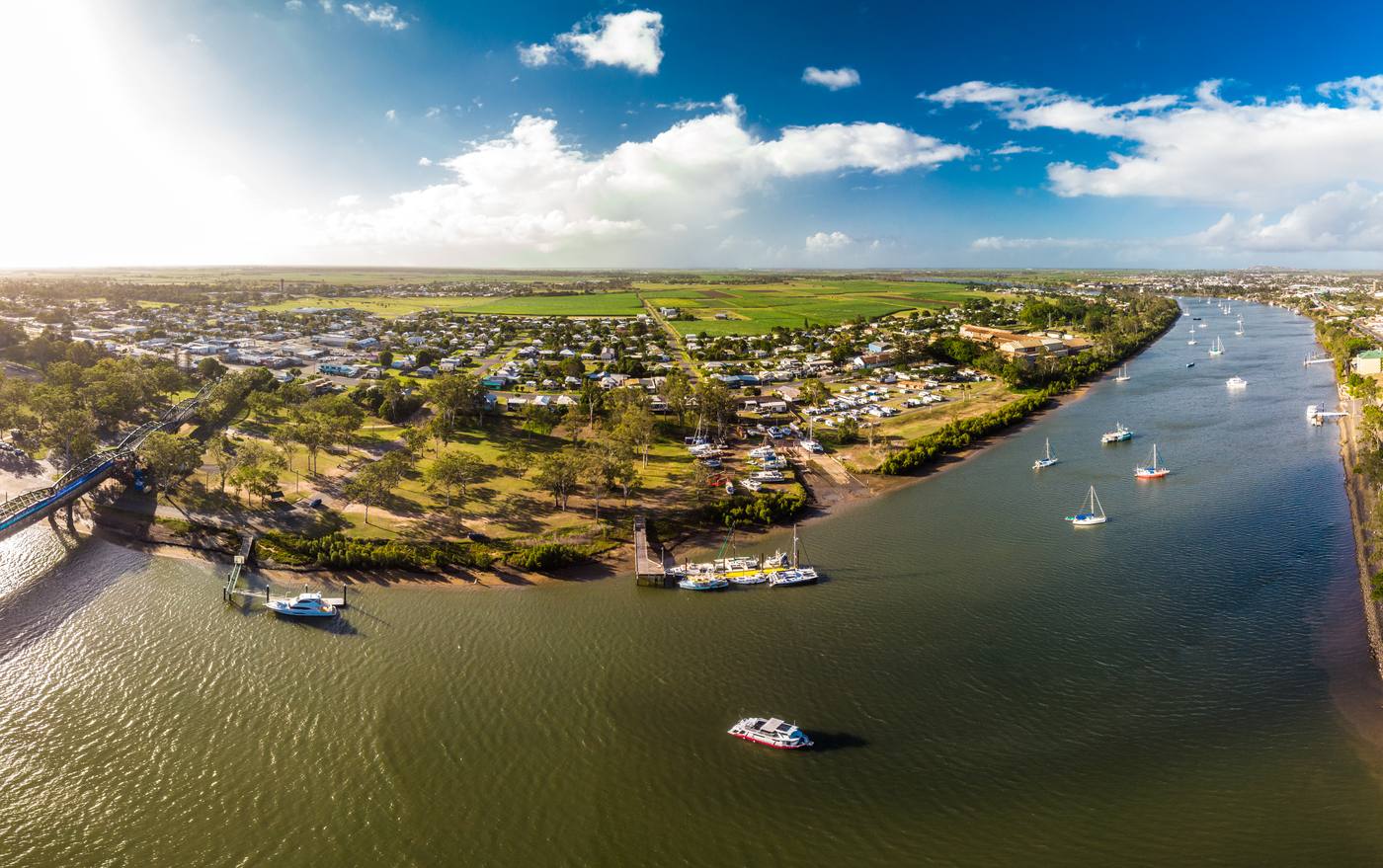
Aerial drone view of Bundaberg, Queensland, Australia

Wide Bay, QLD

Bundaberg

rum · sugarcane · turtles · reef-access

Median house price
$680,000
To Brisbane
4h 15m

Want to find out if you can afford to move?

Move Regional compares towns across QLD, NSW and WA on price, work, schools and lifestyle, so you can find the one that fits.

© OpenStreetMap contributors

At a glance

Drive to the coast

18 min

By road

Nearest major hospital

3 min

By road

Airport access

8 min

By road

Schools access

Excellent

Average daytime temp

27.2°C

Rainfall

Moderate rainfall

Overview

Bundaberg is a working regional city set among sugarcane and farming country, with the coast close enough to use regularly but not close enough to define every suburb. Around 52,000 people live here, the median age is 42 and population growth has been steady at about 6% since 2016.

Healthcare, retail, transport, education and trades provide a broad employment base, while agriculture and food production remain visible in the wider economy. The city is well serviced, with strong schools, hospital access, shopping and an airport only about ten minutes away.

Housing is one of the bigger draws, with a median around $680,000 and three-bedroom rents near $585 a week. Mon Repos, the Burnett River, local aviation history and Bundaberg’s rum-making identity give weekends recognisable local options without turning the whole city into a visitor precinct.

The beach is about 20 minutes away, so residents tend to drive for coastal time rather than live around it every day. Summers are hot and the city is spread out, making a car useful for most households. Brisbane is roughly 4 hours 15 minutes away. Bundaberg suits people who want affordable regional-city services with coast and countryside nearby, and who are comfortable with a more functional, workaday feel than polished resort towns provide.

Photos

21 photos

Is Bundaberg for you?

Best for

Families, healthcare workers, tradespeople, agricultural workers, professionals and budget-conscious movers are likely to find Bundaberg practical. It also works for people who want coastal weekends and regional services but do not need to walk to the beach from home every day.

Watch out for

Summers are hot and the city is car-oriented rather than highly walkable. The beach requires a drive, and Brisbane is about 4 hours 15 minutes away. Housing is affordable, but the lifestyle is more functional than the polished coastal experience some tree-changers expect.

Things to do

  • Tour Bundaberg Rum Distillery

  • See Mon Repos turtles

  • Visit Hinkler Hall of Aviation

  • Cruise the Burnett River

Lifestyle

CommunityCafés & foodSpaceUp-and-coming townsBest for first-home buyersFamily friendly

How it compares to similar towns

  • Bundaberg is the service-rich, more affordable counterpart to Bargara.
  • You give up immediate beach access but gain a larger employment base, hospital, airport and broader shopping.
  • Compared with Hervey Bay, Bundaberg feels more agricultural and working-city in character, with less emphasis on tourism and waterfront living.

Property

Median house price

$680,000

27% below the QLD median

Median attached price (townhouse/apartment)

$498,000

Median weekly rent (3-bed house)

$585

≈ $2,535/month

Sourced from Queensland Government Statistician's Office · 12 months ending 31 March 2026

Services

Healthcare access

Excellent

Shopping & everyday services

Excellent

10+ shopping centres within 20km — a real retail hub

Internet connection

Fixed line

Schools

  • St Joseph's Catholic Primary School0.2 kmCatholic · Primary
  • Bundaberg Central State School0.4 kmGovernment · Primary
  • Bundaberg State High School1.2 kmGovernment · Secondary
  • Bundaberg South State School1.2 kmGovernment · Primary
  • St John's Lutheran Primary School1.3 kmIndependent · Primary
  • St Patrick's Catholic Primary School1.5 kmCatholic · Primary
  • Bundaberg North State School1.8 kmGovernment · Primary
  • Bundaberg West State School1.9 kmGovernment · Primary

Plus 29 more within 20km — showing the 8 closest.

Job market

Job market by industry

Healthcare — 17.4%

Largest share of local jobs

Employment breakdown

  • Healthcare17.4%
  • Trades10.3%
  • Professional & office-based6.3%
  • Agriculture5.8%
  • Education4.8%
  • Hospitality & tourism3.4%

Employment figures cover this town's wider statistical region, not the town alone — you'll see the same figures for Maryborough, Hervey Bay, Bargara, Gympie and Kingaroy.

Biggest employers around here

  • Sales Assistants (General)5.3%
  • Aged and Disabled Carers5.1%
  • Registered Nurses3%
  • Truck Drivers2.3%
  • Secondary School Teachers1.8%

Where the hiring is

  • Medical Practitioners and Nurses2,150/yrScore 3/5
  • Carers and Aides2,088/yrScore 5/5
  • General-Inquiry Clerks, Call Centre, Receptionists1,444/yrScore 4/5
  • Sales Assistants and Salespersons1,173/yrScore 3/5
  • Legal, Social and Welfare Professionals1,157/yrScore 3/5

The score ranks this region against other regions for the same occupation, not against other jobs here — a low score means it isn't a regional stronghold for that field, not that there are no vacancies. Counts online job advertisements, so trades and farm work hired by word of mouth are undercounted, and outside capital cities this is published at a regional level larger than one town.

Climate

  • Very hot summers
  • Cool winters

Demographics

Bundaberg (UCL 311001) · 2021 Census

Older than the country as a whole: 24.2% are 65 or over against 17.2% nationally, and 17.7% are children against 18.2%. Among households, couples without children outnumber couples with them (43.3% of families against 33.1%).

Population

52,370

Population growth

+5.8%

Bundaberg (SA2 319011495)

Median age

42 years

Labour force participation

51.8%

Growth is measured across the wider area named under the figure, which can be a different size to the town.

Age

0–1417.7%
15–2411.8%
25–4422.8%
45–6423.6%
65+24.2%

Share of total population in each band — rounding means these won't land on exactly 100%.

Households

  • Couples with children33.1%
  • Couples without children43.3%
  • Lone-person households31%

Couples are a share of total families; lone-person households are a share of total households — different bases, not one breakdown.

Income

Median personal income

$605

Per week · ≈ $31,460/year

Median family income

$1,440

Per week

Median household income

$1,134

Per week

Personal is one person's income; family and household cover everyone living together — a single-income household will show a lower household figure than its highest earner's personal one. Personal income also covers every resident aged 15 and over, retirees included, so it reads low in a town with an older population even where household income is solid.

Housing & background

Owner-occupied

61.5%

Rented

34.6%

Born in Australia

81.8%

Born overseas

12%

Doesn't sum to 100% — people who didn't state a birthplace are excluded rather than redistributed.

Source: Australian Bureau of Statistics, 2021 Census